
For importers, greenhouse distributors, garden retailers and private-label teams
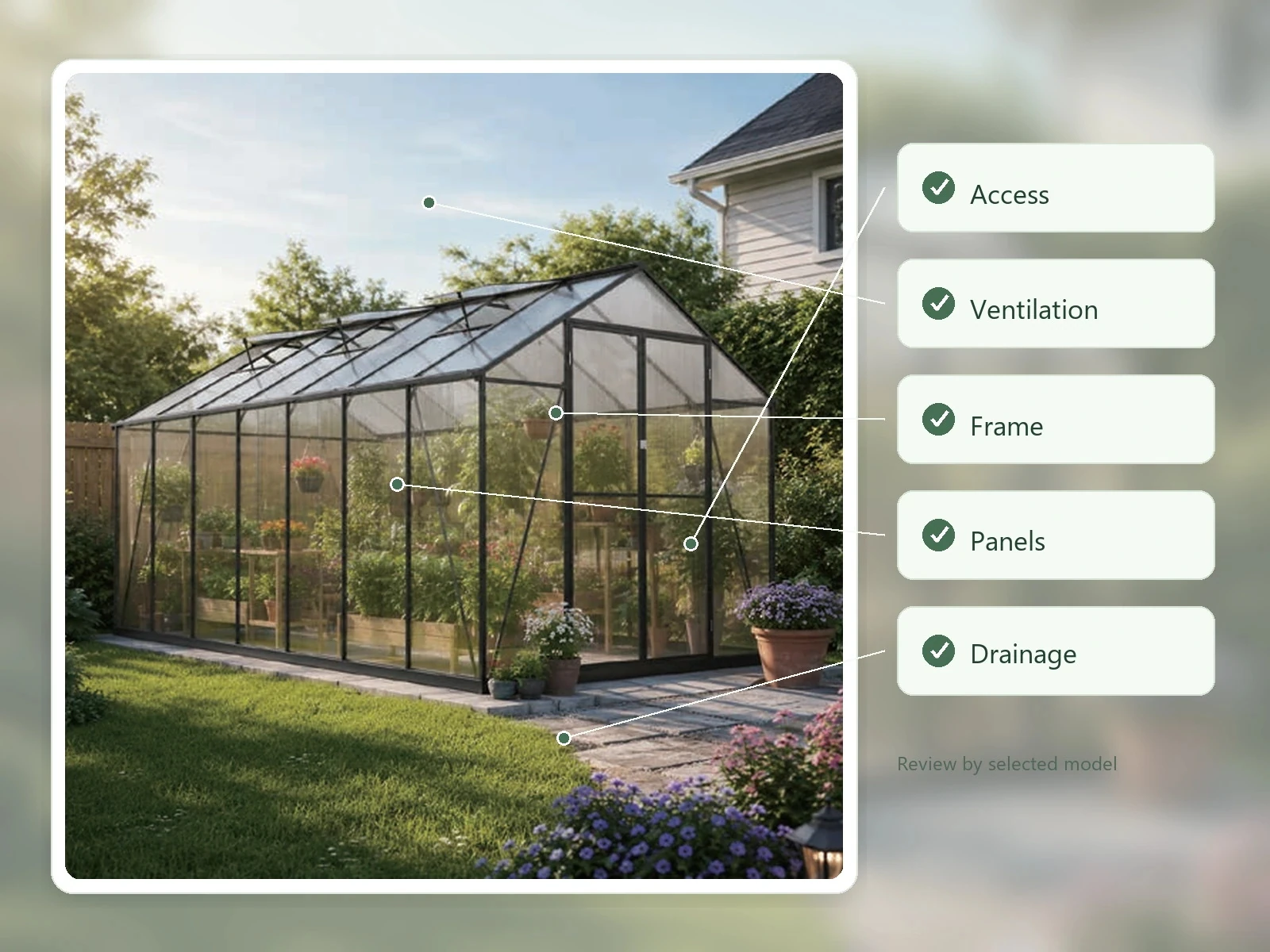
Greenhouse selection for a commercial range starts with the market, customer task and channel. Product names such as polycarbonate, glass, lean-to or T-shaped are useful filters, but buyers still need to control the frame, glazing, access, ventilation, base, packaging, assembly and evidence for the selected product.
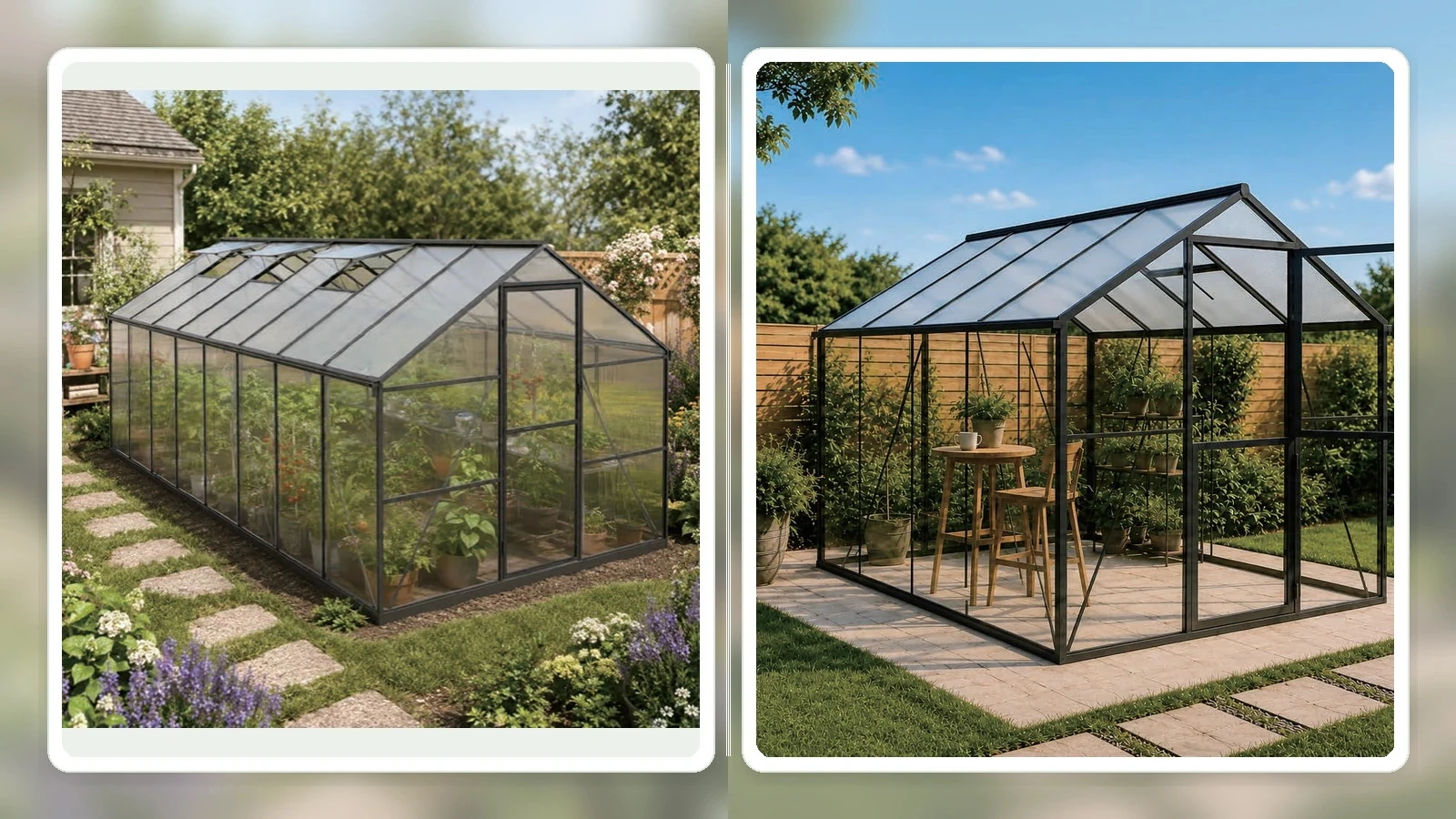
Short answer: how should a B2B buyer select greenhouses?
Define the target market, channel, growing use, product position, footprint and installation expectations. Then shortlist greenhouse families and compare frame, glazing, doors, vents, gutters, base, accessories, package data, assembly support and market-specific evidence. Approve the sample and documentation as one configuration.
1. Define the range architecture
Decide whether the program needs a practical core greenhouse, a compact or wall-side option, an upgraded glazing direction, a premium design product or complementary growing products. Each SKU should serve a different customer or price step.
The greenhouse range-planning guide helps product managers separate core, upgrade and specialist roles.
2. Choose the greenhouse family before fine specifications
| Product direction | Possible range role | Buyer questions |
|---|---|---|
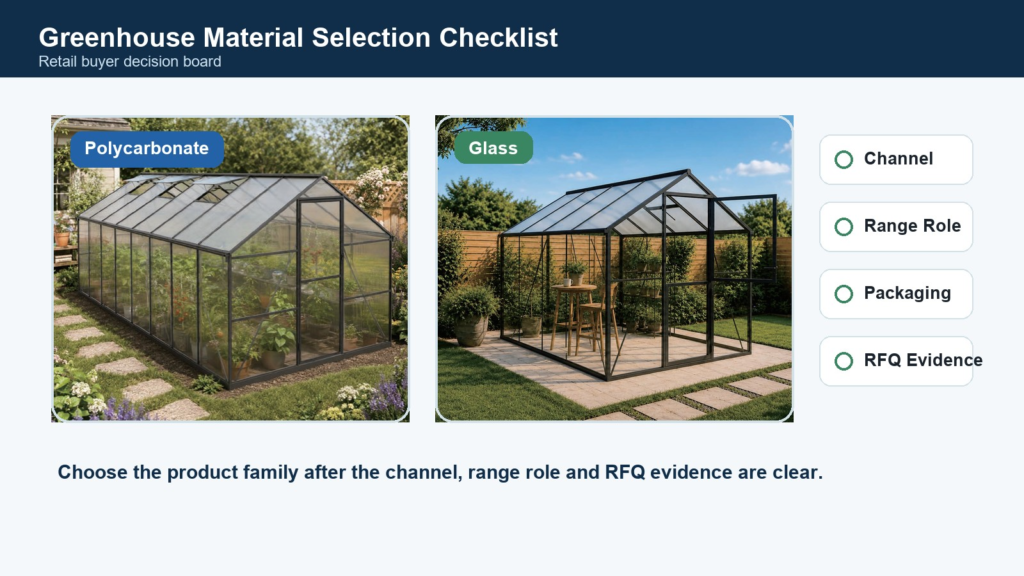
| Standard freestanding polycarbonate | Core practical greenhouse range | Width, length, door type, panel construction, vents, gutters and base |
| Glass greenhouse | Traditional or premium visual direction | Glass specification, retention, handling, packaging and replacement |
| Lean-to greenhouse | Wall-side or space-conscious direction | Wall interface, open-back/enclosure scope, access and drainage |
| Greenhouse cabinet/cold frame | Compact or seasonal growing | Footprint, shelves, lids/doors, ventilation and plant-stage use |
| T-shaped, dwarf-wall or combined structure | Specialist or premium differentiation | Layout, foundation/base, glazing zones, access and installation scope |
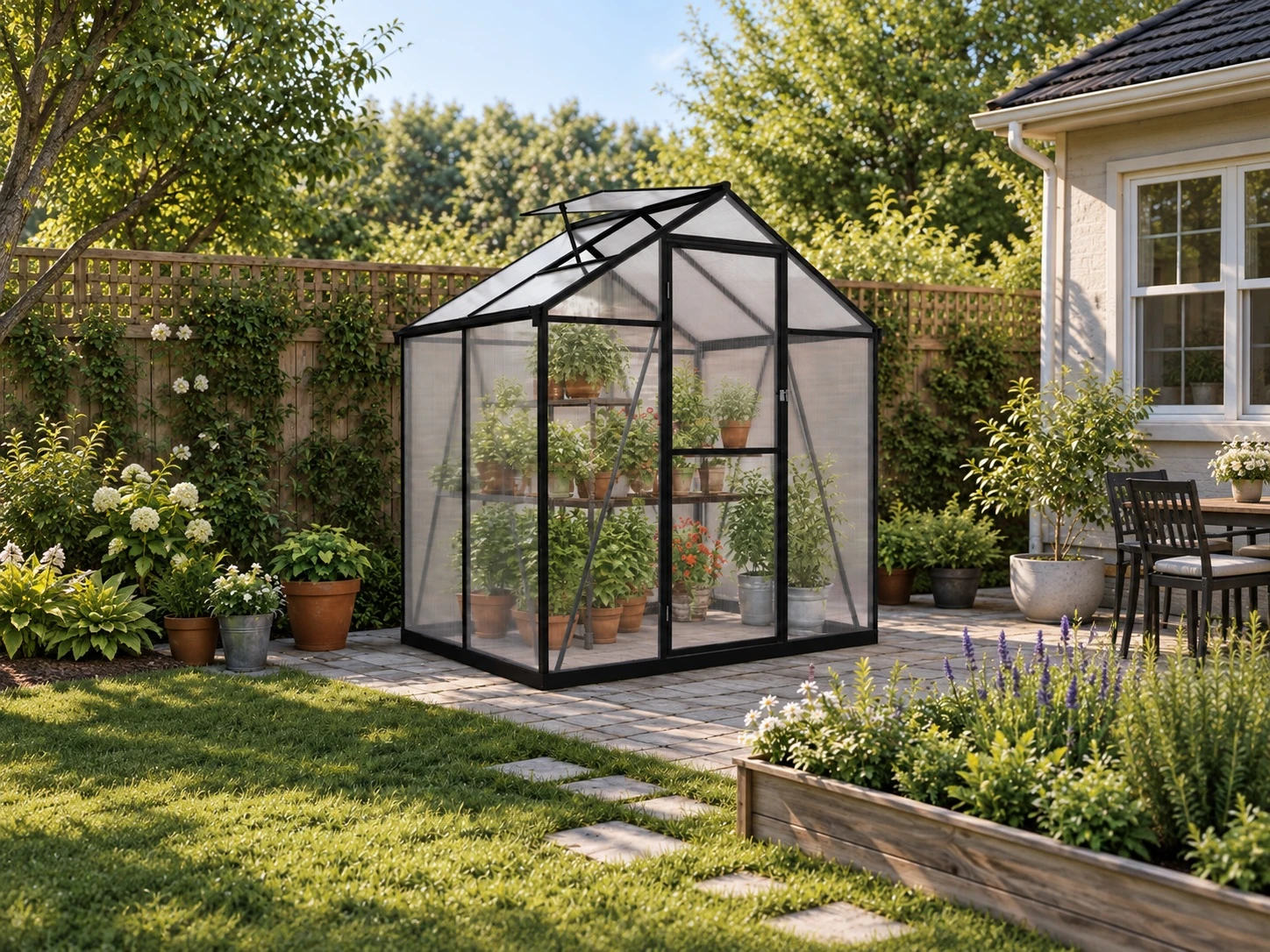
3. Specify glazing with the frame
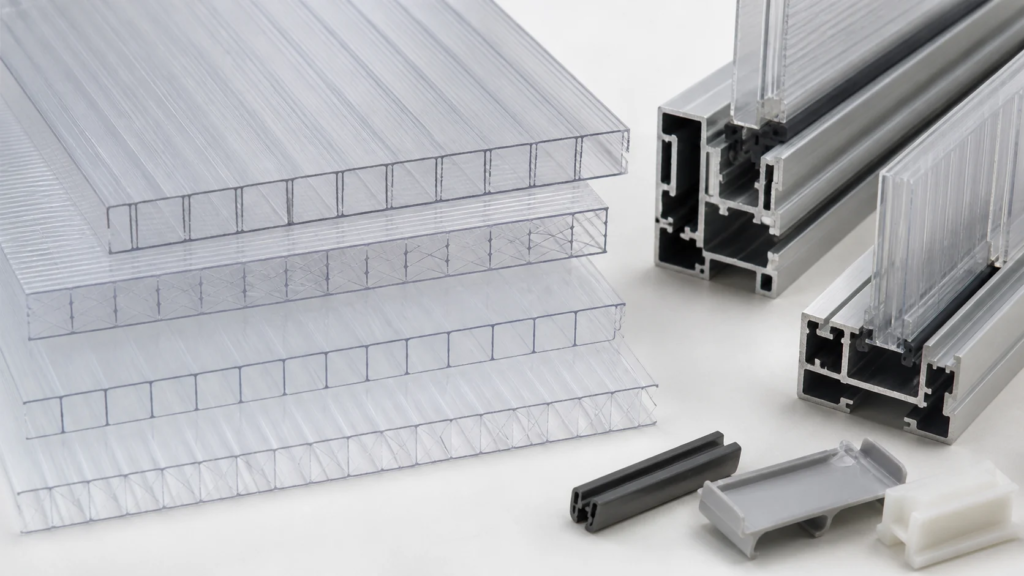
Do not select panels or glass independently from support spacing and retention. LERYOU’s records include 4 mm twin-wall polycarbonate, 1.8 mm solid polycarbonate and selected 6 mm or 8 mm panel directions, plus glass and mixed-glazing products. These options are not universal across every greenhouse.
Use the greenhouse material selection checklist and the polycarbonate versus glass comparison for deeper review.
4. Control doors, vents, gutters and base
Single or double, hinged or sliding door directions change access. Roof windows and adjustable vents affect user operation. Gutters and drainage need a defined route. Base and foundation scope must be explicit. Confirm which elements are standard, optional, excluded or site-supplied.
5. Match packaging to the sales channel
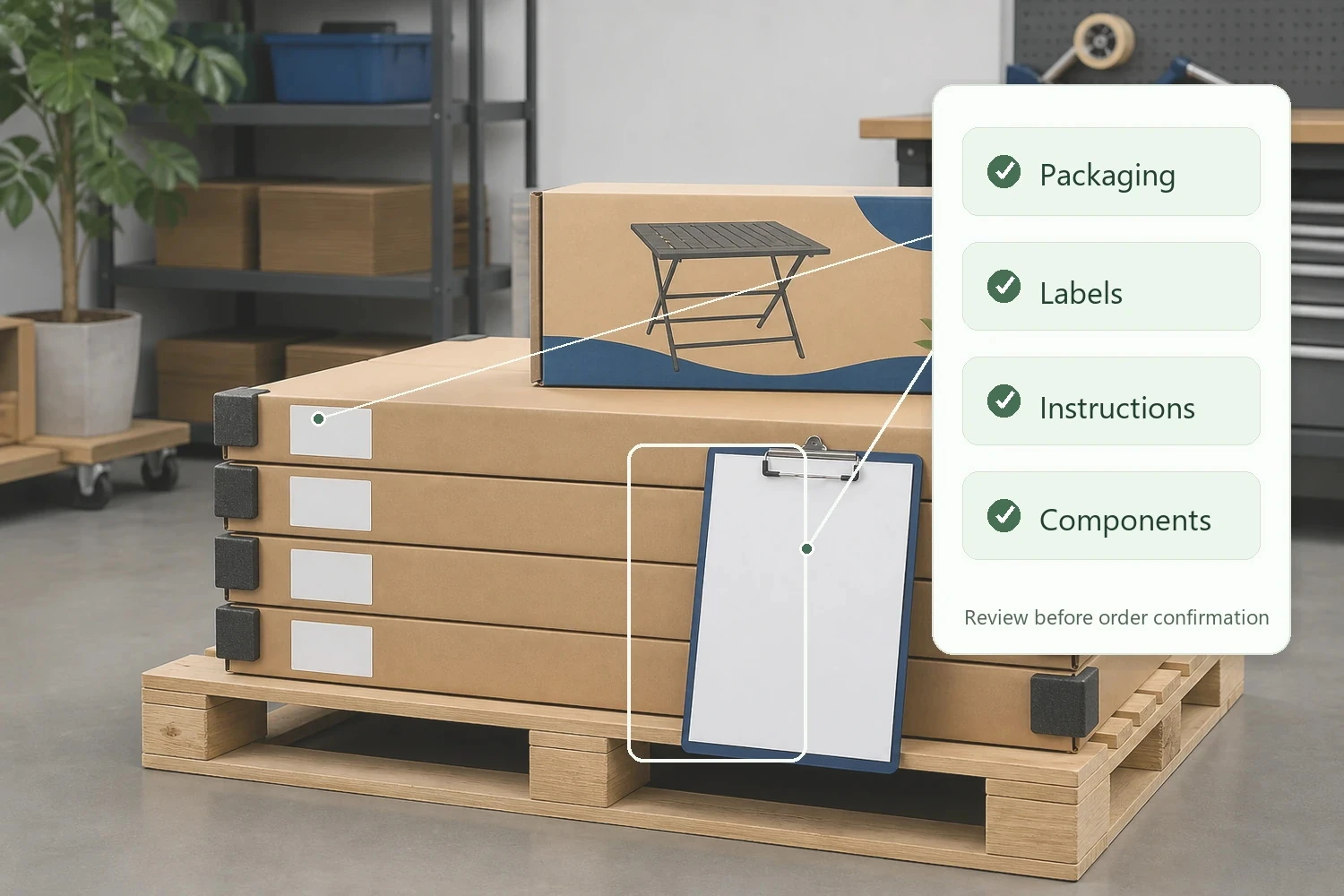
Long profiles, glazing panels or panes, hardware and doors need protection and identification. E-commerce, retailer distribution centres and project delivery can impose different carton and handling requirements. Request final package data only after the configuration is approved.
6. Verify claims and documents
Wind, snow, light, thermal, UV, corrosion and other performance statements must be tied to the exact product and evidence. The buyer should also determine local approval, labelling, packaging and installation obligations with qualified advisers where required.
7. Send a complete RFQ
- Target country, channel and customer segment.
- Greenhouse family, footprint direction and range role.
- Frame, glazing, colour and base direction.
- Doors, vents, gutters, shelves and accessories.
- Performance criteria and required supporting documents.
- Package, manual, labels, artwork and private-label scope.
- Quantity range, destination, sample and approval process.
Frequently asked questions
There is no universal best type. The correct range depends on market demand, channel, price architecture, package limits, customer growing tasks and support capability.
Begin with the customer task, site and range role, then review size, structure and glazing together. Changing one field can affect the others.
No. Panel, glass, door, size, frame and accessory availability must be confirmed for the selected product and quotation.
Approve the configuration, drawings, product sample where required, claims, parts list, manual, package, labels, artwork and applicable evidence.
Prepare a greenhouse sourcing brief
Explore LERYOU greenhouse and growing solutions, review OEM/ODM development support, or submit your market, channel, product role and configuration requirements.
Content scope reviewed against LERYOU’s current product knowledge records in September 2026. Final specifications, packaging, evidence and supply scope must be confirmed for the selected product and destination market.
 English
 Deutsch
 Français
 Español
 Italiano
 Polski
 日本語
 한국어
 Nederlands
 Čeština
 Português do Brasil
 Русский
 ไทย
