
Wheelie bin storage works best when it hides the bins without making them harder to use. Before choosing a finish or counting bays, check three things: whether your actual bins fit, whether both sets of lids can open, and whether each bin can roll out easily on collection day.
A screen, a purpose-built enclosure and a general outdoor cabinet solve different problems. This guide explains how to compare them, measure the working space and choose a practical arrangement for your garden, driveway or other outdoor area.
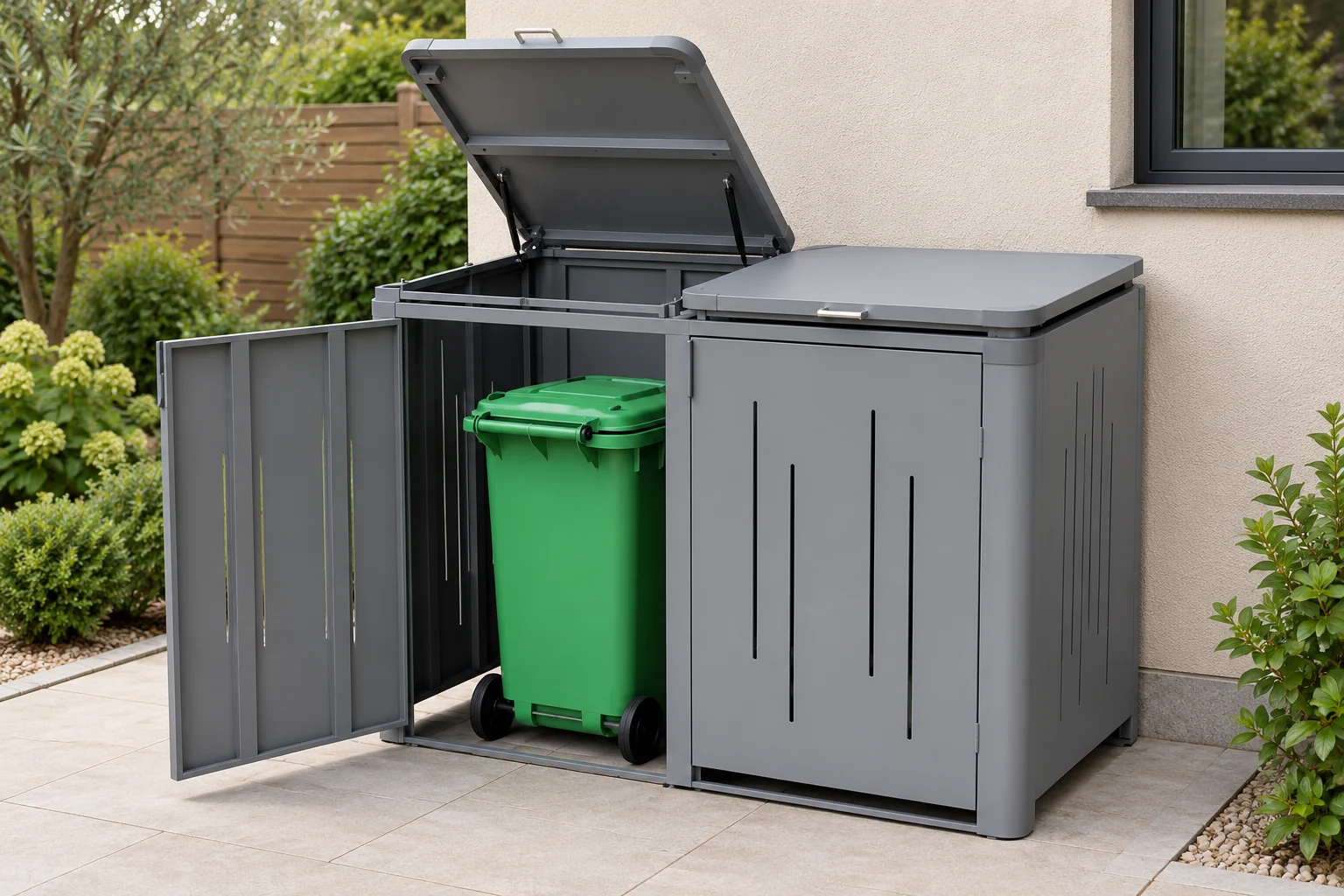
Choose the storage format around the job
If the main aim is to hide bins from a particular viewpoint, a screen may be enough. If you want a closing front and top access, look at an enclosure. Where recycling boxes sit alongside wheeled bins, a combined layout can organise both without leaving small containers on the ground.
| Format | What to compare | Access question |
|---|---|---|
| Two- or three-sided screen | Coverage from the relevant viewpoints, post support and the open side. | Can the bin leave without moving the screen? |
| Dedicated bin enclosure | Clear bay dimensions, front doors, individual or shared top lids and ventilation. | Can you fill and remove each bin independently? |
| Bin and recycling-box combination | Separate bay and shelf dimensions, box handles and the position of each opening. | Can boxes be lifted out without blocking a wheeled bin? |
| General outdoor storage cabinet | Internal space, entrance width, floor and threshold, rather than storage litres alone. | Does the actual bin pass through the opening and operate inside? |
A closing enclosure provides a different arrangement from a screen, but closure alone does not establish pest exclusion, odour control or a tested security level. Choose the access and construction you need before judging those separate claims.
Measure the bins before measuring the store
A litre label describes volume, not the complete outside shape. Bins with similar stated capacities can differ in handles, wheels, lid overhang and proportions. Measure every bin that will use the enclosure, especially when waste and recycling containers differ.
- Maximum width: include wheels, axles and any projecting parts.
- Maximum depth: measure front to back, including handles and lid overhang.
- Closed height: measure from the supporting surface to the highest point.
- Operating space: observe where the bin lid travels and how you tilt the bin to move it.
Compare these measurements with the store’s clear internal dimensions and entrance opening. Outside dimensions include panels, frame members and sometimes a projecting top. A bin that fits behind closed doors may still be awkward to roll through the entrance or fill from above.
For two or more bins, check each bay rather than dividing the total outside width by the bin count. Posts, hinges, dividers and door stops can reduce the usable opening.
Check everyday lid access separately from collection access
Top lids and lifting mechanisms
Open the store lid and the bin lid through their intended travel. Check the headroom beneath windows, fences, shelves or overhanging plants, and the clearance behind a lid placed near a wall.
Some models link the store lid to the bin lid with a chain or cable. Others require the two lids to be opened separately. Gas springs support a store lid; their presence does not mean a bin-lid linkage is included. Confirm the mechanism and its compatibility with your bin’s lid and handle.
Front doors and the removal route
Draw the door swing on your layout, not just the cabinet footprint. Look at the clear opening with the door in its usable position and check whether handles or nearby walls restrict it. Avoid a layout that requires moving a neighbouring bin every time you empty another.
Follow the whole collection-day route: out of the bay, through the gate and towards the collection point. Note thresholds, narrow turns, slopes and any place where a full bin needs extra manoeuvring space. Keep the storage arrangement consistent with your collection service’s current presentation instructions.
Allow three kinds of space
When comparing outdoor wheelie bin storage, separate the closed footprint, the opening envelope and the approach area. These spaces often overlap, but all three must work together.
- Closed footprint: the complete outside width and depth, including projecting lids or handles.
- Opening envelope: the space used by front doors, lifting lids and the bin’s own lid.
- Approach area: room to stand, load rubbish and roll each bin out.
Mark these areas before ordering. A narrow strip beside a wall may fit a cabinet while leaving too little room for an outward-opening door. A raised planter or fixed shelf above a store can also interfere with top access.
Compare metal, timber and resin by their actual construction
Metal wheelie bin storage can use different panel materials, frames and coatings. Check the lid, walls, doors, base and hardware separately. A steel frame does not mean that every visible panel is steel, and a painted finish is not a complete description of corrosion protection.
For timber, check the treatment and ongoing care instructions as well as the frame and panel layout. For resin or composite designs, check the particular panel construction, hinges, floor and cleaning guidance. None of these material names establishes a universal service life or maintenance schedule.
Compare the finish with the location and the way the store will be handled. Look for accessible hinges, replaceable hardware and clear care instructions. A magnetic catch, latch or lock describes a closing mechanism; a tested security claim needs separate evidence.
Understand the base, support and installation
Check whether the product has an integrated floor, a base frame or an open bottom. This affects how a bin crosses the entrance, how the structure is supported and how you clean underneath it. A floor panel can introduce an edge that needs to be considered in the rolling route.
Use a firm, level supporting surface suitable for the selected store and follow its installation instructions. Review drainage around the site and avoid a position where water collects at the entrance. Confirm any required anchors and whether the supplied fixings suit the supporting material.
Before assembly, identify the space needed to join panels and fit doors or lids. Check the parts list, lid-support hardware and instructions for the exact configuration. Do not assume that an extendable design can accept another bay without its matching frame, panels and connections.
Make cleaning part of the layout
Leave enough access to remove every bin and reach the floor, corners and lower panels. Keep ventilation openings clear and follow the finish manufacturer’s cleaning instructions. Do not assume that a pressure washer or a particular cleaning chemical is suitable for every coating or panel.
An enclosure organises the containers; it does not replace bin cleaning or correct waste handling. Assess odour or pest-control claims separately from the simple fact that the bins are concealed.
Compare the LERYOU configurations that match your space
LERYOU’s wheelie bin storage range includes different lid, panel, bay and base arrangements. Its curved-lid design uses colour-coated steel walls and frame, front access and gas-spring lid support. Other configurations have different construction, so select the layout before comparing details.
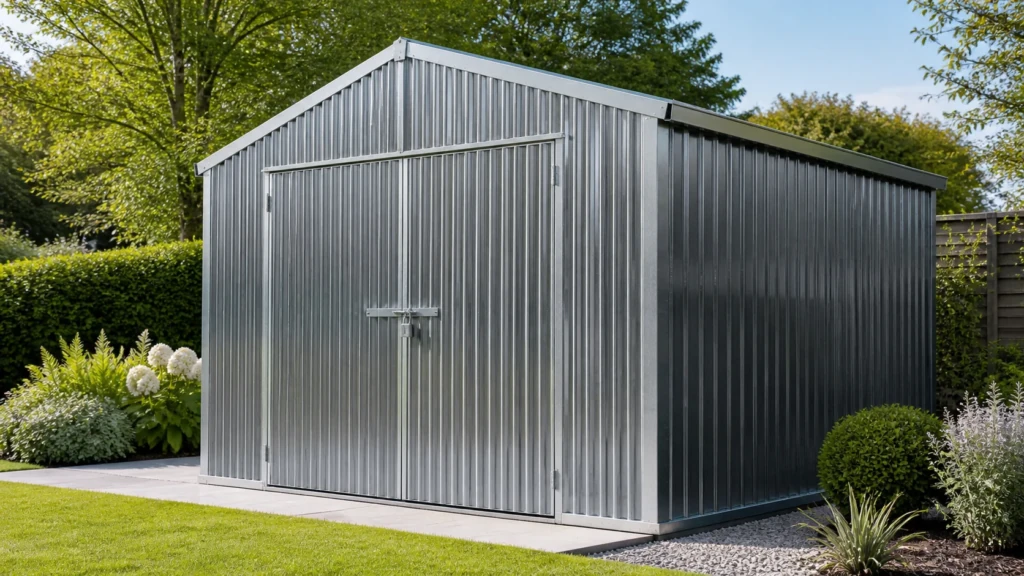
The double enclosure with top and front access is a separate galvanised-steel option. Compare each version’s drawing with your actual bin measurements and opening space.
To review a suitable configuration, send your bin dimensions and site measurements to LERYOU. Include the bin count, available space, intended opening direction and any wall or gate that restricts access.
Frequently asked questions
How can I hide my wheelie bins?
A screen can hide selected sightlines, while a closing store conceals more of the containers. Choose the format that leaves a clear route for filling and removing the bins.
Will a store labelled for 240-litre bins fit mine?
Check your actual bin’s outside dimensions, lid travel and wheel clearance against the internal bay and entrance. The litre label alone cannot confirm fit.
Do all stores open the bin lid automatically?
No. Some have a chain or cable linkage, while others provide separate access. Lid-support gas springs and bin-lid linkages are different features.
How much room should I leave in front?
Allow the door to reach its intended opening position and leave a practical rolling and turning route for the full bin. Use the selected store’s drawing and your actual site rather than a universal clearance figure.
Can I put a bin store straight on grass?
Check the model’s support and fixing instructions. Soft or uneven ground can interfere with door alignment and bin movement; the supporting surface needs to suit both the structure and daily use.
Is metal storage better than timber or resin?
Compare the actual construction, finish, access, care and installation requirements. Material alone does not establish which store best fits your bins or location.
Does an enclosure stop smells or pests?
Do not treat concealment as a guarantee of either. Keep bins clean, close their lids and assess any specific exclusion or odour-control claim on its own evidence.
 English
 Deutsch
 Français
 Español
 Italiano
 Polski
 日本語
 한국어
 Nederlands
 Čeština
 Português do Brasil
 Русский
 ไทย
