For importers, retail buyers and private-label product teams
Two metal garden shed quotations can show the same nominal size and still cover different products, packaging responsibilities and approval work. A useful comparison starts by putting every offer against one controlled specification. Price comes after scope.
This guide provides a practical way to compare quotations for flat-pack metal garden sheds. It focuses on the information a buyer can verify before choosing a supply route. Final dimensions, materials, performance requirements, packaging and commercial terms must be confirmed for the selected model and order.
Why the lowest total may not represent the same offer
A quotation total is only meaningful when the compared suppliers have priced the same product and the same responsibilities. A lower figure may reflect a different footprint, a narrower door, a different base or floor arrangement, fewer accessories, a simpler carton structure, or less documentation work. It may also exclude samples, artwork changes, inspection support or shipment documents.
Start with one RFQ brief and require each supplier to return its offer against the same field list. Where a field cannot be confirmed, record it as open. Do not silently treat a blank field as included.
1. Confirm the product family and intended use
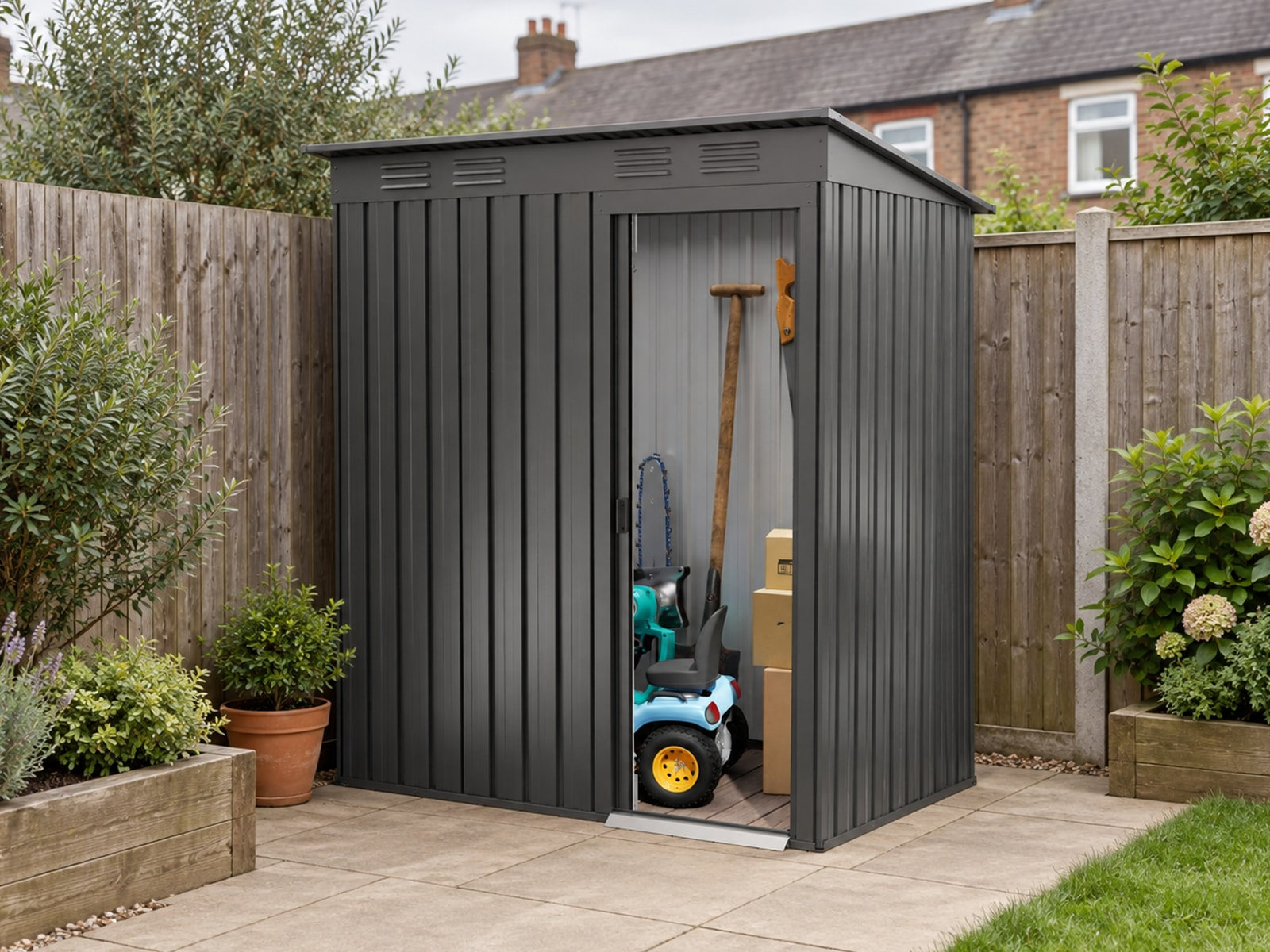
“Metal shed” is too broad for a like-for-like comparison. A classic corrugated shed, a premium vertical-ribbed model, a flat-wall heavy-duty direction, a skylight model and a multi-functional shed may serve different retail positions and use different structures.
State the intended storage task and channel. A compact e-commerce shed for hand tools has different access, packaging and assortment requirements from a larger unit intended for bicycles or garden equipment. A skylight or patio-extension concept also introduces options that should not be assumed to be standard across the range.
LERYOU’s current product records include classic, premium, heavy-duty flat-wall, skylight and multi-functional directions. Buyers can review the metal garden shed types guide before deciding which family belongs in the RFQ.
2. Normalize size, footprint and access
Nominal labels such as 6×8 ft are useful for merchandising, but they are not a complete dimensional specification. Ask for external width, depth and height, base dimensions, roof overhang where applicable, clear door opening and package dimensions. Confirm the orientation used for width and depth.
Examples in LERYOU’s current records include compact configurations such as 151×91×187 cm and 136×138×182 cm, a 6×8 ft reference recorded at 181×246×195 cm, and larger classic configurations including 12×16 ft. These examples demonstrate range breadth; they do not mean that every roof, door or wall system is available in every size.
For access, compare the actual door system and clear opening. Record whether the quotation covers a sliding or hinged door, a single or double opening, and front or side access. The intended stored items should drive this choice. For a deeper framework, use the garden shed door and access configuration guide.
3. Compare the roof, wall, frame and base as one system
A single material label does not define the complete structure. Compare the following fields together:
| Scope area | What the quotation should identify | What the buyer should not assume |
|---|---|---|
| Tetto | Apex, pent, flat or low-slope form; drainage direction; relevant roof components | That one roof form proves a wind, snow or drainage rating |
| Wall | Panel profile, orientation, finish and connection method | That “thicker” applies to every model or proves complete-system strength |
| Cornice | Main profiles, corners, door opening and roof-to-wall connections | That “reinforced” has the same meaning across suppliers |
| Base/floor | Included base, optional floor, installation interface and anchoring information | That a floor or foundation solution is included unless stated |
If the destination market requires a defined performance result, the evidence must relate to the quoted model, size and configuration. Do not transfer a test result from one platform to another. The materials and structure guide explains these relationships in more detail.
4. Separate standard configuration from options
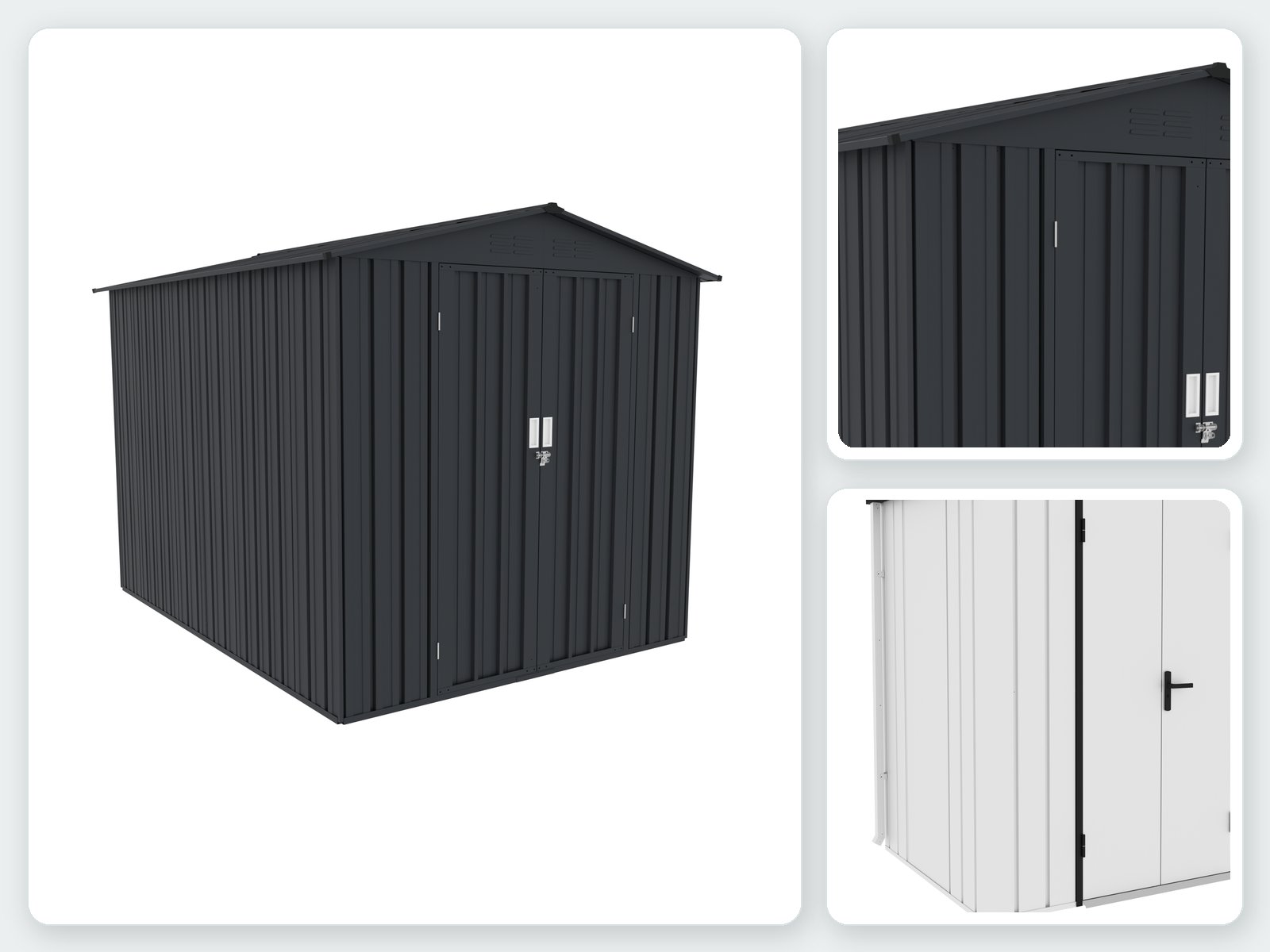
Optional equipment can change the product position and the quotation total. LERYOU product records include selected configurations with simple floating bases, PP floors, shelves, tool hooks, hanging racks and locks. These items are not universal.
Ask each supplier to mark every item as standard, optional, incompatible, or requiring development. Use the same method for vents, skylights, windows, door hardware and storage accessories. If an option changes the manual, hardware list or carton arrangement, that change belongs in the quotation scope.
5. Compare packaging, parts identification and documentation
For a flat-pack product, packaging is part of the product offer. The quotation should state the expected package breakdown and identify who will confirm the carton structure after the model is fixed. Buyers should also ask how panels, long profiles, hardware and instructions are separated and identified.
A complete comparison should cover:
- carton count and final carton dimensions after configuration approval;
- protection for panels, edges, profiles and hardware;
- parts list and hardware identification;
- assembly manual language and version;
- carton marks, labels, barcodes and private-label artwork;
- buyer approval responsibilities and revision records.
Do not compare estimated container quantities before the final SKU, packaging version and loading assumptions are confirmed. For packaging-specific questions, see LERYOU’s flat-pack packaging guide.

6. Make sample and change approval visible
A sample is useful only when both parties know what it represents. Record whether it is a standard model sample, an appearance sample, a packaging mock-up or a pre-production reference. If a sample does not include final color, accessories, artwork or packaging, those exclusions should be written down.
Each change should have a revision, owner and approval status. A quotation based on one revision should not be compared with an offer based on another. The same controlled version should flow into the specification, sample comments, manual, parts list, packaging artwork and inspection criteria.
7. Confirm inspection and shipment-document scope
Inspection terms are not interchangeable. Ask what documents, samples or agreed checkpoints will be available before shipment. If third-party inspection is required, define the scope separately rather than assuming it is included in the product price.
For shipment preparation, identify who supplies the commercial invoice, packing list, carton marks, origin information and any order-specific supporting documents. Container quantity, gross and net weight, carton count and delivery timing must come from the final order and packaging data, not a generic website statement.
Il pre-shipment inspection checklist can support this stage.

A practical quotation comparison table
| Field | Supplier A | Supplier B | Open point/owner |
|---|---|---|---|
| Product family and intended channel | |||
| External and base dimensions | |||
| Roof, wall, frame and finish | |||
| Door type and clear opening | |||
| Base, floor and accessories | |||
| Cartons, protection and parts identification | |||
| Manual, labels and artwork | |||
| Sample and revision status | |||
| Inspection and shipment documents | |||
| Commercial terms and stated exclusions |

Frequently asked questions
No. Use nominal size only as a merchandising reference. Compare external dimensions, base size, height, door opening and packaging data for the exact model.
No. Panel form, frame, connections, roof, base, product size and assembly all contribute to the complete system. Ask for evidence tied to the selected configuration.
The offer should identify the product configuration, included components and options, expected packaging and documentation scope, sample or approval assumptions, inspection scope and commercial exclusions.
Treat early figures as estimates only. Final loading information requires the approved SKU mix, carton dimensions, weights and loading method.
Send the target market, sales channel, product family, preferred size direction, roof and door requirements, intended stored items, quantity range, packaging and branding needs, destination and mandatory performance or documentation requirements.
Send a like-for-like RFQ for review
Review the wholesale metal garden shed program, learn about LERYOU’s product development and supply capabilities, oppure send your RFQ. Company background is available on the About LERYOU page.
Source note: Product-family, configuration and size examples in this guide are based on LERYOU’s current internal product records reviewed on 12 September 2026. Availability and performance evidence must be confirmed for the selected model and order.

 English
 Deutsch
 Français
 Español
 Italiano
 Polski
 日本語
日本語 한국어
한국어 Nederlands
 Čeština
 Português do Brasil
 Русский