For garden-category buyers, importers and private-label teams
A cold frame is usually a low glazed box with an opening lid; a mini greenhouse is a broader compact-growing term; and a greenhouse cabinet is an upright enclosure that can use shelves. The formats should be compared by plant task, footprint, vertical space, access, ventilation and packaging—not by name alone.
The Royal Horticultural Society distinguishes low cold frames from upright mini-greenhouses and notes that ventilation, wind exposure and shelf shading can affect use. For sourcing, those gardening questions must be translated into a controlled product brief.
Short answer: three compact-growing roles
| Format | Typical physical direction | Buyer should confirm | Possible retail role |
|---|---|---|---|
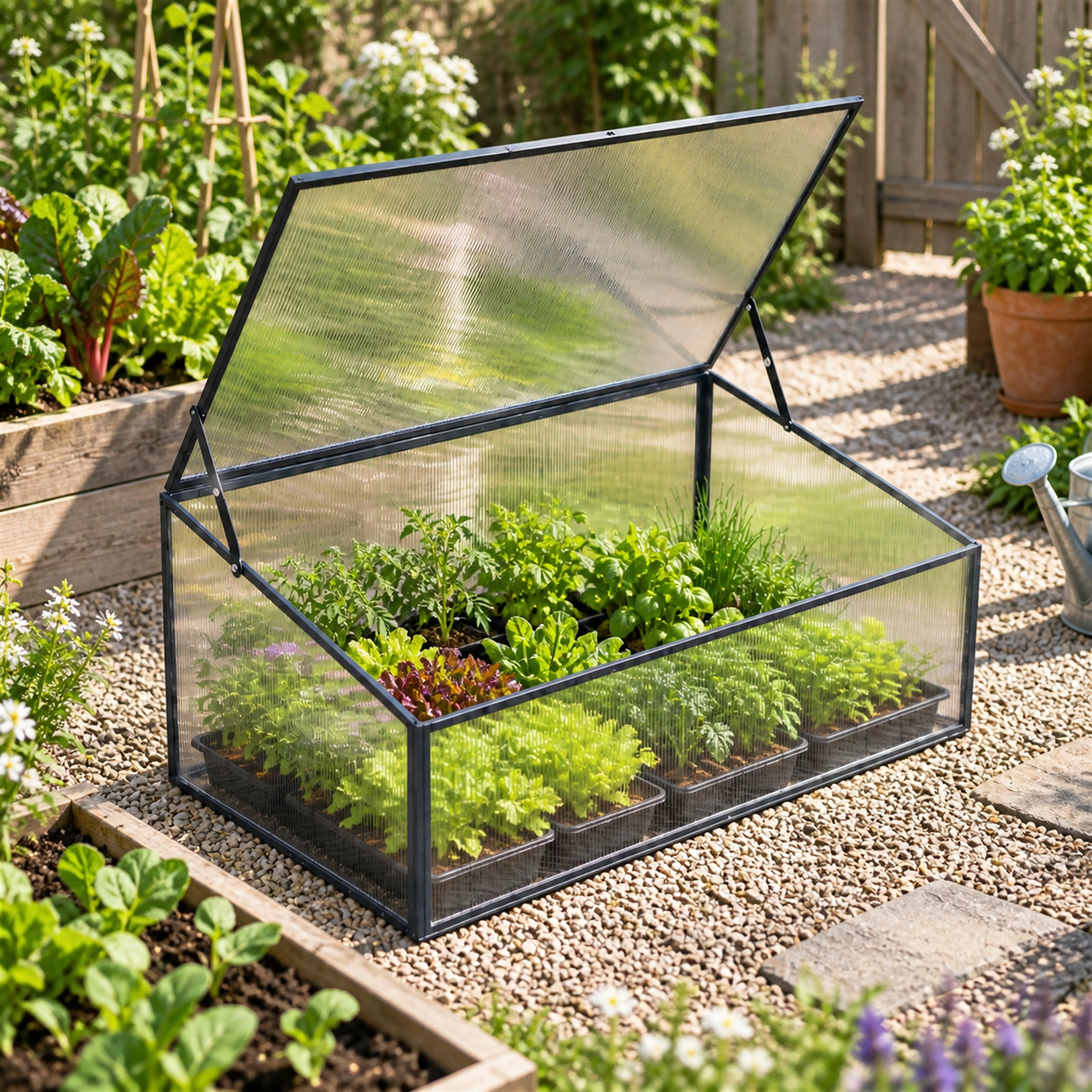
| Cold frame | Low box with one or more sloping glazed lids | Footprint, lid opening, access side, ventilation positions and ground contact | Propagation, hardening-off and low-level seasonal growing tasks |
| Mini greenhouse | Compact enclosure; the term can cover several forms | Actual height, walk-in or non-walk-in use, doors, vents, shelves and panels | Space-conscious gardening range with a clearly defined form |
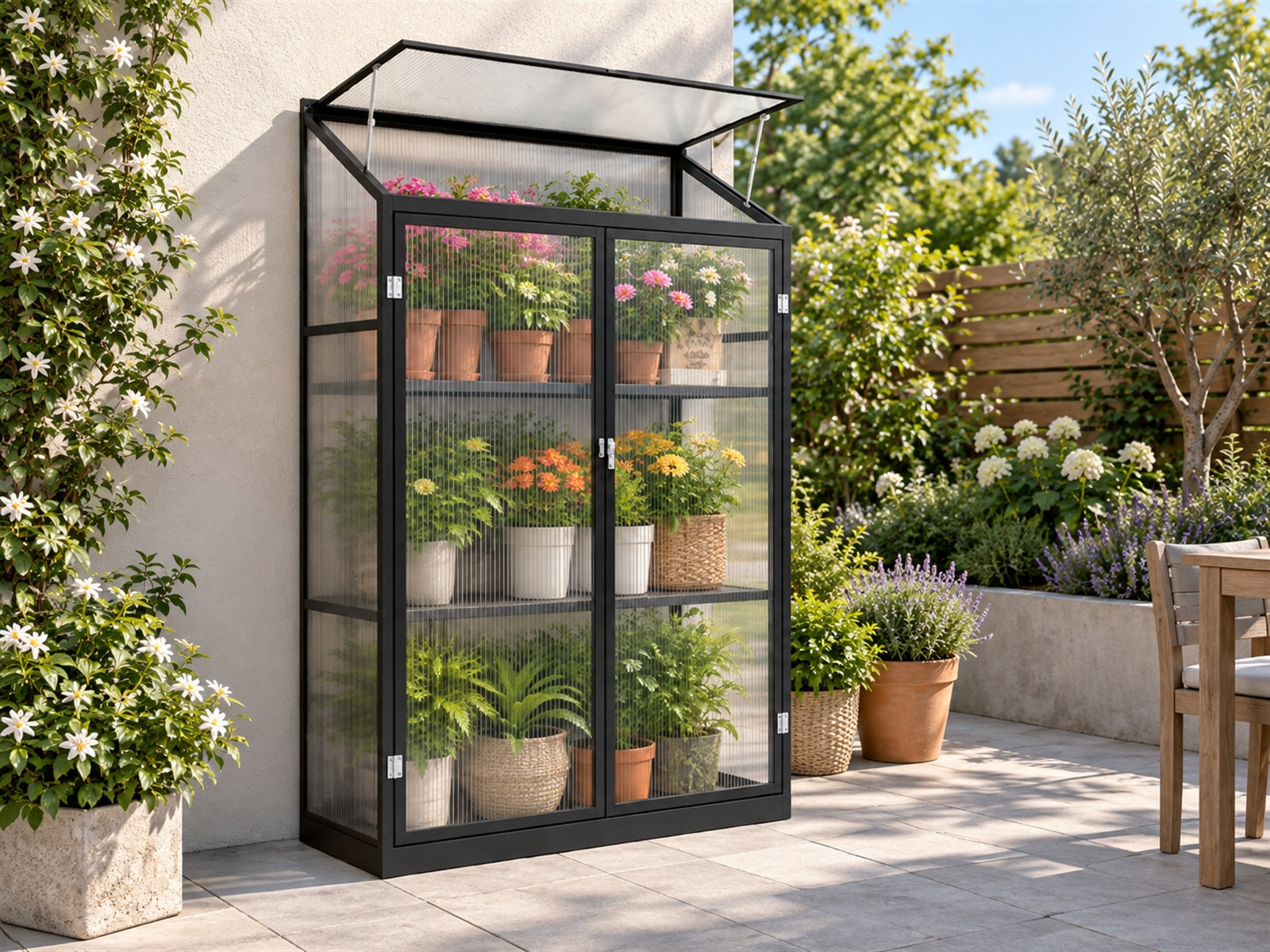
| Greenhouse cabinet | Upright cabinet-like enclosure, often with shelf levels | Shelf spacing, front access, usable height, panel opening and stability requirements | Vertical growing and display within a smaller footprint |
Because “mini greenhouse” is not one fixed construction, the product drawing and configuration should lead the listing. Do not copy a competitor’s size, capacity or performance claim into another supplier’s specification.
Cold frames: low access and seasonal plant tasks
A cold frame puts the growing area close to ground level. One or more lids can provide access and ventilation. The sloping lid direction, opening mechanism and available clearance should be visible in the drawing and instructions. Buyers also need to know whether the unit sits directly on soil, a prepared surface or another base arrangement.
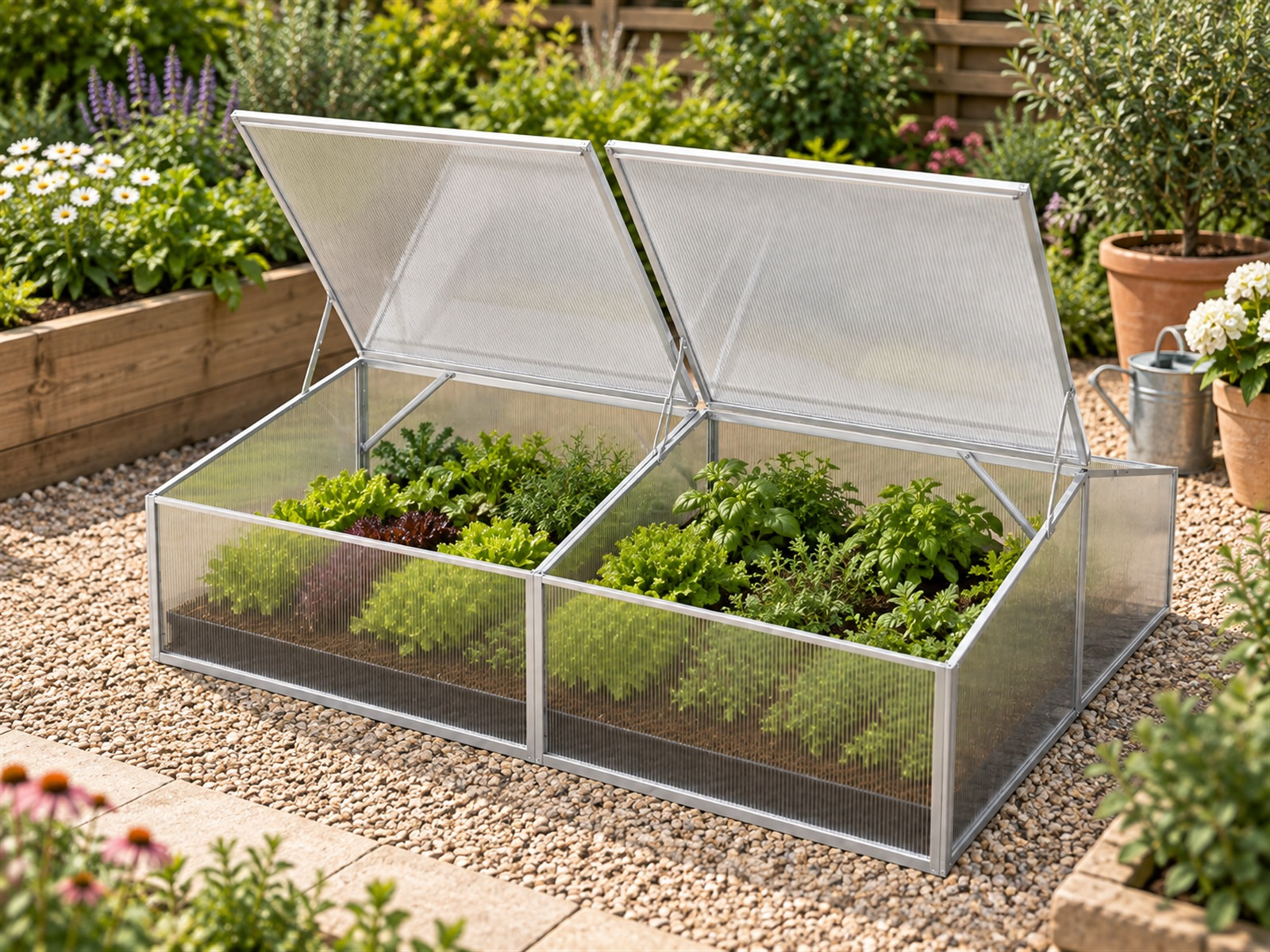
A single-compartment and double-compartment cold frame can support different assortment steps, but the distinction should reflect usable growing area and lid control—not only a product name. Packaging must protect long frame parts and panels, and instructions should show the selected version.
Mini greenhouses: define the form before comparing
“Mini greenhouse” can describe a small freestanding enclosure, a wall-side unit, a compact cabinet or another non-full-size product. A buyer should replace the broad label with a form: upright or low, walk-in or non-walk-in, shelved or open, hinged or sliding access, freestanding or wall-side.
Then confirm the use case. Seed starting, hardening off, protecting young plants and maintaining a compact display can require different shelf spacing, access and ventilation. No one configuration should be presented as ideal for every plant or climate.
Greenhouse cabinets: use height intentionally
A greenhouse cabinet offers an upright enclosure within a relatively compact ground footprint. Shelves can organize trays or pots at multiple levels, but shelf shading, spacing and access should be reviewed. If shelves are adjustable or optional, that must be stated for the selected configuration rather than assumed across the family.
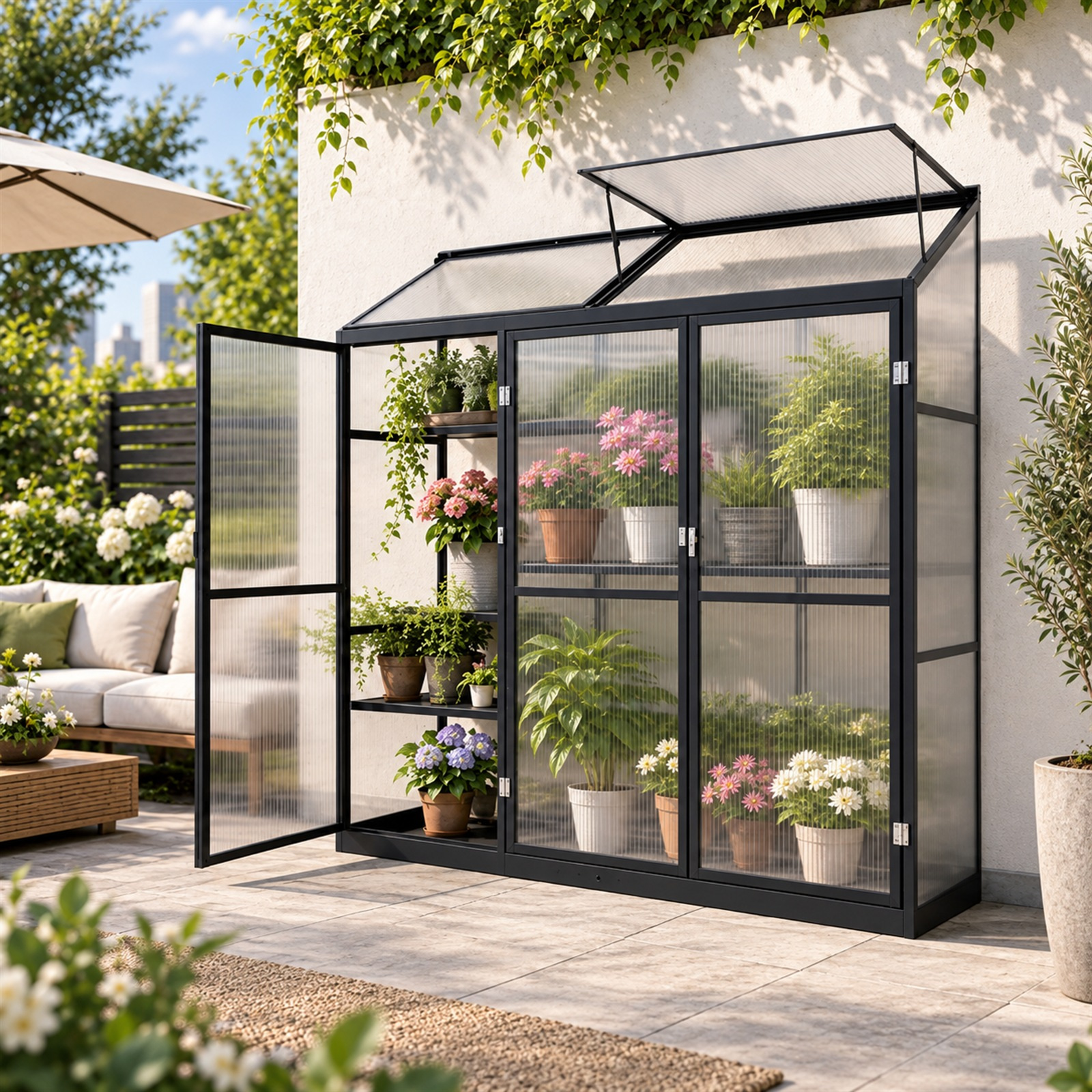
Front panels or doors affect how users reach each level. Confirm opening direction, clear width, catches or hardware and any ventilation positions. The listing should show which panels open and which are fixed.
When a full greenhouse belongs in the comparison
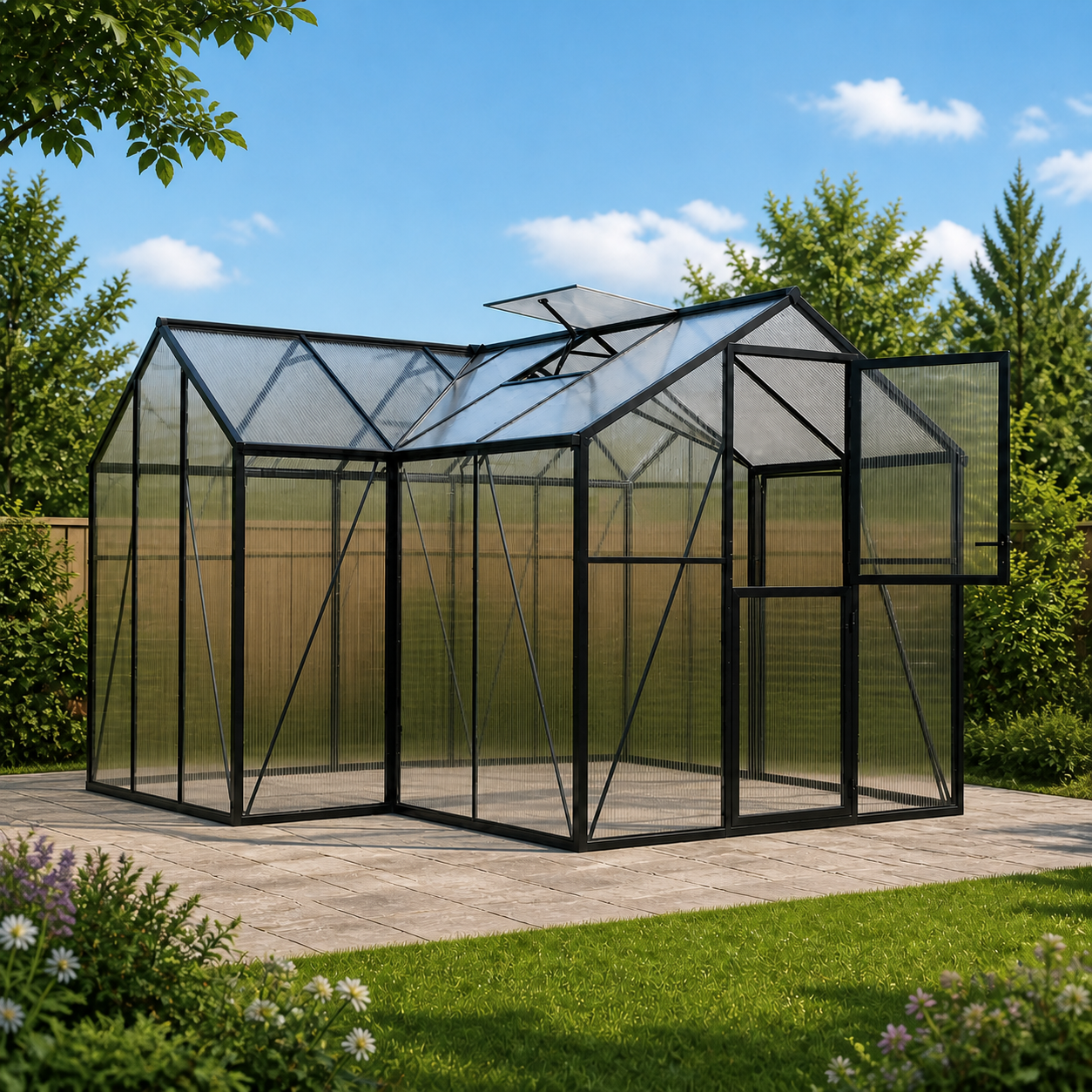
A full greenhouse serves a different spatial task when the user needs a larger growing area or walk-in access. It should not be treated as a simple size upgrade without checking structure, foundation or base, doors, vents, glazing or panel material, and destination requirements.
Retail data that prevents listing confusion
- external width, depth and height;
- usable growing dimensions and shelf spacing;
- door, panel or lid clear opening;
- panel and frame material direction for the selected product;
- ventilation method and opening positions;
- shelf, base and hardware inclusions or options;
- assembly level, parts list and manual version;
- carton dimensions, weights, labels and branding fields after approval.
The same data should appear consistently in the quotation, product data sheet, packaging artwork and listing. If a feature is optional, label it as optional instead of allowing images to imply it is included.
How to build a compact-growing range
Start with shopper tasks rather than adding sizes at random. A low cold frame can serve ground-level propagation and hardening-off. An upright greenhouse cabinet can address vertical organization. A clearly defined mini-greenhouse format can bridge a particular space or channel need. A full greenhouse then sits in a different range tier.
다음 내용을 검토하십시오. cold frame sourcing page, the outdoor greenhouse cabinet page and LERYOU’s nursery and growing category before preparing the product brief.
RFQ checklist for compact-growing products
- Target market, sales channel and intended plant task.
- Cold frame, cabinet or other mini-greenhouse form.
- Maximum footprint and height.
- Usable growing area, shelves and spacing.
- Door, panel or lid access and ventilation direction.
- Frame, panel, base and hardware requirements.
- Packaging, manual, labels, branding and listing data.
- Quantity range, destination and required product-specific evidence.
How compact-growing terms vary across retail listings
Cold frame, mini greenhouse and greenhouse cabinet are useful search and merchandising terms, but retailers do not always apply them in the same way. A low glazed unit with a lifting lid is normally compared as a cold frame, while an upright enclosure may be described as a mini greenhouse, compact greenhouse or greenhouse cabinet according to its shelves, access and height.
For product data and supplier enquiries, connect the market-facing name to a drawing or approved product specification. Record the external footprint, usable growing levels, access panels, ventilation, frame and glazing instead of treating the category label as a technical definition. Buyers can also review LERYOU’s nursery and compact-growing range when planning adjacent products.
자주 묻는 질문
콜드 프레임은 일반적으로 경사진 뚜껑이 있는 낮은 유리 상자이며, 미니 온실은 보통 수직형 소형 구조물입니다. 소싱 시 명칭에만 의존하지 말고 실제 도면, 출입 방식, 환기 및 재배 공간 배치를 확인하십시오.
더 넓은 소형 재배 카테고리에 포함될 수 있지만, 캐비닛 형식은 일반적으로 직립형 접근과 선반을 강조합니다. 리테일러는 필요한 높이, 선반 배치, 도어 또는 패널, 그리고 의도된 식물 생육 단계를 정의해야 합니다.
수직형 캐비닛은 컴팩트한 설치 면적 내에서 더 많은 수직 재배 단을 제공할 수 있지만, 실제 사용 가능한 선반 간격과 접근성을 반드시 확인해야 합니다. 낮은 콜드 프레임은 더 넓은 지면 면적을 사용함에도 불구하고 다른 작업에 적합할 수 있습니다.
모든 사용 사례에 해당하는 것은 아닙니다. 완전한 온실은 걸어 들어갈 수 있는 재배 공간을 제공하는 반면, 콜드 프레임이나 캐비닛은 더 컴팩트한 작업에 적합합니다. 올바른 비교는 사용자 여정, 식물의 생육 단계, 사용 가능한 부지에 따라 달라집니다.
대상 채널, 제품 역할, 외부 및 사용 가능 치수, 패널 및 프레임 방향, 출입구, 환기, 선반, 베이스 인터페이스, 포장, 설명서, 브랜딩, 수량 범위 및 도착지 요구 사항을 확인하십시오.
Editorial source
The gardening definitions used in this comparison were checked against the Royal Horticultural Society guidance on cold frames and mini-greenhouses. Product availability and specifications remain LERYOU-specific and must be confirmed separately.
Prepare a compact-growing range brief
Send LERYOU the target plant task, footprint, access and shelf requirements. The team can help separate product-family choices before quotation.
 English
 Deutsch
 Français
 Español
 Italiano
 Polski
 日本語
日本語 한국어
한국어 Nederlands
 Čeština
 Português do Brasil
 Русский