For garden-product importers, retailers, distributors and private-label sourcing teams
A supplier evaluation should test whether the business can control the complete product program—not simply whether it can quote a low price. Buyers need consistent product data, sample and drawing control, quality checkpoints, packaging files, change management and evidence that matches the offered configuration.
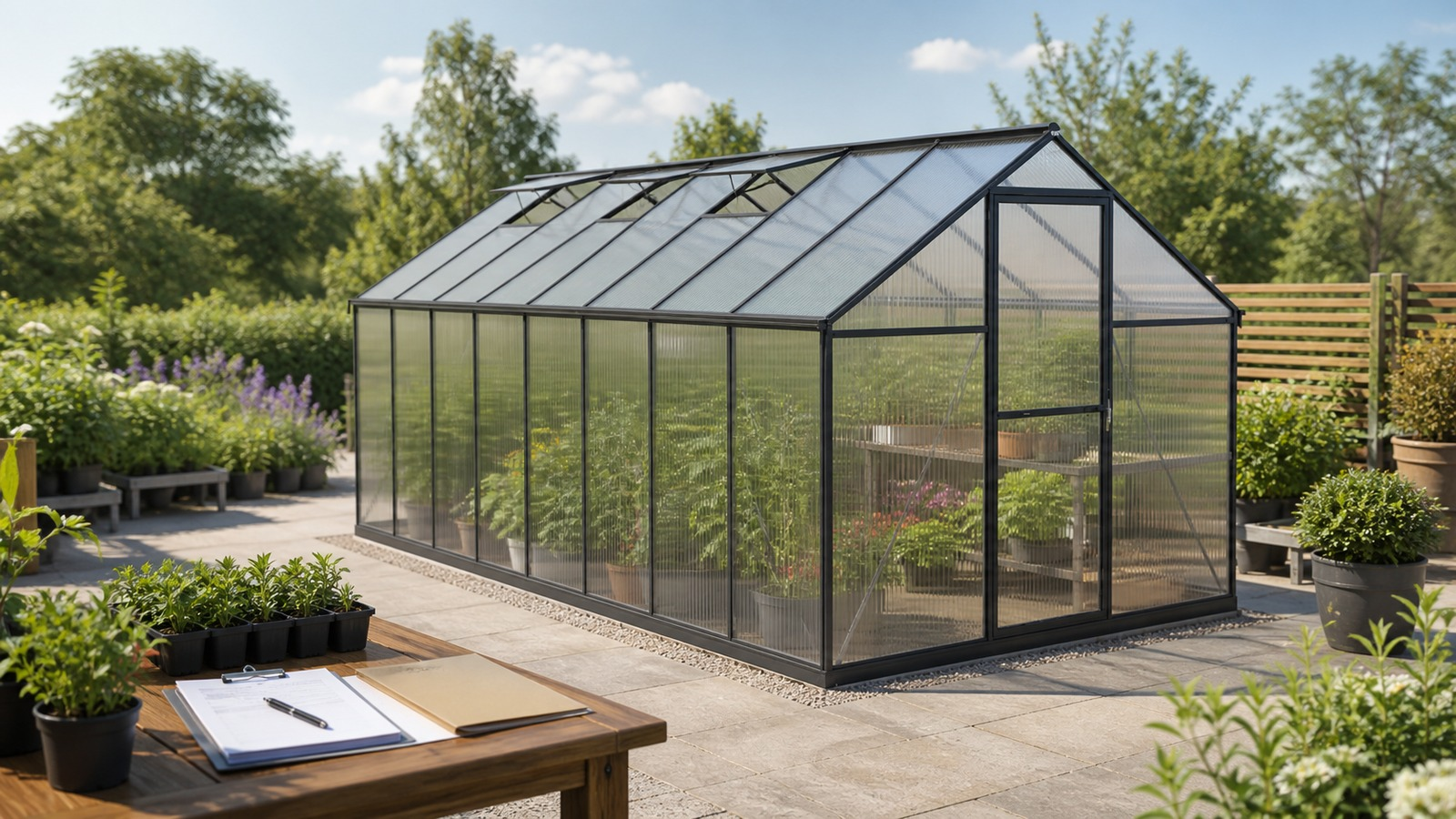
Short answer: how should buyers evaluate a garden product supplier?
Build a compliance matrix from one RFQ and compare each supplier on the same product scope, specification, sample, documentation, quality plan, packaging, delivery assumptions, exclusions and change-control process. Reject unsupported claims and separate the supplier’s quoted price from buyer-side costs or risks caused by missing scope.
| Evaluation area | Evidence to request | Risk if missing |
|---|---|---|
| Product scope | Controlled specification, drawing, options and exclusions | Quotes describe different products |
| Product data | Dimensions, materials, components, packaging and claims basis | Listings and cartons conflict with supply |
| Sample approval | Sample record, revision, deviations and signed decisions | Production changes are not traceable |
| Quality control | Incoming, in-process, final and packaging checkpoints appropriate to the product | Inspection focuses on appearance but misses configuration |
| Packaging | Pack-out, carton data, labels, manual and handling protection | Damage, listing errors and loading estimates |
| Change control | Approval route for material, component, artwork or process changes | Unapproved substitutions enter production |
1. Confirm category and product-fit capability
A supplier may be experienced in one category but weak in another. Define whether the project concerns garden sheds, greenhouses, outdoor storage, outdoor living or a mixed assortment. Ask which product families, materials, structures and packaging routes the supplier can support with current evidence.
LERYOU’s current website presents garden sheds, greenhouse and growing products and outdoor storage solutions. Product availability remains configuration-specific.

2. Normalize the specification before comparing price
Send the same brief to every supplier. Require them to mark compliance, alternatives, options, exclusions and assumptions line by line. A lower total can reflect missing panels, floors, accessories, packaging, testing, documents or delivery scope rather than a lower price for the same product.
3. Evaluate the approval system
Ask how drawings, samples, colour/finish references, manuals, packaging and artwork are approved and revised. Every approval should have an owner, date and revision. If the supplier proposes an alternative, require a written explanation of what changes and which downstream files are affected.

4. Review quality controls at the right stages
A suitable plan can include material or component checks, in-process checks, assembly or fit review, finished-product inspection and packaging verification. The exact checkpoints depend on the product. Do not accept generic “100% quality” language without a defined method and acceptance criteria.
5. Audit packaging and after-sales identification
For flat-pack outdoor products, cartons, hardware bags, labels, instructions and part codes are part of the customer experience. Ask how missing or damaged parts are identified and how the supplier connects after-sales questions to a product revision.
6. Separate evidence from marketing statements
Certifications, tests, patents, load statements, corrosion claims, warranties and sustainability statements must be linked to the responsible entity, product, standard, scope and validity. A document for another model or supplier should not be reused as proof.

Garden product RFQ checklist
- Buyer company, market, channel and intended customer.
- Product family, use case and target range role.
- Dimensions, materials, structure, access and required options.
- Performance criteria and destination-market documentation.
- Quantity range, destination, Incoterm or delivery boundary to be quoted.
- Branding, labels, manual languages, packaging and artwork.
- Sample, drawing, testing, inspection and approval process.
- Required commercial breakdown, exclusions, assumptions and validity.
- Change-control and after-sales identification process.
Simple supplier scoring approach
Use mandatory gates first: legal identity, product scope, required documents, minimum technical compliance and willingness to disclose assumptions. Then apply weighted scoring to product fit, quality control, packaging, documentation, communication, schedule evidence and commercial terms. Do not let a price score compensate for a failed mandatory requirement.
Frequently asked questions
No. First normalize the product and supply scope. Compare price only after mandatory technical, documentation and commercial requirements are clear.
There is no single document. The specification, drawing, sample record, quality plan, packaging files and quotation must describe the same approved product.
Require every alternative to identify the changed assumption, affected components, performance, documents, packaging, schedule and price before approval.
The governance framework can be shared, but product-specific fields and acceptance criteria must be added for each category and configuration.
Discuss a controlled garden-product RFQ
Review LERYOU OEM/ODM and quality-control capabilities or send the target product family, market, channel, specification, quantity range and packaging requirements.
Content scope reviewed against LERYOU’s current product knowledge records in September 2026. Final specifications, packaging, evidence and supply scope must be confirmed for the selected product and destination market.
 English
 Deutsch
 Français
 Español
 Italiano
 Polski
 日本語
日本語 한국어
한국어 Nederlands
 Čeština
 Português do Brasil
 Русский