
Choose greenhouse benches and shelves around three things: the plants they will carry, the room needed to work, and the structure supporting them. A long bench may suit seed trays, while a narrow shelf can keep small pots within reach. Filling every wall with shelving can leave too little space for tall crops, opening windows or moving through the greenhouse.
For retailers and importers, the strongest accessory range makes those choices clear. Customers need to understand which unit fits their greenhouse, what is included and how to use the space comfortably. This guide compares the main options and the details to include in a purchasing specification.
What is the difference between greenhouse benches, staging and shelves?
In the UK, greenhouse staging usually means a raised surface for pots, seed trays and everyday growing tasks. A greenhouse bench serves a similar purpose. It can stand on its own legs or attach to a compatible frame. A shelf is generally a narrower surface used above or alongside the main growing area.
A potting bench adds a work area for handling compost and repotting. Features such as a tray edge or storage below can make that task easier. Tiered shelving offers several levels for smaller plants, but each level also changes how much light and growing height remain underneath.
| Option | Useful for | Main buying check |
|---|---|---|
| Freestanding bench | A growing or work surface that can be repositioned | Floor stability, footprint and door access |
| Frame-mounted staging | Growing space with an open floor below | Compatible profiles, brackets and attachment positions |
| Narrow upper shelf | Small pots and trays above a main bench | Reach, headroom, shading and opening-window clearance |
| Tiered stand | Several levels of compact plants | Space between levels and access to the rear pots |
Garden staging or commercial rolling benches?
A garden greenhouse usually needs a convenient place for seed trays, pots and everyday planting work. Commercial production houses may instead use long rolling benches that move sideways to create a shared access aisle. Those systems are selected together with production flow, irrigation and the growing area. For a retail garden greenhouse range, start with usable shelf space, easy access and compatible fittings. A higher-density commercial layout answers a different purchasing need.
Plan the growing layout before choosing a bench size
Measure the usable interior
Start with the inside dimensions rather than the greenhouse’s advertised footprint. Allow for upright frames, diagonal braces, gutters, door travel and the working movement of windows. A bench that fits between two walls may still obstruct the doorway or make it difficult to reach the end of the greenhouse.
Mark the proposed bench depth on the floor. Walk through while carrying the largest tray or watering can normally used. Check that a person can turn, reach the farthest pot and open the door without moving equipment. For a freestanding unit, include its feet and any projecting top edge in the measurement.
Leave growing height for the plants
Small greenhouse shelves work best when their position follows the crop plan. A narrow shelf can hold seedlings without taking over the floor, but tall plants need uninterrupted space above their containers. Keep part of the greenhouse available for plants that will outgrow the bench area during the season.
More tiers do not automatically produce more useful growing space. Deep upper shelves can shade plants below. Consider pot height, the height of the mature plant and how easily the user can water each level. A single accessible surface can be more useful than several crowded shelves.
Keep windows and air paths clear
Place the complete shelf and its contents clear of opening windows and operating arms. Include the height of plants and trays when checking this, rather than measuring the empty shelf alone. Leave space around pots so that plants do not form a dense barrier along the wall. Our greenhouse ventilation buying guide explains how opening positions and airflow belong in the wider specification.
Compare aluminium, steel and timber by the complete construction
Aluminium greenhouse benches are popular because they are relatively light and suited to damp growing environments. Slatted designs provide gaps for water to pass through. Nevertheless, the whole assembly matters: the shelf surface, carriers, joints and fixings can use different materials.
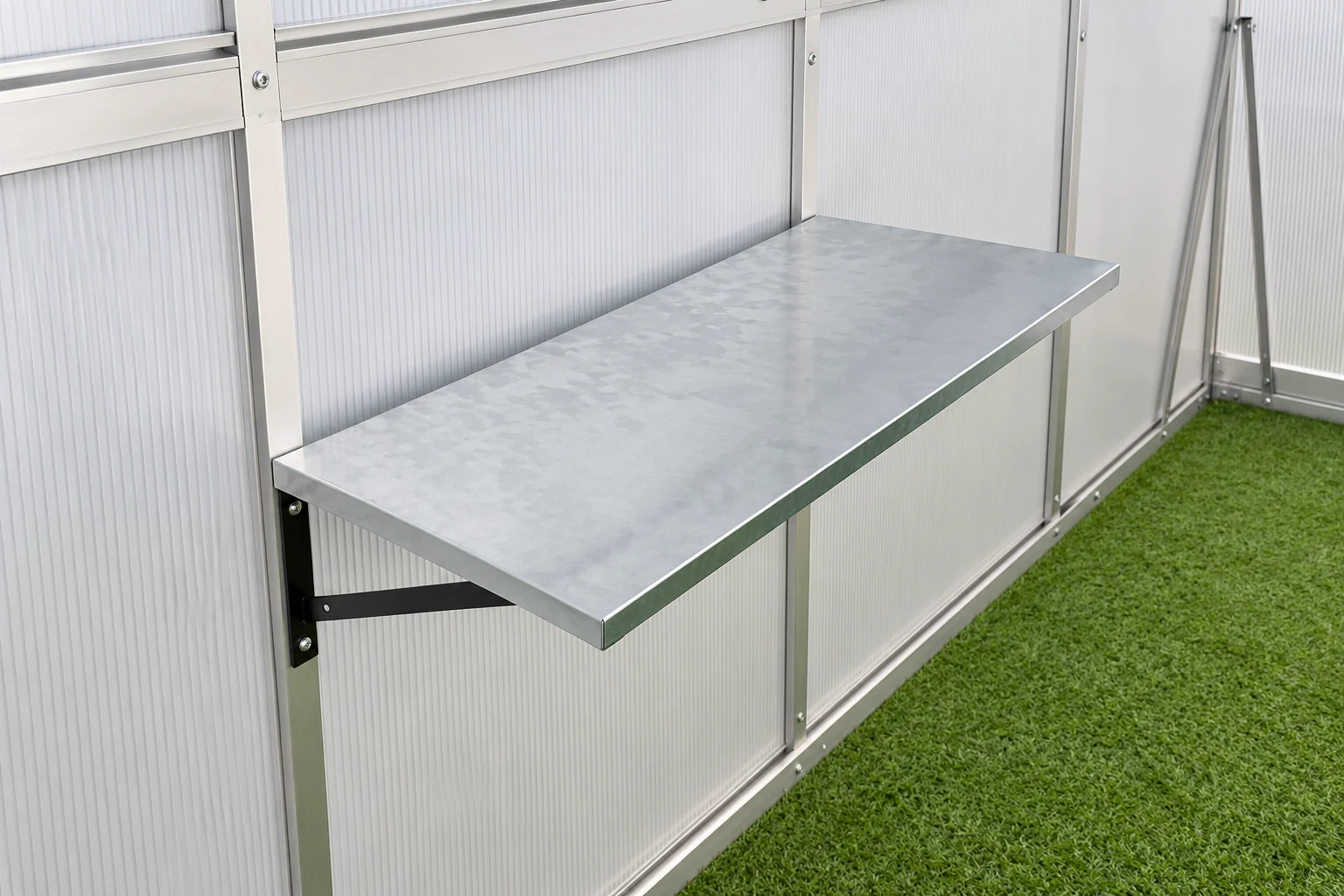
Steel offers another route for benches and shelves. Look at the protective finish, edge construction and how the product can be cleaned after use. A galvanised shelf and a painted support bracket perform different jobs within the same assembly. Scratched coatings and persistent trapped water deserve attention during normal care.
Timber can work well in a greenhouse, particularly where its appearance is important, but it brings different care requirements. Compare the timber specification, surface condition and ease of cleaning. Avoid choosing solely by the material name: drainage, support spacing and the quality of connections affect day-to-day usefulness.
Match the top surface to the task
Slatted or mesh surfaces let water drain through, so the area beneath must also be considered. A solid top can be useful for working with small pots or collecting loose material in a removable tray. Check how water leaves the surface and whether trays can be lifted out for cleaning. Open shelves are not a substitute for deliberate watering and drainage arrangements.
Check frame compatibility and load information
A frame-mounted shelf transfers its weight to the greenhouse structure. Matching the visible colour or choosing a similar bolt does not establish compatibility. Compare the greenhouse model, profile shape, fixing channel, bracket arrangement and intended installation height before ordering an attached accessory.
Request the load limit for the exact shelf assembly and ask whether it applies to one shelf, one section or the whole unit. The loading arrangement also matters: a rating for weight distributed across a surface is different from placing one heavy container at its edge. Include wet compost, pots, plants and retained water when estimating use.
For freestanding benches, check that every foot has firm, level support and that the assembled unit is stable. The greenhouse foundation and base guide helps connect that decision with floor preparation and the surrounding installation.
How greenhouse shelving fits a LERYOU range
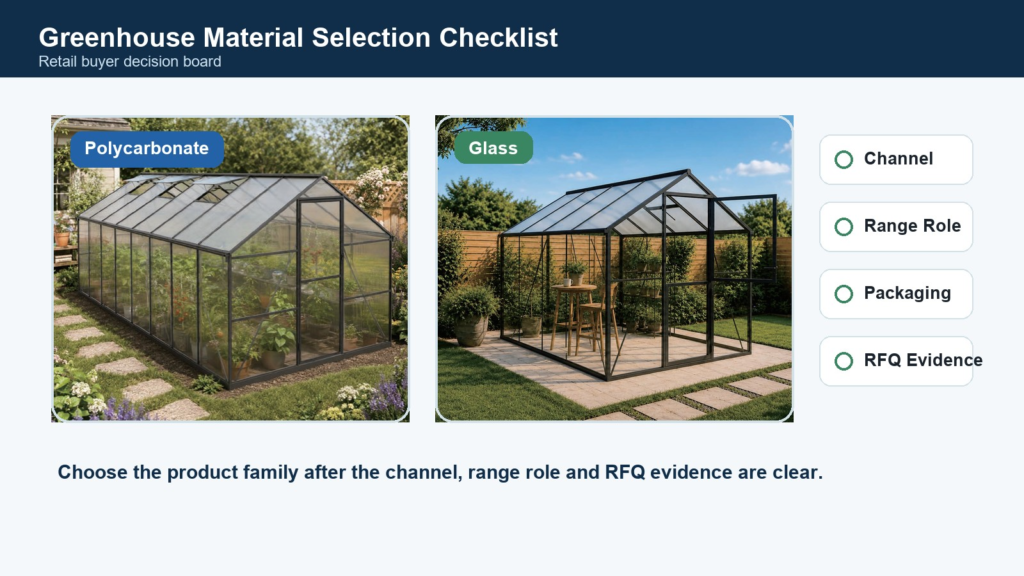
LERYOU offers greenhouse shelving as a configuration option within its greenhouse range. Buyers planning an enclosure and its accessories together can start with our polycarbonate greenhouse range and compare the growing layout alongside door and ventilation needs.
One compact shelving option combines a galvanised metal shelf surface with painted metal supports. This is a different construction from an all-aluminium slatted bench. Selecting the material for the greenhouse frame and selecting the construction of its accessories are separate purchasing decisions.
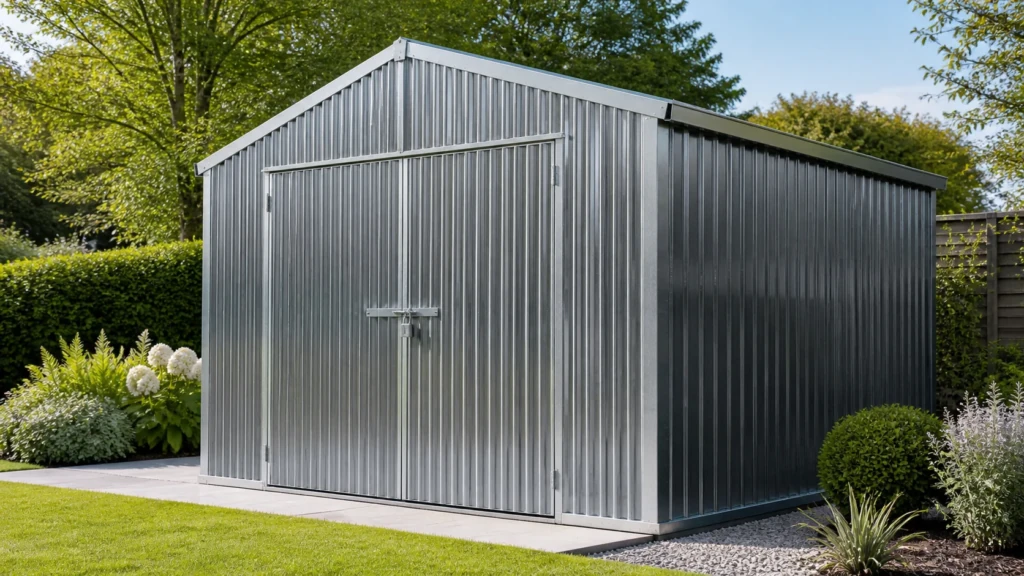
For an assortment that combines growing and storage, the glass greenhouse and storage shed combination also offers optional shelving for the growing area. Plan shelf placement alongside the connected access route so that pots and everyday equipment remain easy to reach.
What to include in a retail purchasing specification
A useful specification connects the accessory with a particular greenhouse and a clear intended task. Ask for the following information together:
- Greenhouse model, usable interior dimensions and planned shelf position.
- Overall shelf dimensions, working height, tier count and usable surface depth.
- Materials and finishes for the top, supports and supplied fixings.
- Load limits, support conditions and the loading arrangement used for the rating.
- Included brackets, fittings, assembly instructions and care information.
- Carton dimensions, part identification, labels and spare-component arrangements.
For a greenhouse-and-accessory bundle, list the shelves and fittings in the pack contents. Clear inclusion information helps customers compare ranges and plan the installation before delivery. Keep the same accessory names across the product listing, carton label and assembly instructions.
Frequently asked questions
Are greenhouse benches and staging the same?
They often describe the same raised growing surface. Staging is the common UK term. Compare its dimensions, support method and intended use rather than relying on the name alone.
Are aluminium greenhouse benches better than steel?
Each can be suitable. Aluminium is relatively light, while steel products use finishes such as galvanising or paint for protection. Compare the complete structure, joints, shelf surface, cleaning requirements and stated load limits.
What shelves work in a small greenhouse?
Narrow shelves, a single side bench or a compact tiered stand can make practical use of limited space. Choose around the doorway, walking route, plant height and available light. Keep every pot accessible for watering.
Can shelves attach to any greenhouse frame?
No. Frame-mounted accessories need compatible profiles, fixings and support positions. Select an accessory for the particular greenhouse model rather than assuming similar-looking frames take the same shelf.
How much weight can a greenhouse shelf hold?
Use the rating supplied for that exact shelf and mounting arrangement. Check whether it is a per-shelf or total-unit limit, and whether it requires evenly distributed loading. Include water and wet growing material in the total.
Should greenhouse shelves have gaps?
Gaps can help water drain through and leave openings around the growing surface. Solid tops can suit other working tasks. Choose the surface together with trays, watering practice and the position of plants underneath.
Are LERYOU greenhouse shelves included as standard?
Shelving is available as an option. Choose the required configuration and include its components in the order specification and pack contents.
Plan the greenhouse and its accessories together
A practical bench-and-shelf range makes room for plants, comfortable access and everyday maintenance. Share your greenhouse model, target market, proposed shelf layout and packaging needs with LERYOU to discuss a coordinated accessory configuration.
 English
 Deutsch
 Français
 Español
 Italiano
 Polski
 日本語
 한국어
 Nederlands
 Čeština
 Português do Brasil
 Русский
 ไทย
