
For greenhouse buyers, importers, product managers and private-label teams
Polycarbonate greenhouse panel thickness is an important field, but it is not a stand-alone quality grade. Buyers must review panel construction, protected surface, support spacing, retention, greenhouse geometry, market requirements, packaging and the evidence for the selected product.
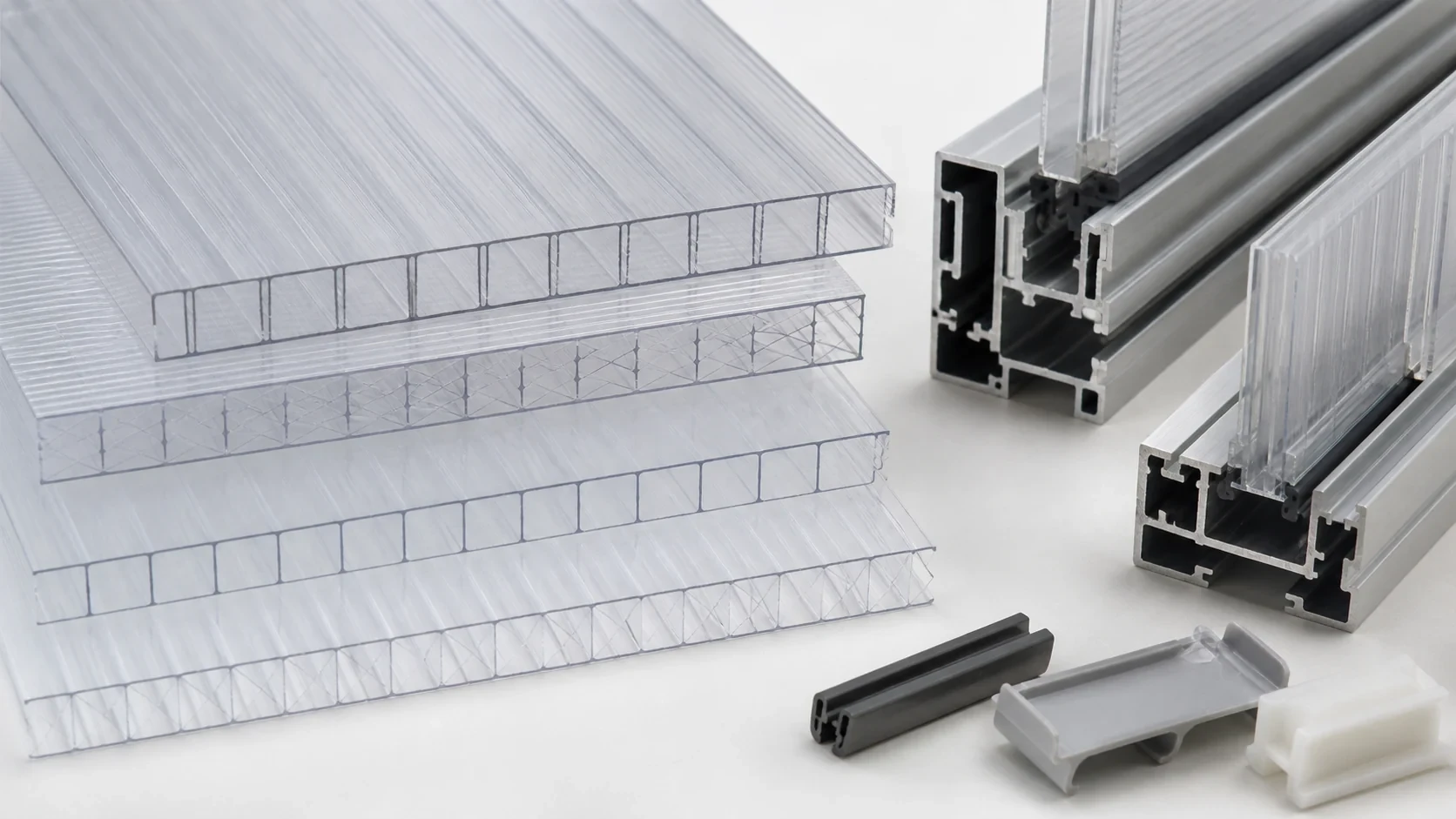
Short answer: what thickness should a greenhouse panel be?
There is no universal best polycarbonate greenhouse panel thickness. LERYOU’s current records include 4 mm twin-wall, 1.8 mm solid polycarbonate and selected 6 mm or 8 mm directions, but the applicable option depends on the greenhouse model, panel construction, frame spacing, connector system, size, target requirements and approved quotation.
| Recorded panel direction | How a buyer should use it | What still requires confirmation |
|---|---|---|
| 1.8 mm solid polycarbonate | A solid-panel direction listed for selected greenhouse products | Exact material, supported span, frame, retention, surface and model |
| 4 mm doppelwandiges Polycarbonat | A common recorded direction across selected standard, lean-to, cabinet and cold-frame products | Internal construction, frame spacing, orientation, edge treatment and product evidence |
| 6 mm polycarbonate | An upgraded direction recorded for selected greenhouse products | Exact panel construction, compatible profiles, selected model and claimed performance |
| 8 mm polycarbonate | A thicker direction recorded for selected greenhouse products | Availability, greenhouse design, packaging, evidence and commercial scope |
This table reports product-record directions; it does not assign universal performance values.
1. Identify panel construction
Nominal thickness does not reveal whether a sheet is solid or multi-wall, how internal ribs are arranged, which side carries surface protection or what tolerances apply. Request a specification that identifies construction, thickness, tolerance, colour/transparency direction, protected side, edge treatment and installation orientation.
2. Match the panel to frame spacing and retention
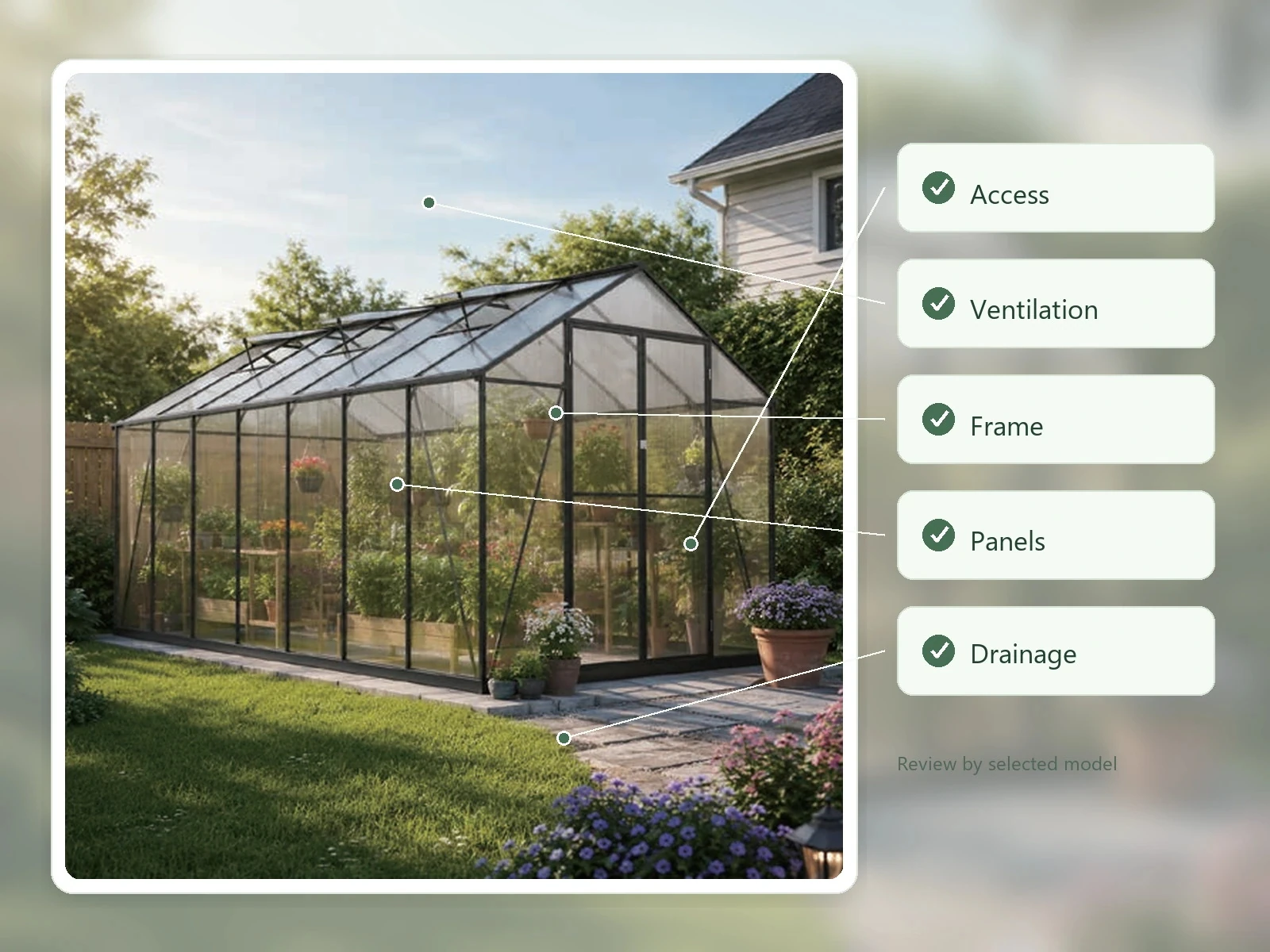
The panel works with roof and wall modules, aluminium profiles, connectors and edge engagement. A change in panel can require a review of profiles, clearances, fastening, manual steps and package protection. Do not approve a substitution using thickness alone.
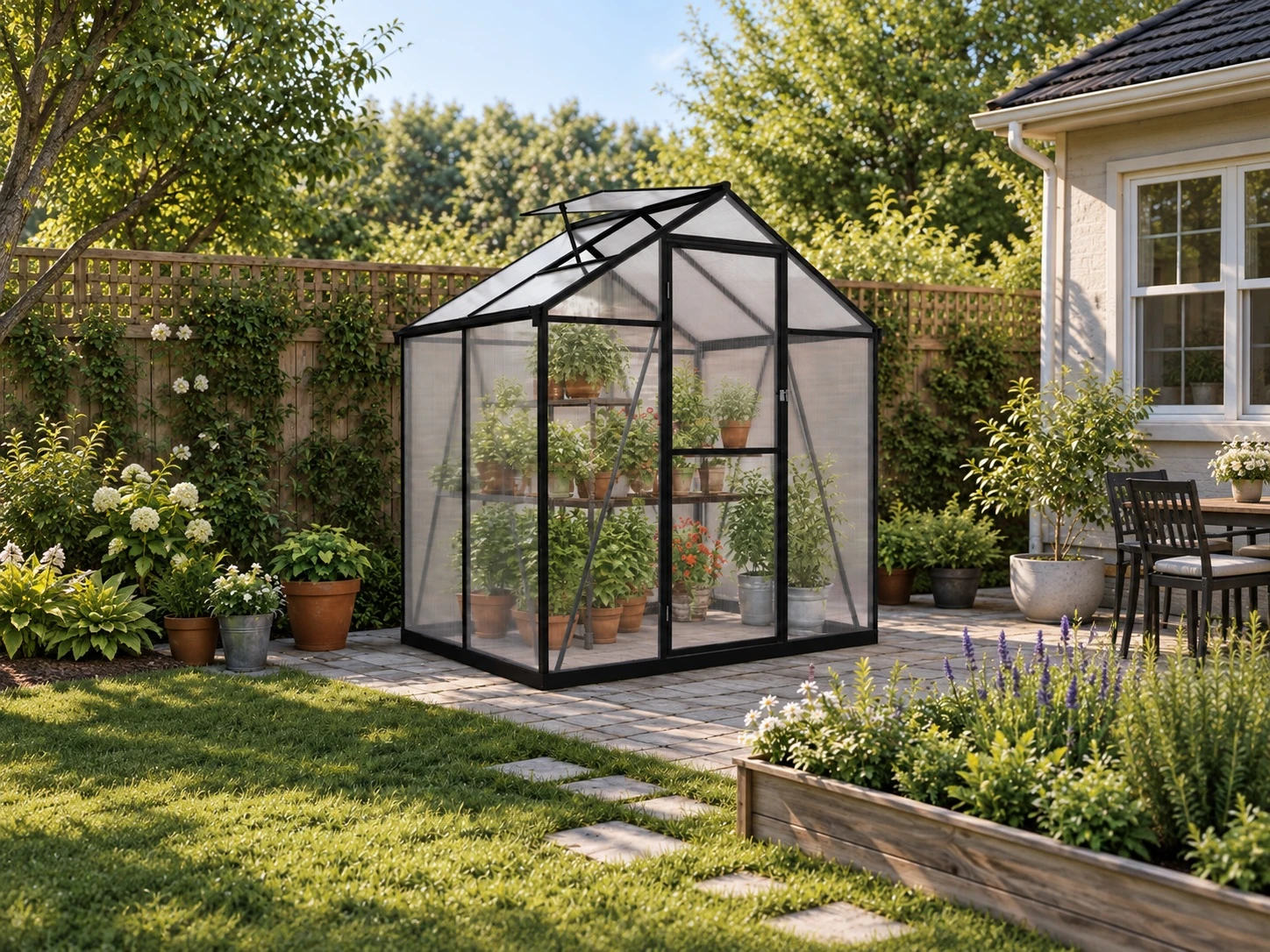
3. State market and site criteria
Provide destination, expected installation environment and required wind, snow, temperature or other criteria at the start. Any calculation, test or claim should identify the greenhouse model, size, frame, panel and conditions it covers. Local approval obligations remain a buyer-side market check.
4. Separate panel data from whole-greenhouse claims
Light, thermal or impact data for a material sample does not automatically describe the assembled greenhouse. Doors, windows, joints, profiles and air paths affect complete-product behaviour. Use component data precisely and avoid turning it into an unsupported whole-product promise.
5. Review orientation and edge instructions
The manual should show protected-surface orientation, top/bottom identification, connector engagement, end treatment, unpacking and cleaning guidance. These steps must match the supplied panel, not a generic manual reused across products.
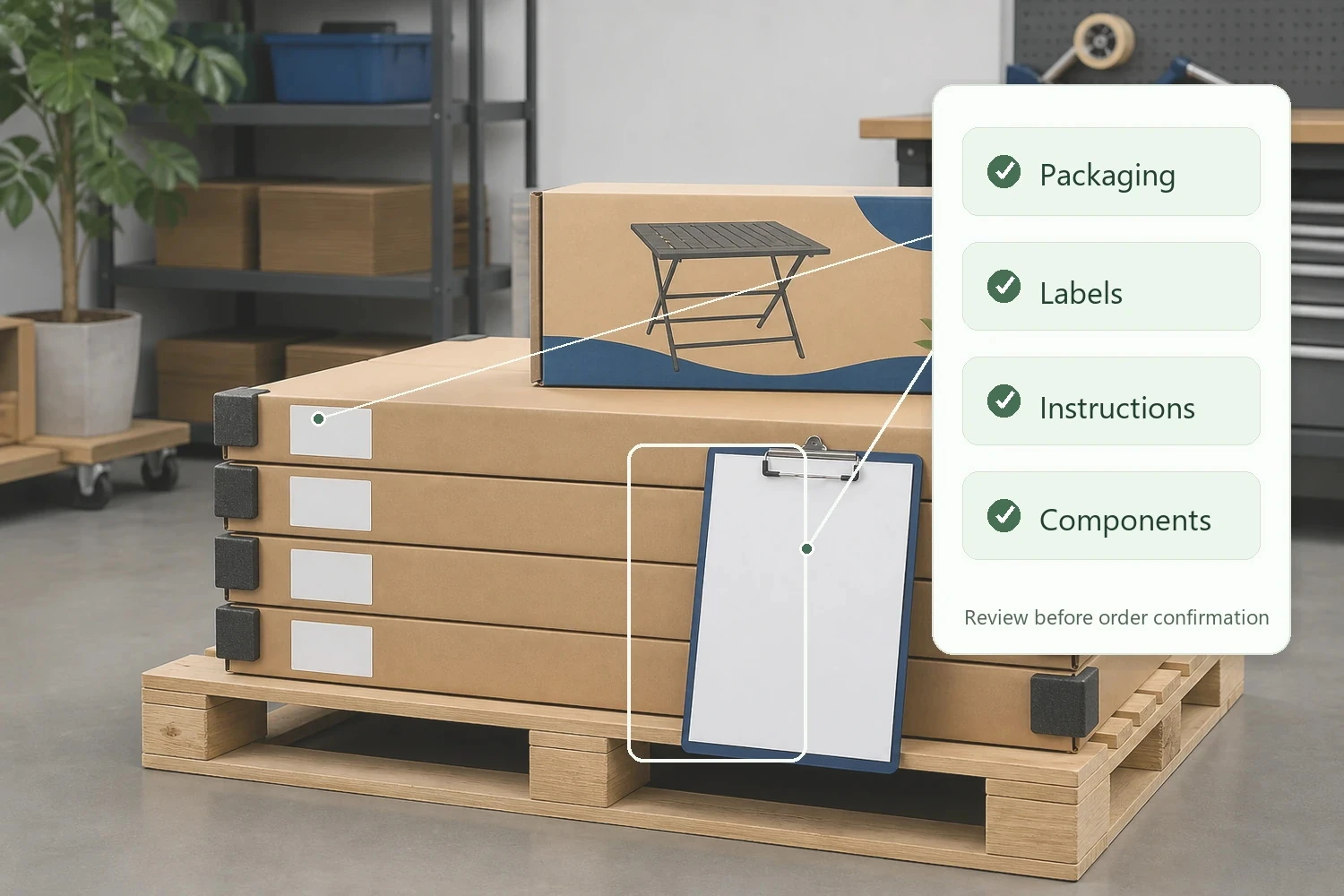
6. Include packaging in the decision
Long panels require separation and support to reduce abrasion, bending or edge damage. Confirm stack method, protective film, labels, separation from profiles and hardware, carton breakdown and storage instructions. Package data changes when the panel or greenhouse changes.
Panel specification checklist
- Greenhouse family, dimensions and geometry.
- Panel construction, nominal thickness and tolerance.
- Protected surface, transparency/colour and orientation.
- Roof/wall module sizes, support spacing and profiles.
- Retention, edge engagement and end treatment.
- Target criteria and supporting evidence.
- Package protection, labels, manual and change control.
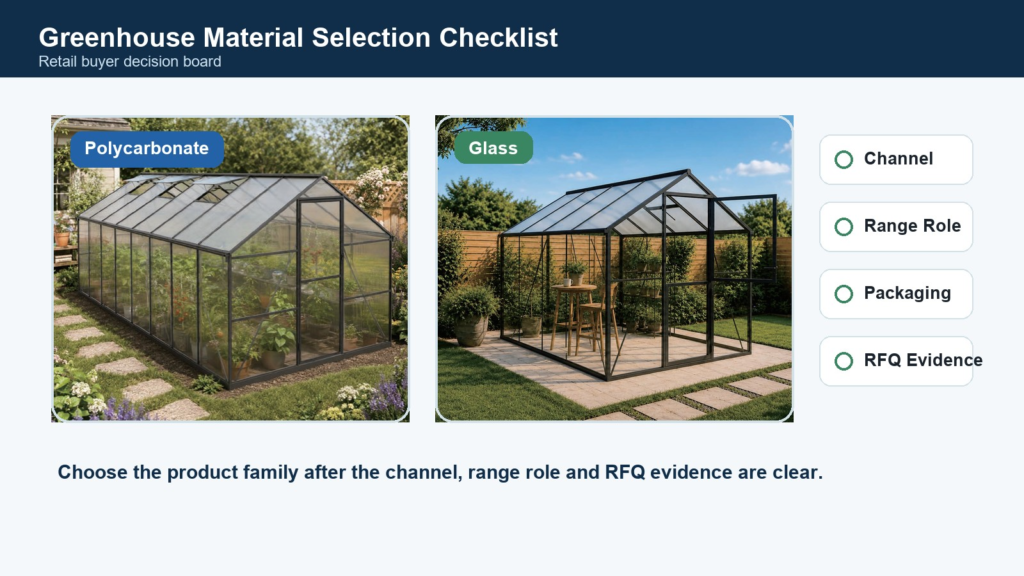
Überprüfen Sie die Sortiment an Gewächshäusern aus Polycarbonat und material selection checklist before finalizing the RFQ.
Häufig gestellte Fragen
In den aktuellen Unterlagen von LERYOU ist 4 mm Stegdoppelplatte aus Polycarbonat für ausgewählte Gewächshaus-, Anlehn-, Schrank- und Frühbeet-Ausführungen aufgeführt. Bitte bestätigen Sie die Eignung für das konkret angebotene Produkt.
Nein. Konstruktion, Stützabstände, Profile, Befestigung, Gewächshausgeometrie, Montage und Produktnachweis beeinflussen alle das Endergebnis.
Gehen Sie nicht davon aus. Abmessungen, Eingriffe, Abstände, Gewicht, Verbindungselemente, Handbuchschritte und Verpackung müssen möglicherweise überprüft werden.
Geben Sie Gewächshausmodell/-familie, Größe, Bestimmungsort, geforderte Kriterien, Plattenkonstruktion und Dickenrichtung, Rahmen- und Verbinderdetails, Verpackung, Dokumentation und Mengenumfang an.
Confirm a complete greenhouse panel specification
Review LERYOU polycarbonate greenhouses, see OEM/ODM-Unterstützung für Gewächshäuser, oder send the greenhouse size, panel direction, market and evidence requirements for review.
Der Umfang der Inhalte wurde im September 2026 anhand der aktuellen Produktdaten von LERYOU überprüft. Die endgültigen Spezifikationen, die Verpackung, die Nachweise und der Lieferumfang müssen für das ausgewählte Produkt und den Zielmarkt bestätigt werden.

 English
 Deutsch
 Français
 Español
 Italiano
 Polski
 日本語
 한국어
 Nederlands
 Čeština
 Português do Brasil
 Русский
 ไทย
