For category managers, importers, retailers and wholesale garden-product buyers
A garden shed size guide for B2B buyers should do more than convert feet to centimetres. It should connect each footprint to a storage task, door clearance, usable height, package plan and price role while keeping the listing data consistent with drawings and cartons.
Short answer: how should a retailer plan shed sizes?
Use compact, core and larger-footprint roles based on stored items and access—not nominal labels alone. For every SKU, control external dimensions, base dimensions, maximum and eave height, clear door opening, roof overhang, internal usable space where needed, carton dimensions and package weights.
| Assortment role | Typical buyer task | Dimensions that matter most | Commercial check |
|---|---|---|---|
| Compact | Hand tools, cushions or limited garden equipment | External footprint, door opening, wall height | Delivery limits and whether vertical organization improves value |
| Núcleo | Mixed tools, mower direction, seasonal equipment | Base, door, internal movement path and roof height | Clear upgrade from compact without excessive SKU overlap |
| Large | Multiple bulky items or wider access needs | Door clear width/height, usable floor, ridge/eave height | Carton length, weight, delivery and assembly complexity |
| Special function | Side storage, plant cabinet, skylight or premium flat wall | Main enclosure plus attached functional zone | Customer benefit must justify listing and package complexity |
These are assortment roles, not fixed size definitions.
Do not use nominal size as the only specification
Labels such as 6 × 4 ft or 8 × 6 ft help shoppers navigate, but suppliers may use them differently. The quotation and product page should state exact external dimensions and identify the order of width, depth and height. Record base dimensions separately because installation preparation can depend on them.
Map the stored objects before the footprint
Start with the largest items and the movement required to place them inside. A bicycle, mower, wheelbarrow and shelving plan create different door and turning requirements. Build a simple object list for each SKU role and avoid capacity claims that have not been tested with the intended item mix.
Measure doors and height zones
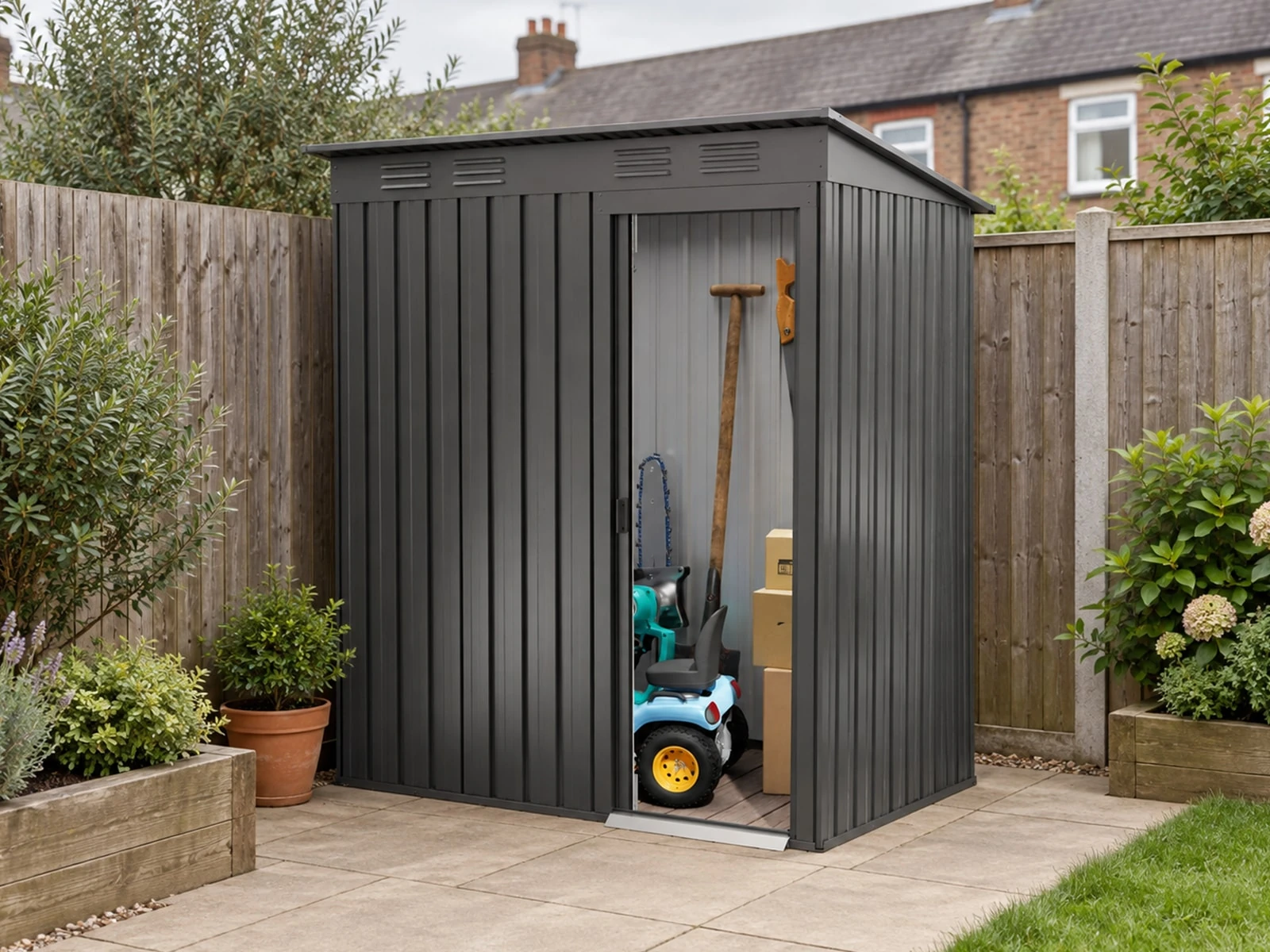
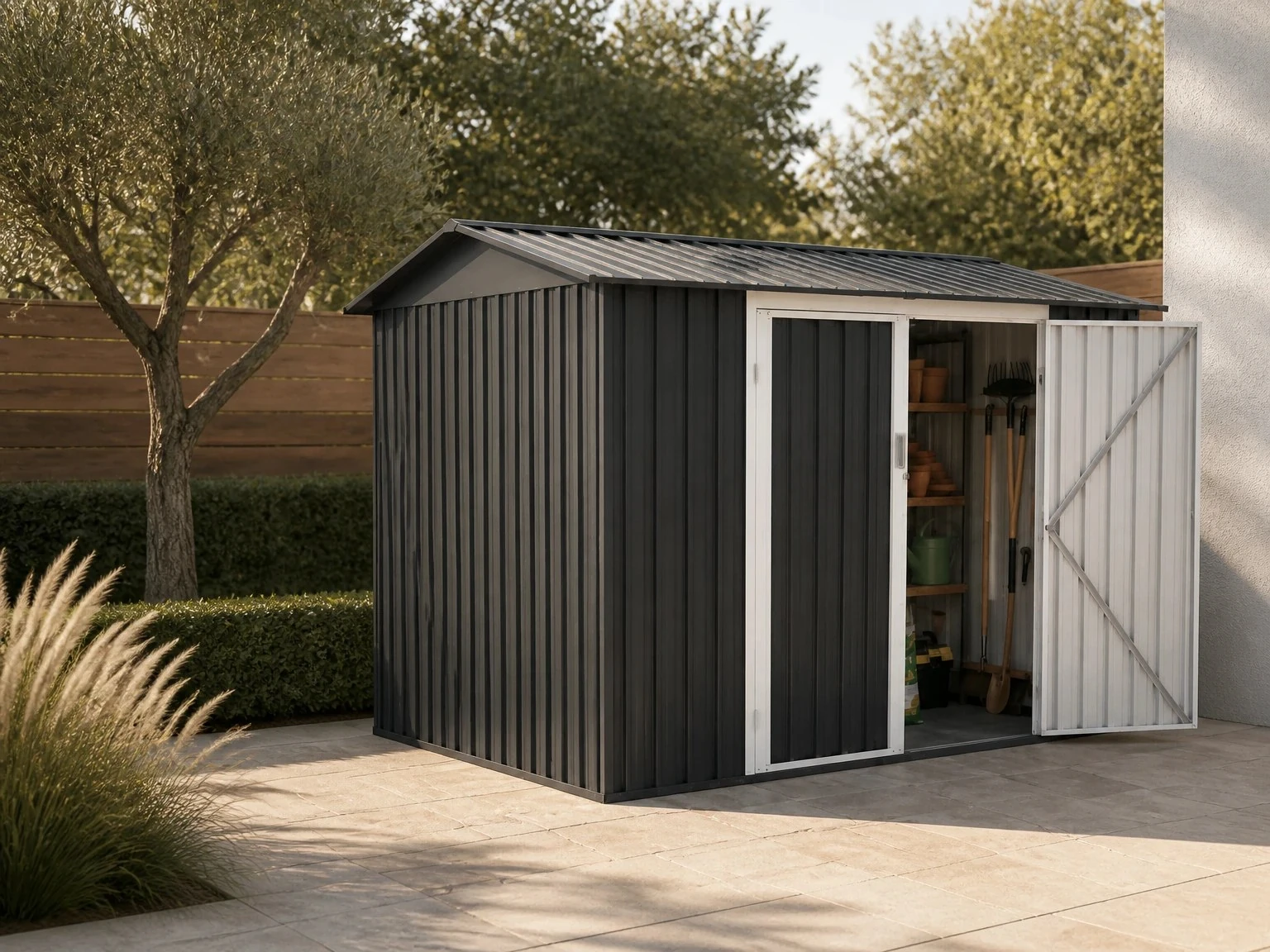
External height does not explain usable wall height or where the roof slopes. For apex roofs, record ridge and eave heights. For pent roofs, record high-side and low-side heights and drainage direction. Record the clear door opening after frames, tracks and thresholds are considered.
Use LERYOU records as a range, not one merged specification
Current LERYOU product records include classic shed references from compact footprints through larger platforms, including examples labelled 4 × 4 ft, 5 × 3 ft, 6 × 4 ft, 6 × 5 ft, 6 × 8 ft, 7 × 4 ft, 8 × 6 ft, 8 × 10 ft and larger directions. These references belong to different products and configurations; they must not be presented as sizes of one universal model.
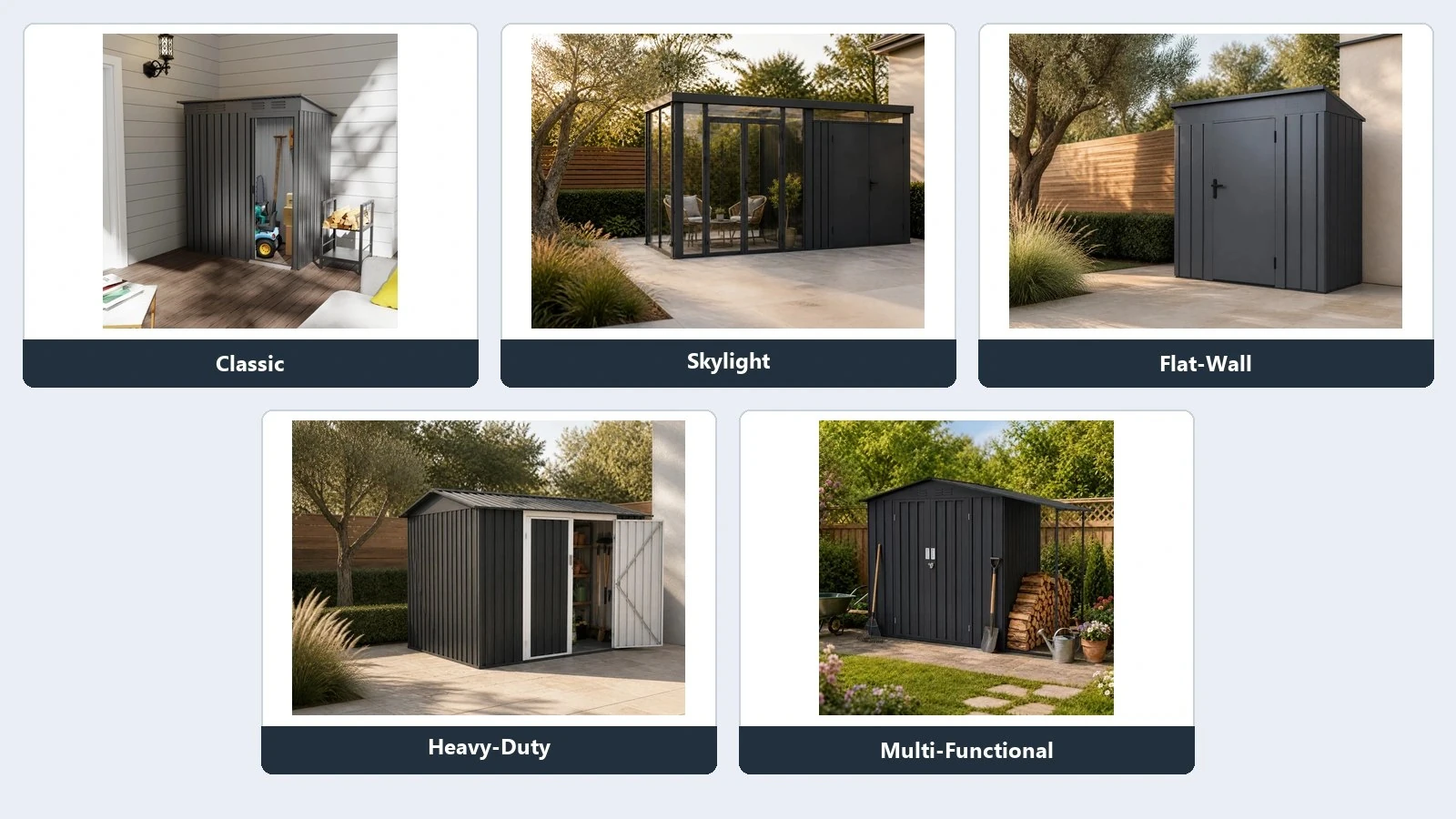
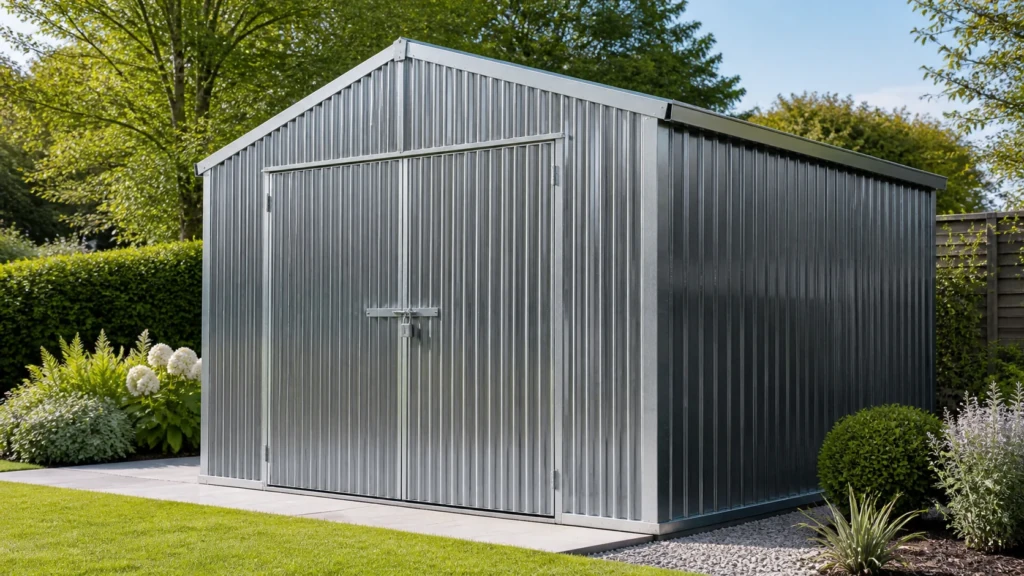
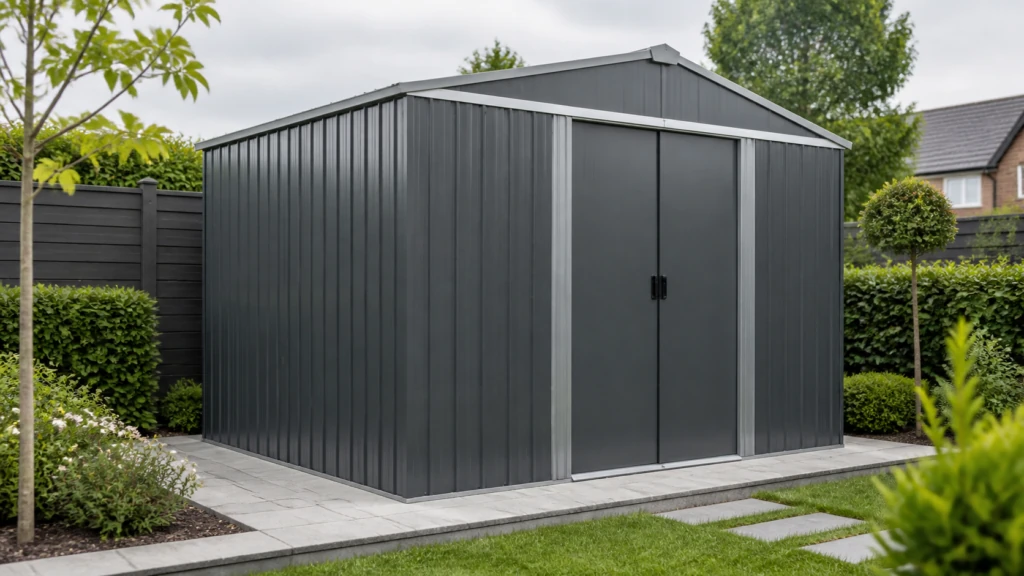
Buyers can compare the classic metal shed direction, skylight sheds, flat-wall sheds y heavy-duty directions before choosing a size ladder.
Include packaging before finalizing the assortment
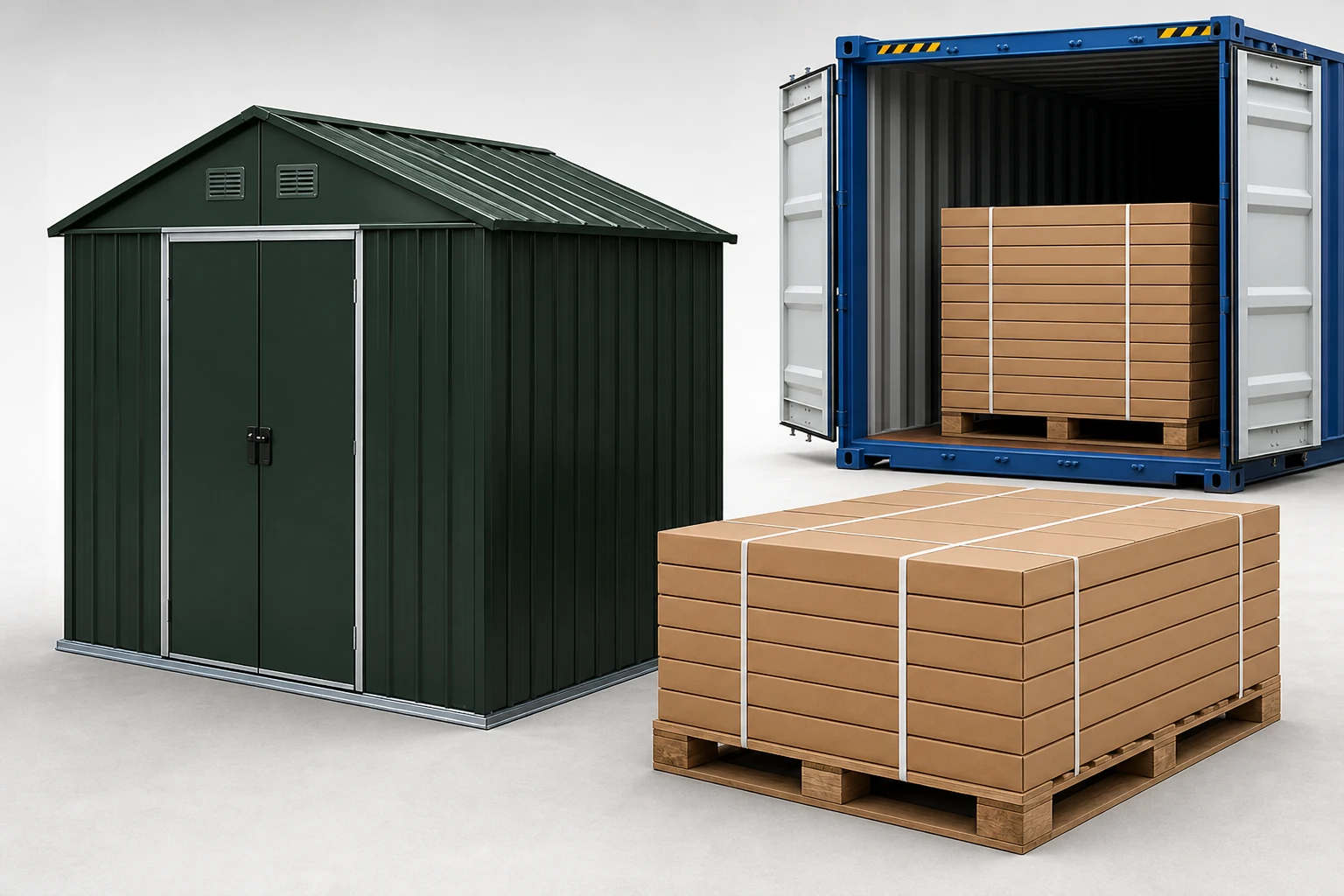
A commercially attractive footprint may create long or heavy cartons. Request the final pack count, carton dimensions, weights and handling method for each approved configuration. Container estimates require a confirmed SKU mix and loading plan. E-commerce programs should also review carrier limits and damage-prone components.
Size-guide approval checklist
- State the exact axis order for every dimension.
- Separate external, base, internal and door-opening measurements.
- Record roof-specific high, low, ridge and eave heights.
- Match dimensions across drawing, product page, manual and carton files.
- Use nominal sizes only as customer navigation labels.
- Confirm which options change dimensions or package data.
- Do not combine several product families into one specification table.
Preguntas frecuentes
No. Nominal labels can differ. Compare exact external dimensions, base size, height, door opening and package data for the quoted product.
Show verified internal usable dimensions when they help the storage task. Do not estimate them by subtracting wall thickness from external dimensions.
Give each SKU a distinct customer task, footprint, access pattern, feature set and price role. Remove products whose differences cannot be explained clearly.
A multi-size program can be reviewed, but each product and configuration needs its own controlled dimensions, package data and applicable options.
Plan a garden shed size ladder
Review garden shed product families y send LERYOU the target storage tasks, preferred footprints, doors, channel and destination for a range review.
Alcance del contenido revisado con los registros de conocimiento de producto actuales de LERYOU en septiembre de 2026. Las especificaciones finales, el embalaje, la evidencia y el alcance de suministro deben confirmarse para el producto seleccionado y el mercado de destino.
 English
 Deutsch
 Français
 Español
 Italiano
 Polski
 日本語
日本語 한국어
한국어 Nederlands
 Čeština
 Português do Brasil
 Русский