
Choosing a metal garden shed manufacturer is not simply a matter of comparing one model and one price. For retailers, importers, distributors and private-label brands, the more important question is whether a supplier can support the product range, configuration process, packaging requirements and ongoing coordination needed for the target market.
A suitable manufacturing partner should help you define a workable assortment rather than force every sales channel into the same product. This guide explains the areas buyers should review before requesting quotations, approving a model or developing a private-label metal garden shed range.
1. Start With the Market and Sales Channel
Before comparing factories, define where and how the sheds will be sold. A garden center, home-improvement chain and e-commerce seller may all need metal sheds, but they can have different priorities.
Consider:
- the target country or region;
- retail, wholesale or e-commerce distribution;
- the expected consumer use, such as tools, bicycles or general garden storage;
- available display, warehouse and delivery space;
- preferred package format and handling method;
- the intended retail price position;
- whether the range will use the buyer’s own brand.
These points influence the appropriate shed size, roof style, access arrangement, exterior finish and packaging direction. A manufacturer should review this context before recommending a model.
2. Evaluate the Manufacturer’s Product Range
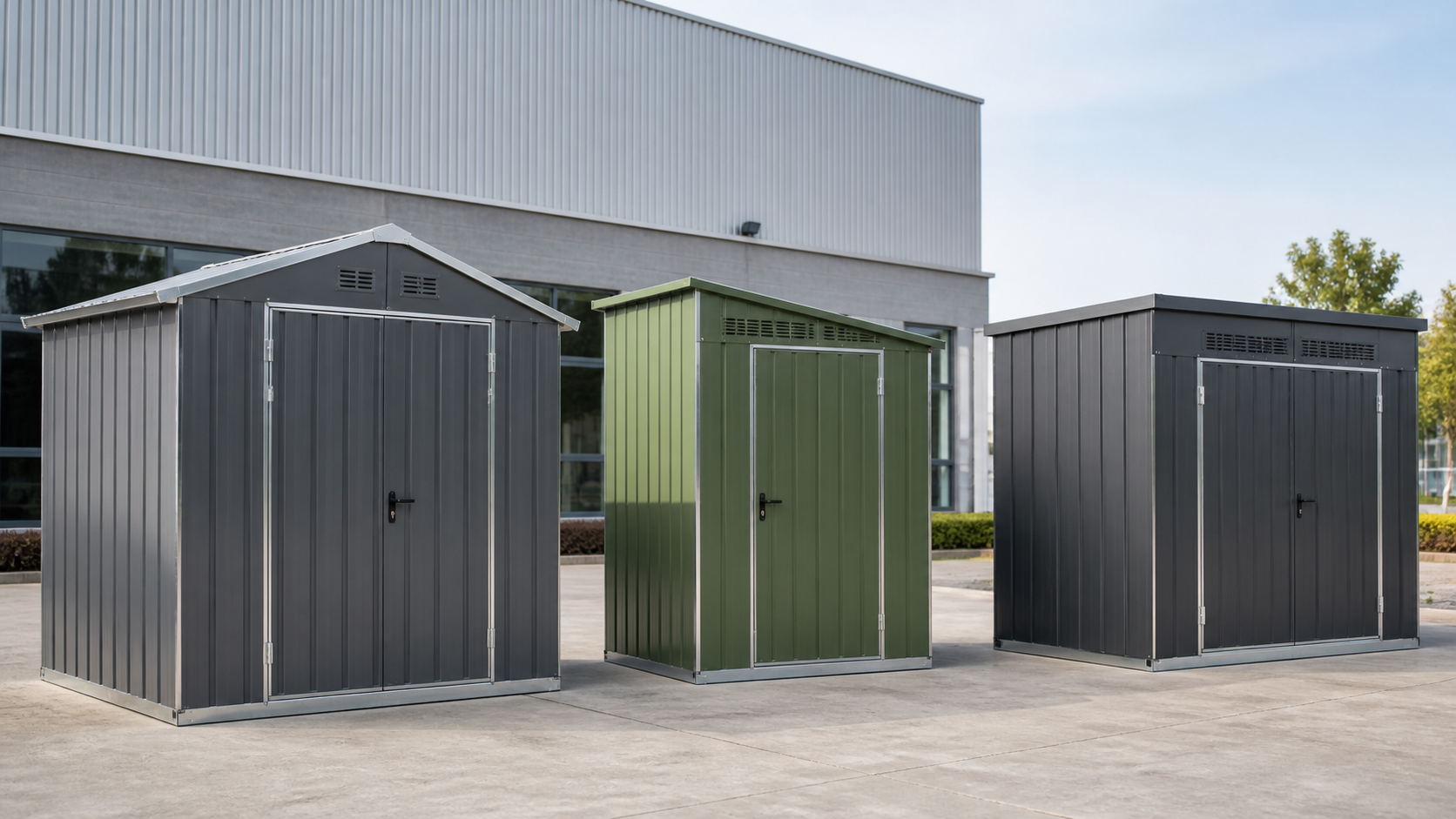
A broad range is valuable when the differences between products are meaningful. Buyers should look for a manufacturer that can support entry-level, upgraded and specialized options without presenting minor color changes as separate product platforms.
LERYOU’s current metal shed portfolio includes several distinct directions:
- Classic shed models with corrugated steel walls and roofs, multiple sizes and different access arrangements;
- Signature skylight sheds with vertical ribbed steel walls, natural-light options and extension possibilities;
- Premium sheds with upgraded profile steel panels and a more refined exterior;
- Heavy-duty flat-wall sheds with thicker flat steel panels, enclosed storage and reinforced structures;
- Multi-functional sheds that combine enclosed storage with plant cabinets, covered side storage or patio-style extensions.
For buyers, this range makes it possible to build a structured assortment: a core volume model, one or more upgraded models, and differentiated products for specific channels.
Explore the current metal garden shed product range before defining the quotation list.
3. Compare the Structure, Not Just the Exterior
Two sheds can look similar in a product image while using different structural concepts. During supplier evaluation, ask how the wall panels, frame, roof and base work together.
Important review points include:
Wall and Frame Design
The range may include corrugated steel walls, vertical ribbed steel walls or flat steel wall panels. These choices affect appearance, product positioning and assembly method. Frame design should be reviewed together with the wall system rather than as an isolated specification.
Base and Floor Options
Some LERYOU shed platforms use an aluminum base design. Available configurations in the product data also include a simple floating base and PP floor options. The right configuration should be confirmed for the selected model, intended installation and market requirements.
Roof Form and Drainage
The product range includes apex, pent and flat-roof directions. A flat-roof model may also use hidden drainage for a cleaner exterior. The roof should be selected according to the product concept, installation environment and target market—not solely for visual preference.
Access and Door Configuration
Available directions include single doors, double doors, sliding doors, hinged doors, front access, side access and multiple-door layouts. Buyers should consider the stored items, placement restrictions and expected user flow.
The final structure and performance requirements must be confirmed for the chosen model and market. Buyers should not assume that one specification applies to every shed in a manufacturer’s catalogue.
4. Review Useful Configuration Options
Customization should solve a commercial or user need. A good manufacturer should explain which changes are available on an existing platform and which would require further engineering review.
Options found in LERYOU’s current shed data include:
- two-tone and wood-look finishes;
- side windows, skylight windows and roof lighting;
- shelves, tool hooks and hanging racks;
- lock options;
- alternative floor configurations;
- patio and covered-side-storage extensions;
- metal privacy screens;
- plant-cabinet and greenhouse-storage combinations;
- size and color customization on applicable platforms.
Not every option is available for every model. The quotation and sample process should identify the exact base model, compatible options and any required adjustments.
5. Assess Assembly and Documentation
Flat-pack products depend heavily on assembly logic. A competitive product can still create customer-service problems if parts are difficult to identify or instructions do not match the final configuration.
When assessing a metal garden shed manufacturer, review:
- how wall panels connect to the frame;
- whether the selected platform is designed to reduce unnecessary fastening steps;
- how parts and hardware are identified;
- whether the instruction manual reflects the final model;
- how optional accessories are explained;
- whether packaging artwork, labels and manuals can be coordinated for the destination market.
Several LERYOU platforms use slot-in wall panels with fewer screws. However, assembly arrangements vary by product, so buyers should review the actual model instead of relying on a general catalogue statement.
6. Confirm the Customization Process
For OEM and private-label programs, the process should be clear before production begins. A practical workflow normally includes:
- requirement review;
- model and specification confirmation;
- customization review;
- sample or order confirmation;
- production and shipment preparation.
The buyer should provide the target market, sales channel, intended product category and expected order scope. The manufacturer can then review model suitability, dimensions, materials, structure, color, accessories, branding, labels, manuals and packaging.
Final specifications, commercial terms and approval materials should be confirmed for each project. LERYOU’s OEM and ODM capabilities page presents the current collaboration workflow.
7. Review Packaging Before Approving the Order
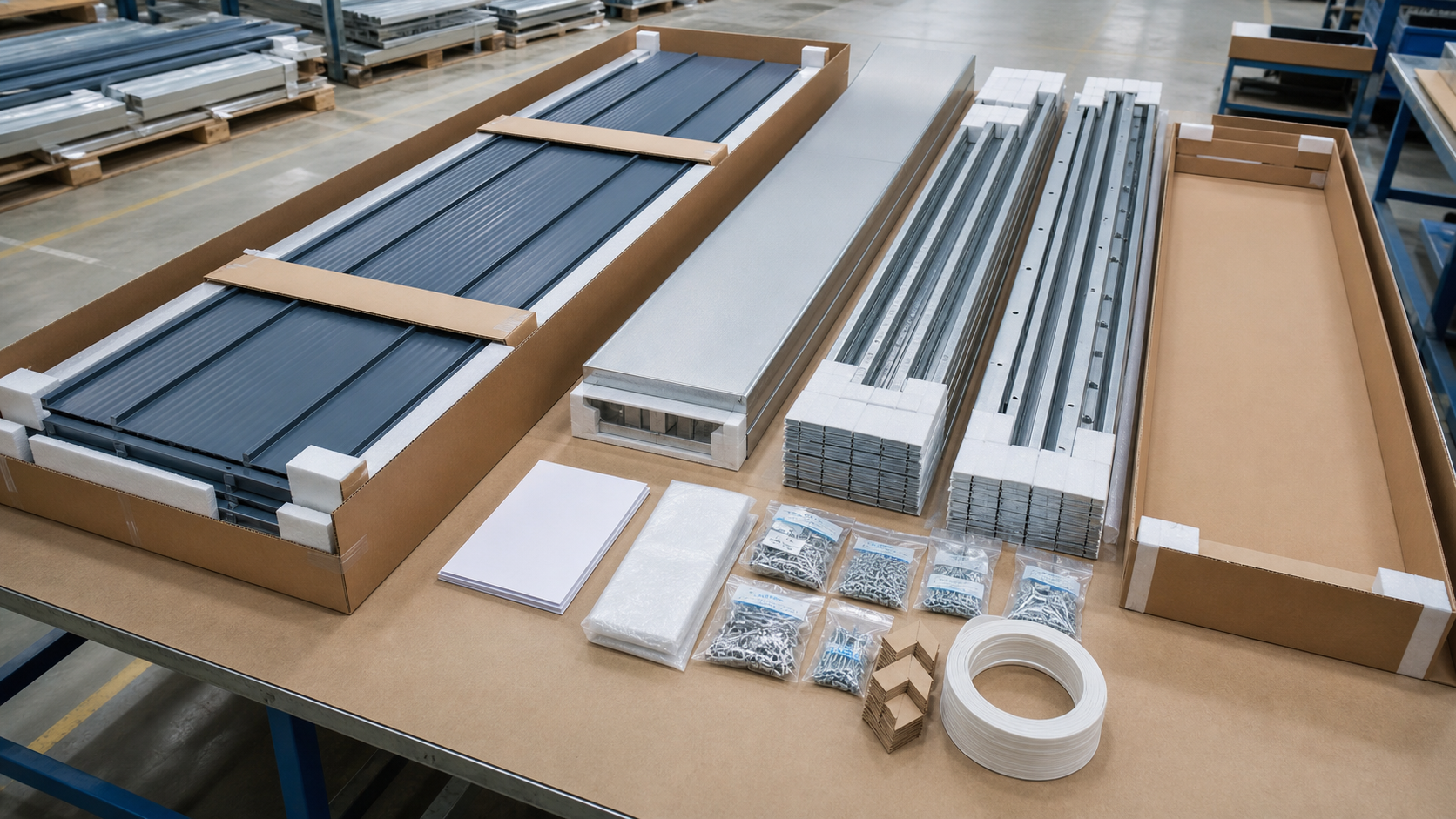
Packaging is part of product development, especially for large flat-pack garden products. It affects warehouse handling, retail presentation, e-commerce delivery and the end customer’s first experience with the product.
Before confirmation, review:
- carton structure and package breakdown;
- protection for panels, profiles and hardware;
- part identification;
- label placement;
- instruction-manual language;
- private-label artwork;
- barcode and market-specific information supplied by the buyer;
- handling requirements for the chosen channel.
Packaging details should be confirmed against the actual model and order. Container quantities, test methods and performance claims should not be assumed before the supplier has reviewed the final specification and package.
8. Ask for Evidence Relevant to the Selected Model
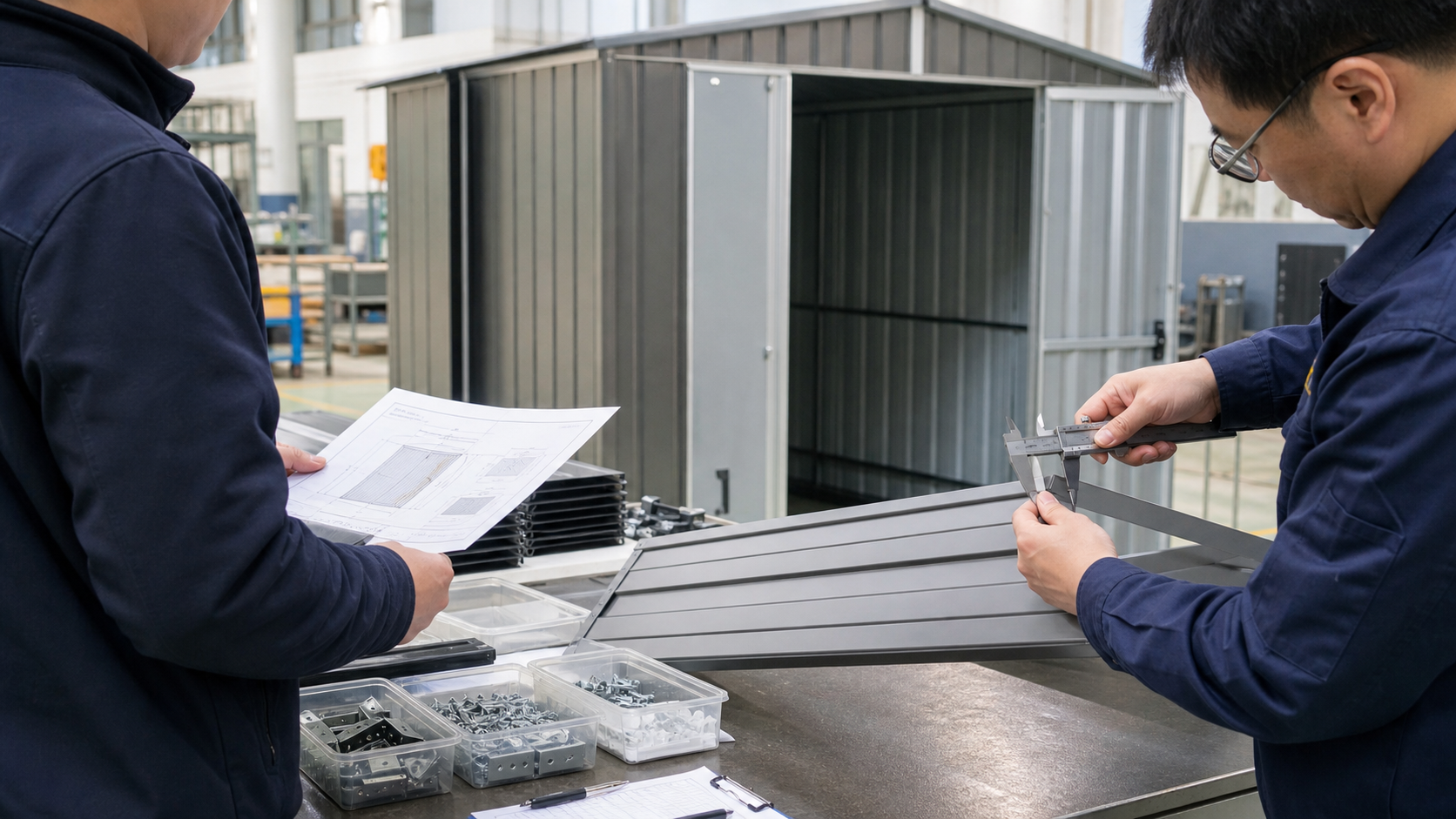
Buyers often receive broad claims that are not tied to a product. A better approach is to request documentation relevant to the actual shed, market and order.
Depending on the project, this may include:
- approved drawings or specification sheets;
- material and finish confirmation;
- assembly documentation;
- packaging files;
- sample or approval records where applicable;
- quality-review points for production;
- shipment documents required for the order.
If snow, wind or other performance requirements are important, state the target requirement and market at the beginning of the project. Do not assume that a test result for one model, size or configuration automatically covers another.
9. Check Communication and Change Control
Metal shed projects involve many linked details. A color change can affect artwork; a door change can affect parts and instructions; a structural change can affect packaging.
Before choosing a manufacturer, confirm:
- who coordinates the project;
- how specifications and revisions are recorded;
- which version controls quotation, sample and production;
- when artwork and packaging are approved;
- how changes after confirmation are handled;
- what information the buyer must provide.
Clear change control is particularly important for private-label programs and multi-model retail ranges.
10. Use a Supplier Evaluation Checklist
Before making a final decision, compare shortlisted manufacturers using the same questions.
Product and Structure
- Does the manufacturer offer product platforms suitable for your channel?
- Are roof, wall, frame, base and door choices clearly explained?
- Are compatible options identified for each model?
Customization
- Can the supplier review color, finish, branding, labels and manuals?
- Are proposed changes based on an existing platform or a new development?
- Is the approval process documented?
Packaging and Delivery Preparation
- Is packaging reviewed for the actual product and channel?
- Are parts, hardware and instructions coordinated?
- Are shipment documents confirmed for the order?
Commercial Coordination
- Is the quotation based on a defined specification?
- Are assumptions and exclusions visible?
- Are final terms confirmed before production?
Frequently Asked Questions
What information should I send before requesting a quotation?
Provide the product category or reference model, target market, sales channel, intended application, preferred size or capacity, required configurations, branding needs and expected order scope. The manufacturer can then confirm what additional information is required.
Can one manufacturer support different retail price levels?
Potentially. LERYOU’s portfolio includes classic, skylight, premium, heavy-duty and multi-functional shed directions. The appropriate range depends on the target market, selected specifications and commercial requirements.
Are all colors and accessories available for every shed?
No. Available colors, finishes, doors, floors, lighting and storage accessories depend on the chosen platform. Compatibility should be confirmed during specification review.
Should I choose a shed based only on its listed dimensions?
No. Dimensions are important, but buyers should also review internal use, access, roof form, structure, base, package format and sales-channel requirements.
How should performance requirements be handled?
State the relevant market and target requirement at the beginning of the project. Any supporting information should be reviewed for the exact model, size and configuration rather than generalized across the entire range.
Build a Metal Garden Shed Range for Your Market
The right metal garden shed manufacturer should help you move from a market requirement to a clearly defined product and package—not simply offer a catalogue image.
LERYOU supports garden and outdoor product projects for retailers, importers, distributors, private-label brands and e-commerce sellers. Review the metal garden shed range, explore outdoor storage solutions, or contact LERYOU to discuss a target market, product direction and quotation scope.
 English
 Deutsch
 Français
 Español
 Italiano
 Polski
 日本語
日本語 한국어
한국어 Nederlands
 Čeština
 Português do Brasil
 Русский