For outdoor-living buyers, importers and private-label range teams
A deck box and an outdoor storage cabinet solve different organization problems. A deck box is a low horizontal format with top access; a cabinet is a taller front-access format that can organize items across shelves or vertical space. The best retail decision depends on stored objects, footprint, opening clearance, internal layout and the channel’s packaging limits.
This guide compares the formats as range roles. Final dimensions, materials, shelves, doors, hardware, capacity, finish and packaging must be confirmed for the selected configuration.
Short answer: choose by storage task and access pattern
| Decision field | Deck box / metal storage box | Outdoor storage cabinet |
|---|---|---|
| Primary form | Low and horizontal | Tall or wide, with vertical usable space |
| Typical access | Lift-up lid; some configurations may add other access | Front doors; selected configurations may use shelves |
| Clearance to check | Lid opening above and behind the box | Door swing or opening area in front |
| Organization direction | Open bulk volume for larger or mixed items | Shelf levels or upright organization |
| Retail role | Patio and garden storage, lower visual profile | Tools, accessories and organized vertical storage |
These roles are not universal specifications. Check the exact product drawing and parts list before publishing dimensions, capacity or included shelves.
When a deck box is the clearer choice
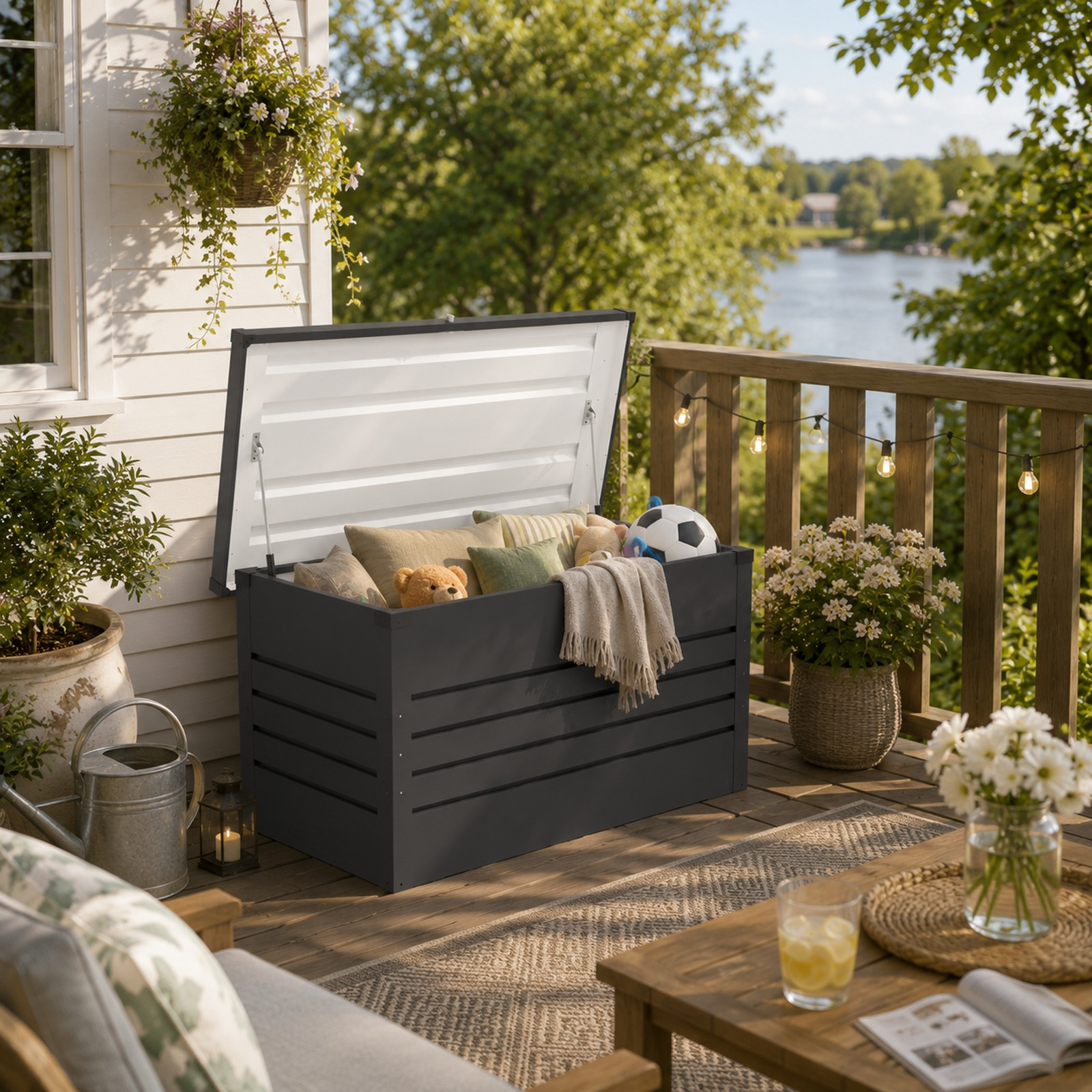
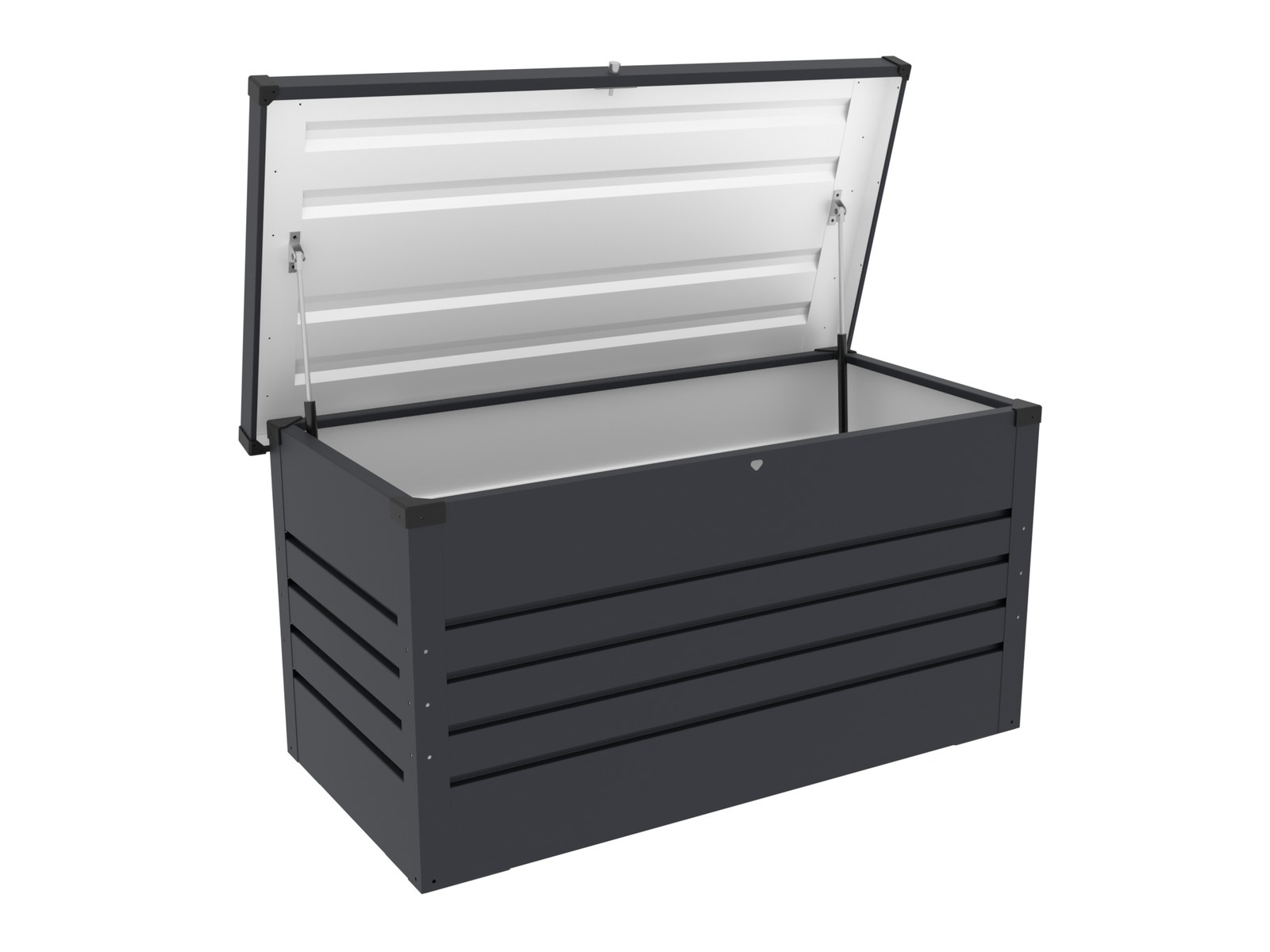
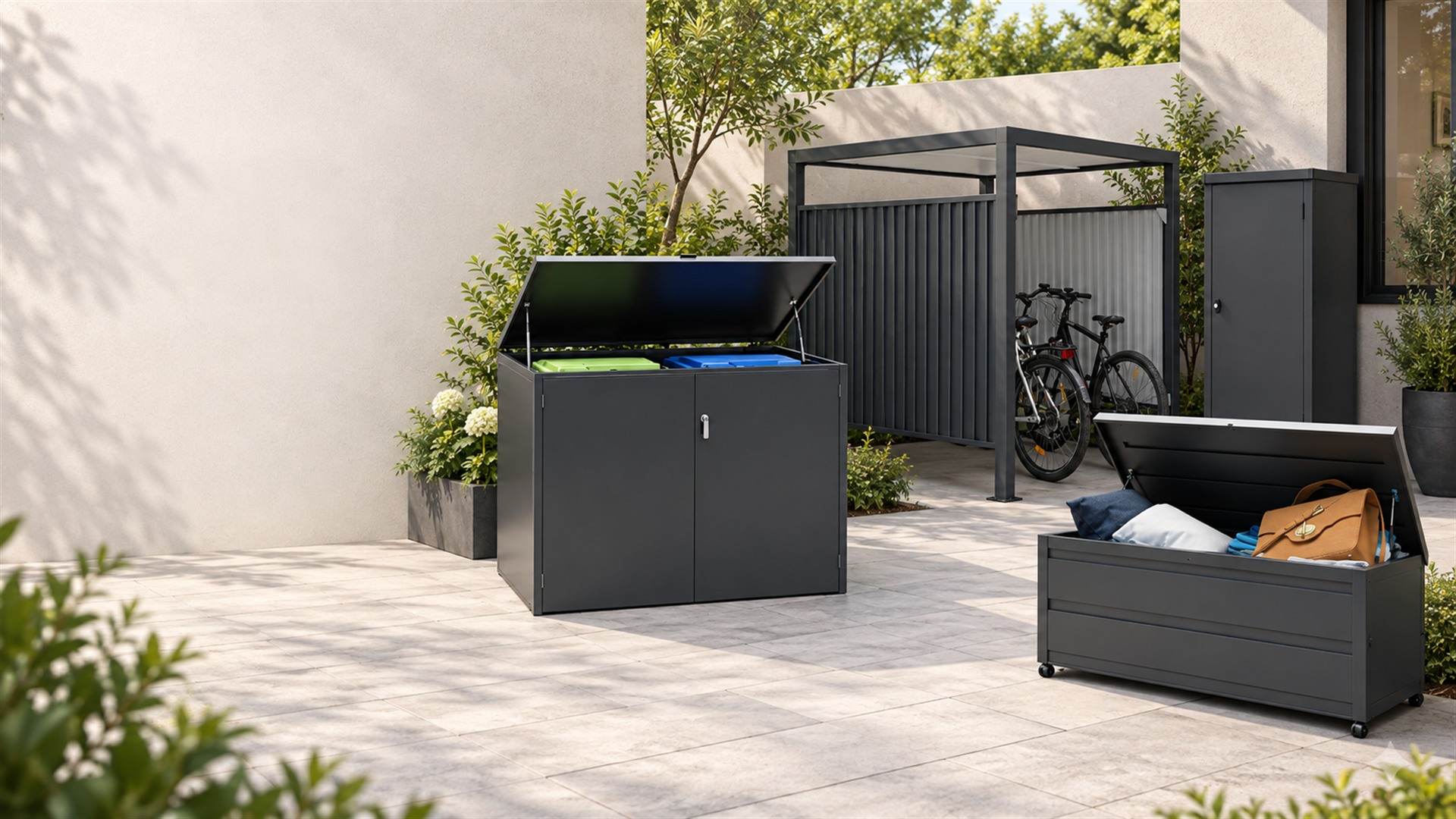
A deck box works well when the shopper wants a low storage format near a patio, garden seating area or wall. The lift-up lid can expose a broad opening, but it also needs clearance. Buyers should check whether the lid can open fully in the intended setting and whether nearby walls, railings or furniture interfere.
External dimensions do not equal usable internal dimensions. Lid geometry, panel folds, frame members, hardware and the base can reduce the space available inside. If the listing states a capacity, that statement should come from verified product data for the selected configuration.
When an outdoor cabinet adds more value
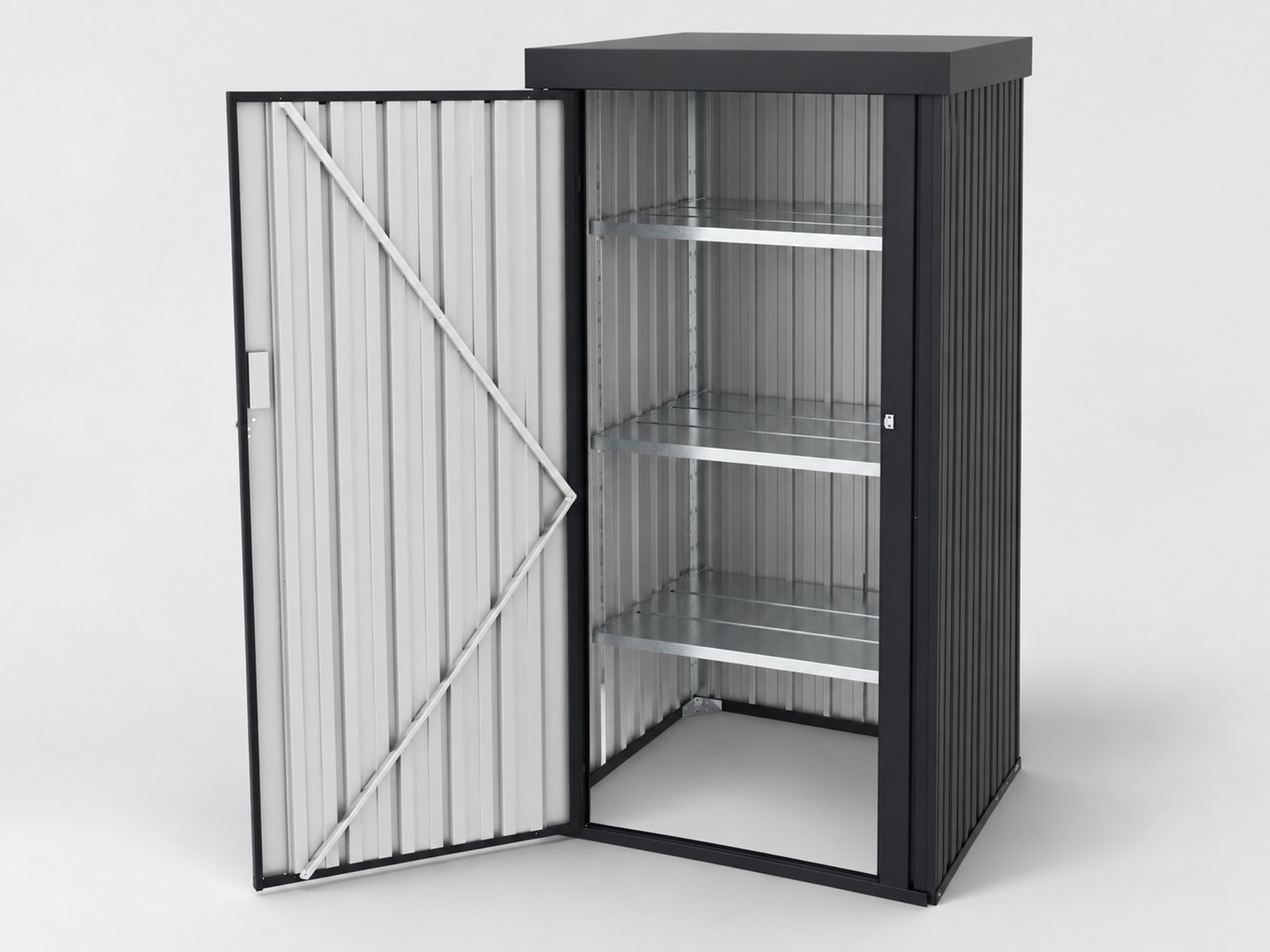
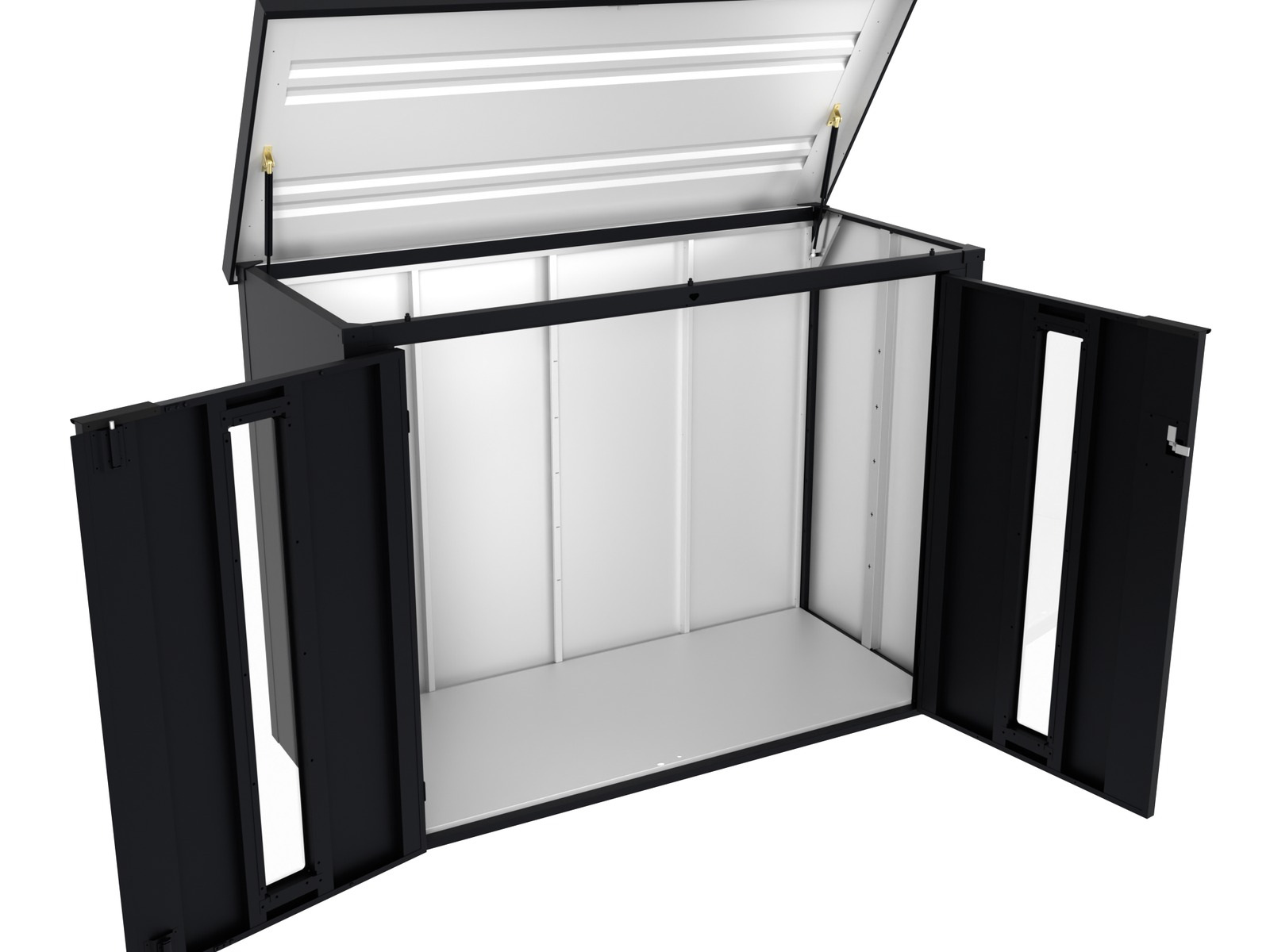
An outdoor cabinet can use height to organize tools, garden supplies and accessories without moving into a full shed footprint. Front doors make the contents accessible without lifting a large lid. Shelves can separate smaller items, while a taller internal zone may suit selected upright objects.
Do not treat “with shelves and doors” as a complete specification. Confirm the number and position of shelves, usable spacing, shelf support, door clear opening, hardware and which parts are standard or optional. The product page should distinguish external height from usable internal height.
Compare the two formats on the same fields
- Stored objects: list the longest, widest and tallest items rather than using “garden tools” as the only brief.
- Footprint: confirm the space available at ground level.
- Access: record the clearance required for a lid or doors.
- Internal organization: decide whether bulk space, shelves or upright zones are needed.
- Base interface: identify the intended surface and any leveling or anchoring questions.
- Packaging: compare carton breakdown, long parts, hardware, instructions and labeling.
- Listing data: control external and internal dimensions, included components and option wording.
Packaging and e-commerce implications
Both formats can be supplied as component-based products, but their panels, doors, lids, shelves and hardware create different package structures. The retail buyer should request final carton dimensions, weights and parts identification only after the configuration is fixed. Early container or parcel assumptions should remain estimates.
For e-commerce, confirm that the assembly manual, parts list, product photography and specification fields all refer to the same revision. A changed shelf set, door arrangement or lid hardware can affect the manual and customer expectations even when the exterior looks similar.
Build an assortment without unnecessary overlap
A useful range can include both formats when each has a distinct job. A compact deck box can support patio accessories; a larger box can serve bulky garden items; a tall cabinet can organize smaller tools; and a wide cabinet can create a broader front-access zone. The range should not add near-identical SKUs simply to increase count.
Review LERYOU’s outdoor storage box manufacturing page そして outdoor storage cabinet manufacturing page for product-specific sourcing inputs. The outdoor storage solutions category shows how boxes, cabinets, bicycle storage and bin storage can support different range tasks.
RFQ checklist for boxes and cabinets
- target market, channel and price-position direction;
- intended stored items and required usable dimensions;
- maximum external footprint and height;
- top-access or front-access preference and clearance;
- shelf, door, lid, lock and hardware requirements;
- finish, color and branding direction;
- assembly, manual, labels and carton-mark requirements;
- quantity range, destination and required documents.
Frequently asked questions
Neither format is universally better. A box supports low horizontal storage and top access, while a cabinet supports vertical organization and front access. The retail range should reflect the objects, footprint and access pattern customers need.
Confirm the external footprint, internal usable space, lid-opening clearance, access around the product and the dimensions of the items that must fit. Final capacity claims must match the selected product data.
Confirm external and internal dimensions, usable shelf spacing, door clear opening, shelf configuration, hardware, floor or base interface and whether each item is standard or optional.
Often they can play different range roles, but the decision should follow shopper tasks and channel economics. Avoid near-duplicate products that add packaging and listing work without adding a distinct use case.
Include target market, channel, intended stored items, size direction, access and internal-organization needs, finish, packaging and branding requirements, quantity range, destination and required documents.
Turn the range role into a product brief
Send LERYOU the stored-item list, space limits and channel requirements. The team can help separate box and cabinet options before a model-level quotation is prepared.
Source note: Product-format observations are based on LERYOU’s current outdoor storage range and procurement workflow. Availability, options and product claims require confirmation for the selected configuration.
 English
 Deutsch
 Français
 Español
 Italiano
 Polski
 日本語
日本語 한국어
한국어 Nederlands
 Čeština
 Português do Brasil
 Русский