For importers, distributors, retailers, project buyers and private-label outdoor-storage teams
Commercial bike storage sourcing should start with five inputs: bicycle quantity, available footprint, access direction, required enclosure level and destination-market packaging. Buyers can then compare open-front shelters, semi-enclosed structures, storage-room combinations and enclosed bicycle boxes using model-specific dimensions and specifications.
This guide turns those inputs into a practical sourcing and RFQ workflow. It does not replace local planning, accessibility, fire, structural or installation requirements, and it does not assign one performance level to every product in a family.
Short answer: confirm the brief before selecting a format
The most useful first comparison is not “which shelter looks best?” It is whether the proposed format fits the users, bicycles, site and supply program. A buyer should record the following before requesting a quotation:
- User and channel: workplace, residential project, retail resale, public-facing project or another shared-use context.
- Bicycle demand: planned quantity, bicycle types and whether non-standard frames or accessories must be considered.
- Site envelope: maximum width, depth and height, plus a clear route into and around the unit.
- Access and enclosure: open front, doors, lift-up lid, internal tracks, storage-room combination or another controlled configuration.
- Supply scope: finish, labels, manuals, packaging, quantity range, destination and required product evidence.
Gebruik de LERYOU Bike Storage Series to identify available product-family directions, then keep the quotation tied to the selected model and configuration.
Compare commercial bike storage formats by use case
| Format direction | Typical access | Buyer must confirm | Possible range role |
|---|---|---|---|
| Open-front shelter | Direct approach from the open side | Bicycle count, shelter footprint, track arrangement, access aisle and site orientation | Shared parking where visibility and direct movement are priorities |
| Semi-enclosed shelter | Open entry with side and rear protection | Panel layout, entry width, roof direction, internal circulation and fixing interface | A more defined parking zone without a fully enclosed room |
| Shelter with storage room | Separate or combined access zones | Which items belong in each zone, door positions, partition layout and usable dimensions | Projects that combine bicycle parking with another storage task |
| Enclosed bicycle shed | Front or side doors, depending on configuration | Clear door opening, locking hardware, internal layout, ventilation direction and base details | Programs that require a defined enclosed boundary |
| Individual or compact bicycle box | Lift-up lid, front opening or combined access, depending on model | Operating clearance, bicycle loading sequence, internal dimensions and hardware | Low-profile or lower-capacity storage where the exact bicycle fit is verified |
These are sourcing categories, not universal specifications. LERYOU’s current range includes semi-enclosed shelters, shelter-and-storage combinations and enclosed box or shed directions, but access, materials and dimensions vary by configuration.
Start with parking duration and user expectations
Short visits and longer storage periods can create different expectations for access, shelter and control. The Association of Pedestrian and Bicycle Professionals separates short-term and long-term bicycle-parking contexts in its guidance and notes that longer-term users place greater value on security and shelter. For an importer or distributor, this is a useful briefing distinction rather than a product certification.
Translate the user context into visible product fields. Record whether users need rapid open access, a door or lid, an internally organized track layout, a separate lockable zone, or a fully enclosed boundary. Then identify which claims require evidence. A product should not be described as “secure,” weatherproof or compliant merely because it has walls or a lockable-looking image.
Open-front and semi-enclosed bicycle shelters
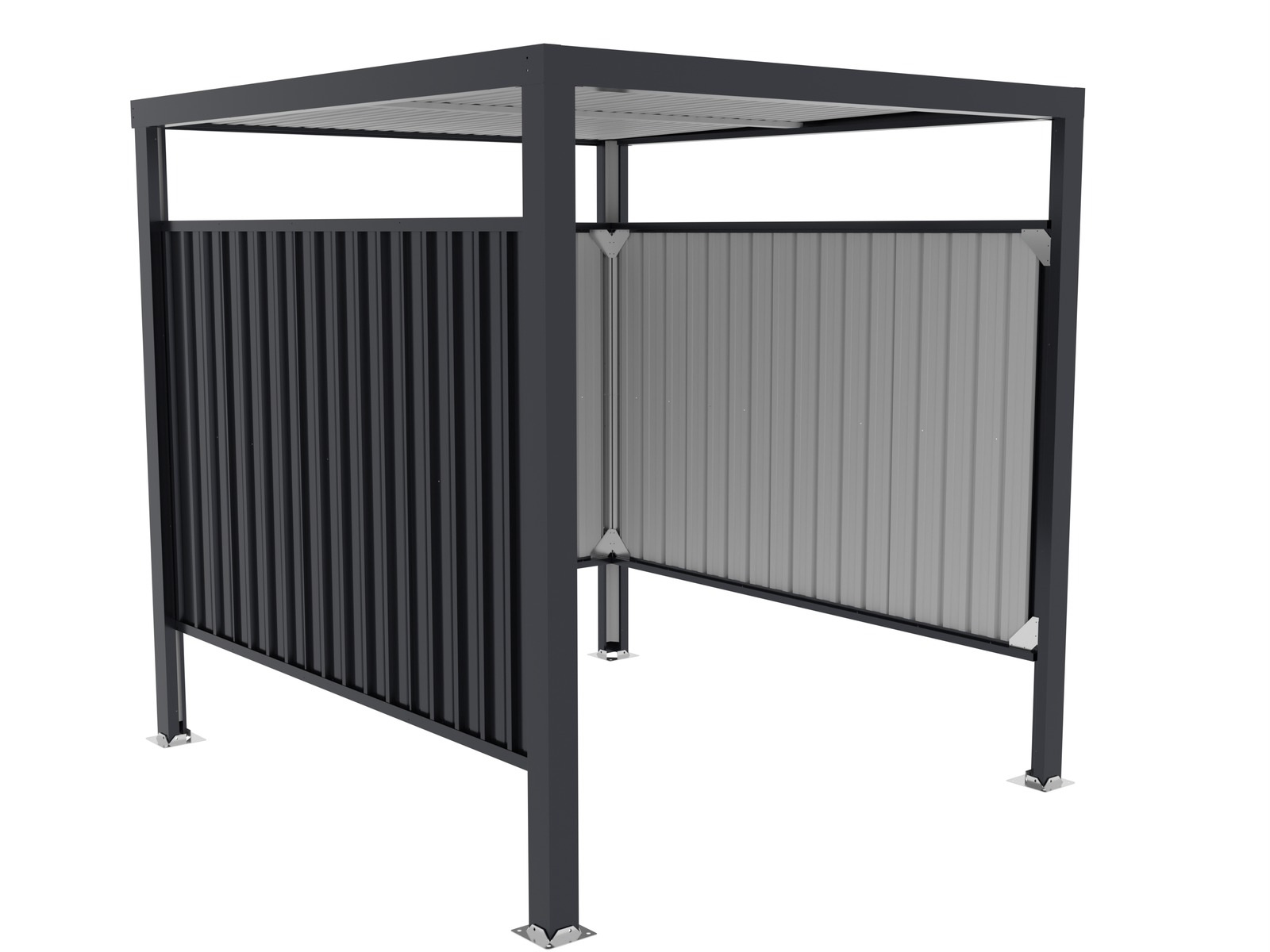
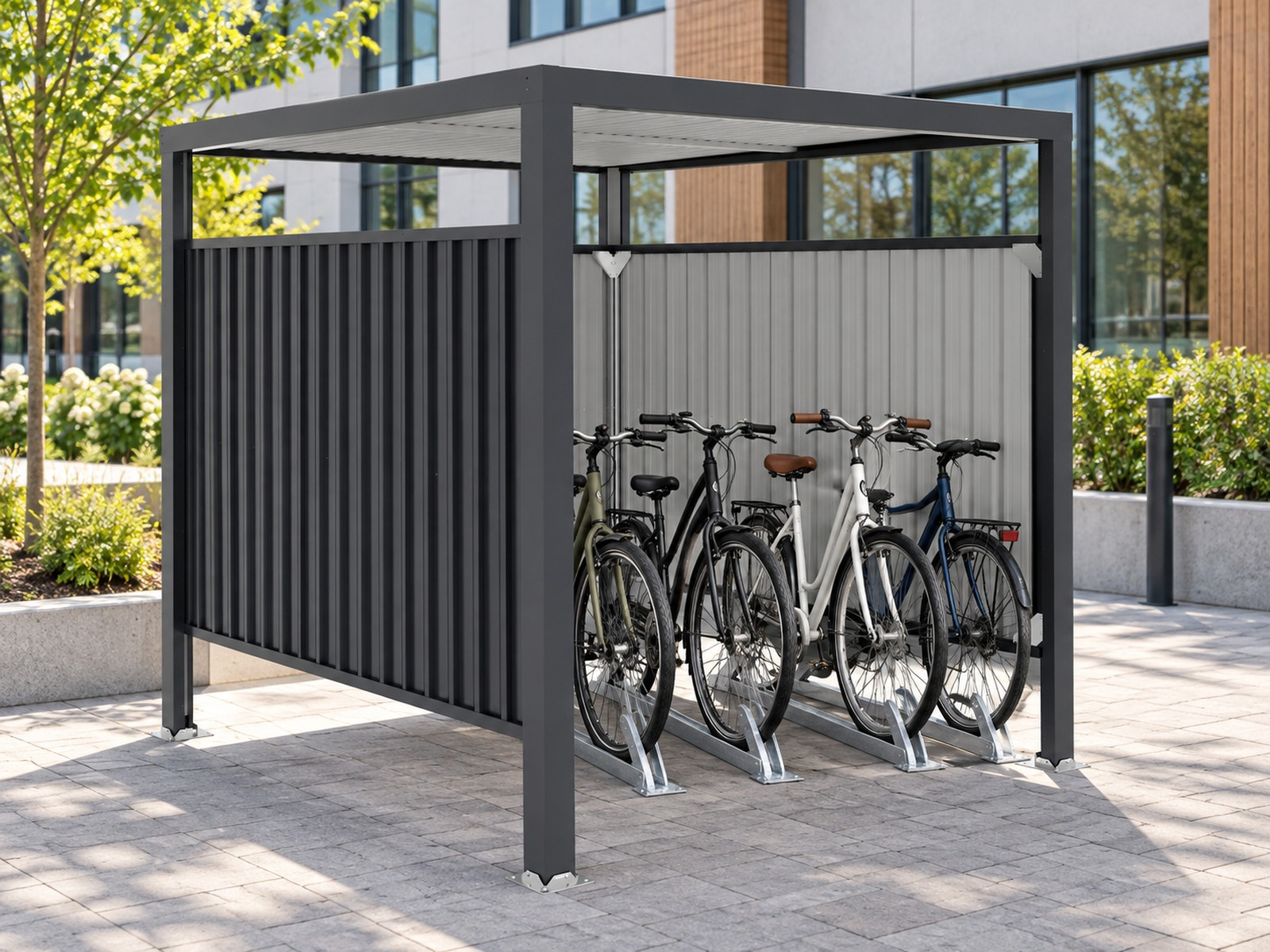
An open-front commercial bicycle shelter can make entry and exit straightforward. Side and rear panels can create a more defined area, while the roof and frame determine the overall envelope. Buyers should confirm the open side, approach direction and the amount of clear space users need before they reach the bicycle position.
The bicycle-support method matters as much as the shelter shell. Internal tracks, rails or stands affect wheel position, handlebar overlap and the sequence in which bicycles are stored. If the chosen configuration uses staggered or individual tracks, the drawing and listing should show the actual arrangement instead of relying on a generic capacity statement.
For category planning beyond one product, compare the Outdoor Storage Solutions for Retailers and Importers. It helps separate bicycle storage from bin storage, metal boxes and outdoor cabinets before a range is built.
Enclosed bicycle sheds and compact bicycle boxes
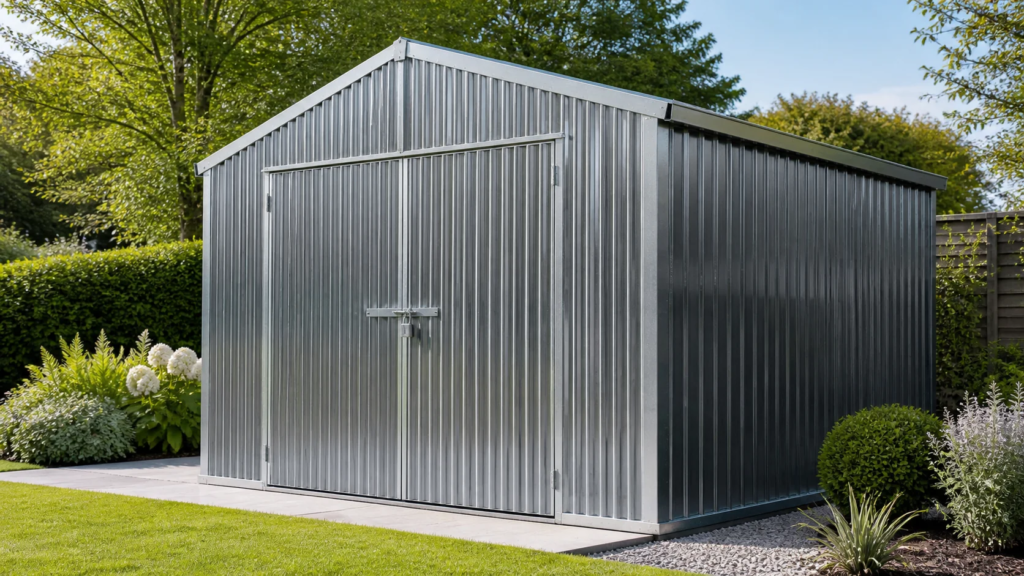
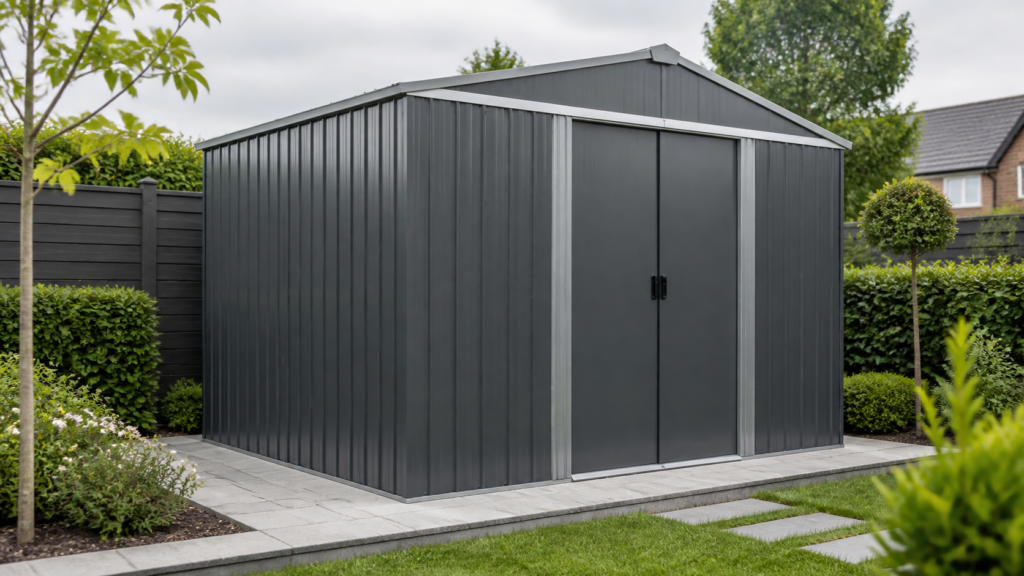
An enclosed shed introduces doors, walls and a controlled internal area. That can be useful when a project brief calls for a more defined boundary, but buyers still need to review door swing, clear opening, bicycle turning path, internal organization and the foundation or fixing interface. A double-door photograph does not confirm that every bicycle can enter without interference.
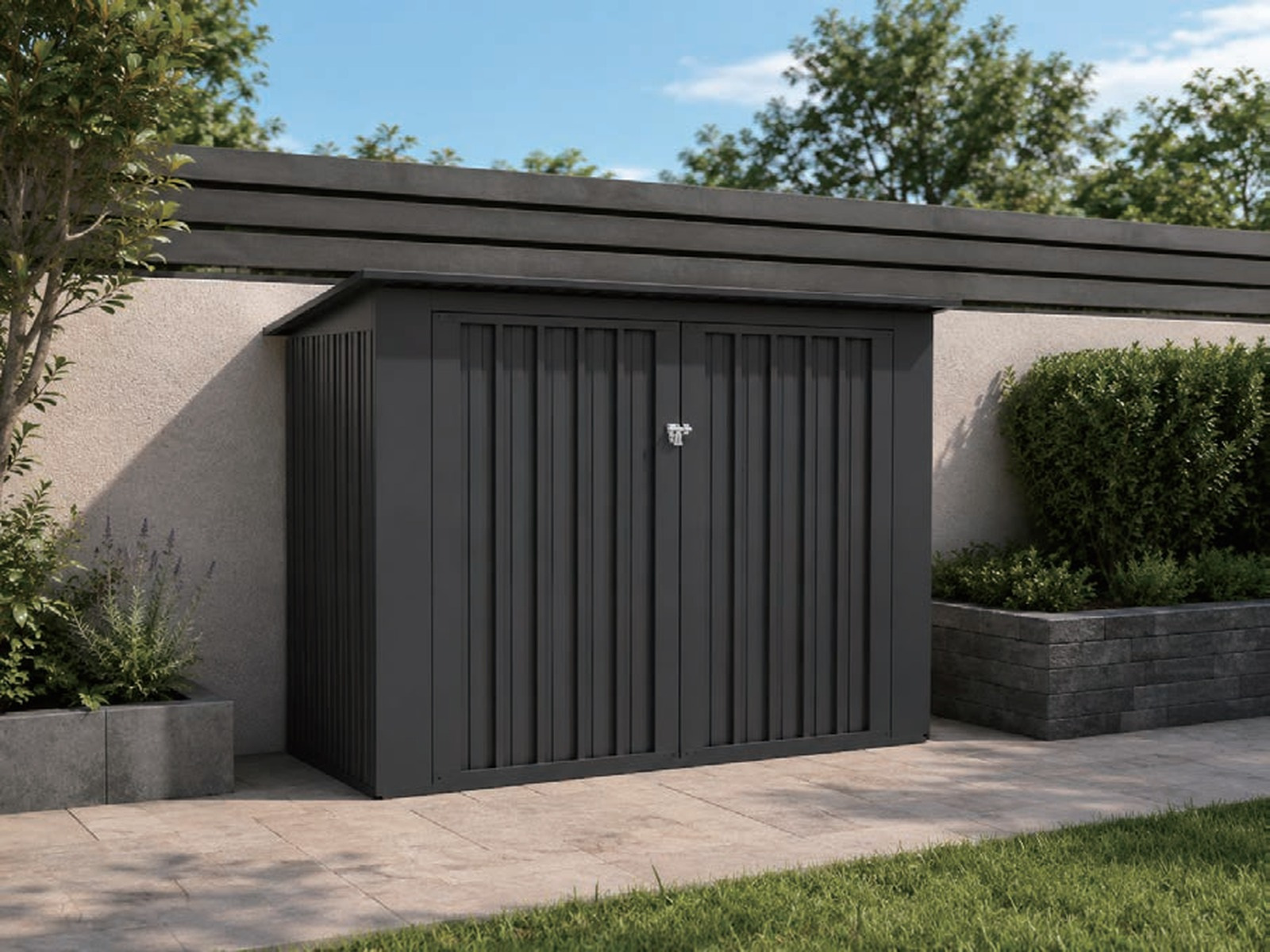
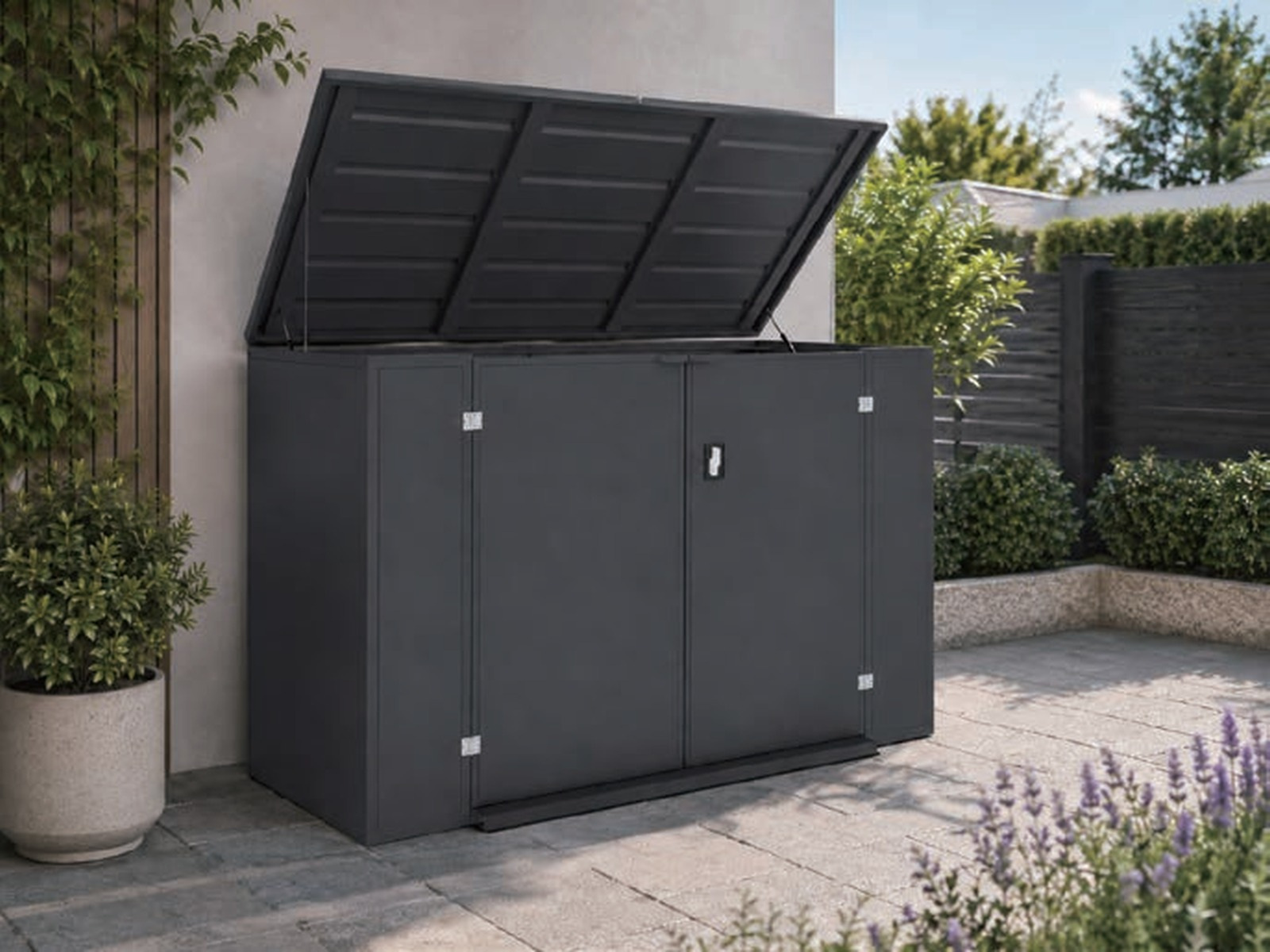
A low bicycle box can use a lift-up lid, front doors or a combined opening direction. The operating envelope may extend above, in front of or behind the closed product. That clearance belongs in the specification and site review. Buyers should also confirm whether the pictured tracks, base, lock or accessories are standard, optional or shown only for product-family context.
Capacity is more than a headline bicycle count
A nominal capacity can be a useful starting point, but it should not be the only selection field. Bicycle size, handlebar width, baskets, child seats, tyre width and frame geometry can change the usable arrangement. A layout that fits standard bicycles in a controlled test may not represent every user group.
Review capacity through five checks:
- Position count: how many defined bicycle positions are included in the selected configuration?
- Usable spacing: what spacing and stagger are shown in the approved drawing?
- Access route: can a user reach, turn and remove a bicycle without blocking the approach?
- Opening clearance: do doors, lids and bicycle tracks operate within the available site envelope?
- Bicycle range: which bicycle types were considered, and which require a separate fit review?
Capacity language on a product page, carton, manual and sales quotation should refer to the same configuration. When a family includes several sizes, keep a separate controlled record for each quoted model.
Create one controlled product record
Good B2B content begins with consistent product data. Before a listing is released, align the quotation, product sheet, drawing, assembly manual, packaging artwork and image set. At minimum, the controlled record should identify:
- external width, depth and height;
- usable internal dimensions where relevant;
- clear entry, door or lid opening;
- frame, wall and roof material direction for the selected configuration;
- bicycle-support components and accessory inclusions;
- base, floor or fixing interface;
- finish and colour direction;
- carton count, dimensions, weights, labels and manual revision after approval.
LERYOU product-family examples include steel or aluminium-base structures and corrugated or colour-steel wall directions, depending on the selected configuration. Those examples should not be converted into a universal specification. Confirm the bill of materials and documents for the exact quotation.
Packaging and distribution planning
Commercial bike storage products can include long frame members, panels, doors, tracks and hardware. Packaging design therefore affects handling, parts protection, warehouse identification and customer assembly. Buyers should avoid treating early loading estimates as final until the product, carton structure and SKU mix are approved.
For distribution and e-commerce programs, request a packaging review covering panel separation, hardware kits, part labels, carton marks, manual language and image consistency. LERYOU’s guide to flat-pack-verpakkingen voor tuin- en buitenproducten explains the information that should be controlled before shipment planning.
OEM and private-label review
OEM review can cover selected colours, finishes, brand labels, instructions, carton artwork and other presentation fields. ODM or broader development work may involve a deeper product review. In both cases, feasibility depends on the product platform, requested change, quantity direction, destination market and approval process.
Gebruik de OEM vs ODM garden product guide to separate branding changes from product-development requests. The first RFQ should identify which fields are essential, which are preferred and which can remain standard.
Build a coherent outdoor-storage range
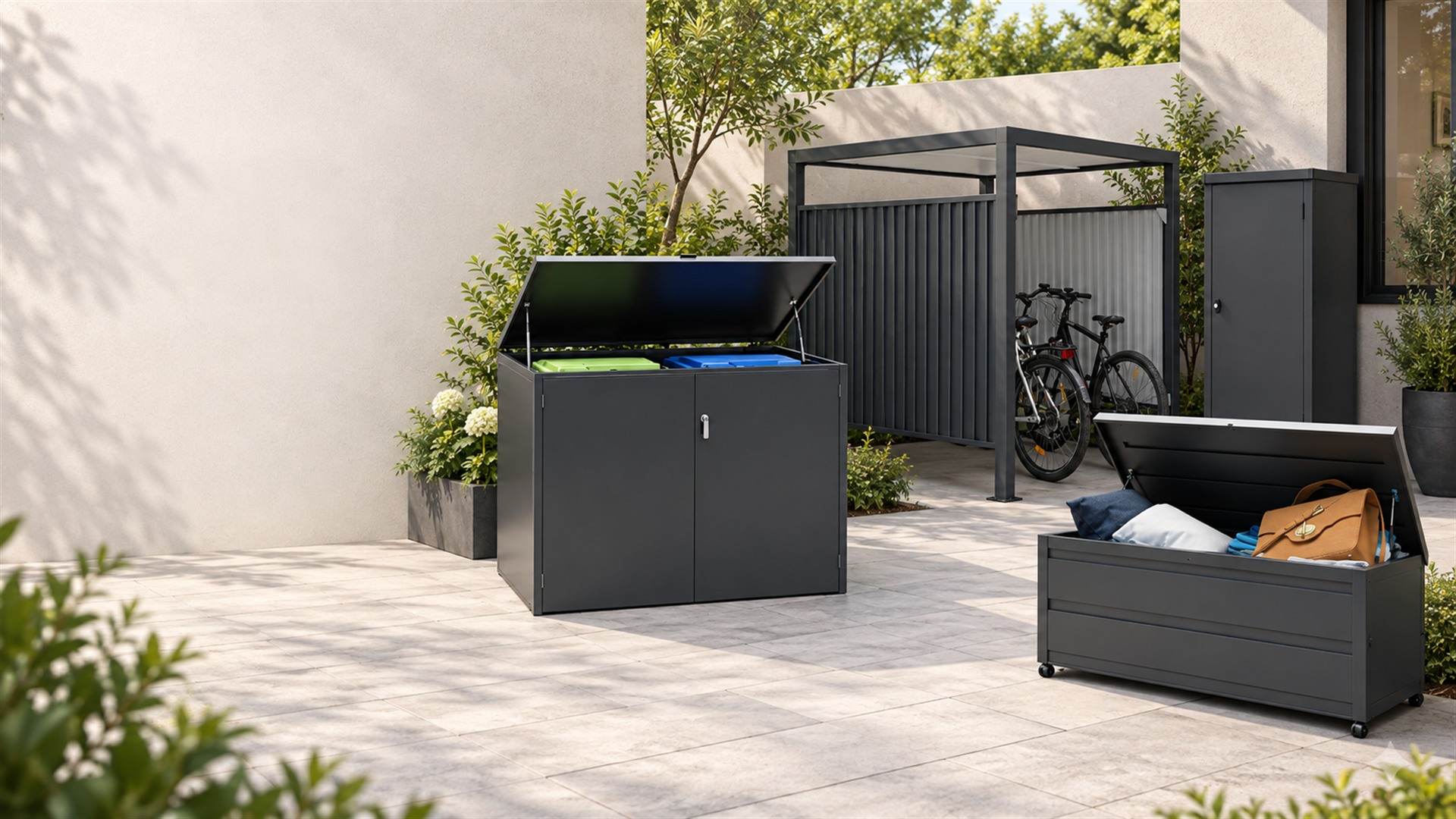
A distributor may not need bicycle storage as an isolated item. It can sit beside bin storage, metal storage boxes, outdoor cabinets and garden sheds. The category should still give each format a clear customer task. A bicycle shelter should not be substituted by a generic cabinet simply because both are made from metal panels.
Review the Outdoor Storage Solutions product category and the Wholesale Outdoor Storage Solutions page when deciding how bike storage fits the broader buying program. For retailer-facing assortment planning, the DIY gardening products guide for retailers provides additional channel context.
Commercial bike storage RFQ checklist
- Markt en kanaal: destination country, retailer, distributor, project or private-label program.
- User context: short visit, longer-duration storage or another defined operating scenario.
- Bicycle demand: planned number and any bicycle types requiring fit review.
- Site envelope: maximum footprint, height, approach route and installation surface.
- Format: open shelter, semi-enclosed shelter, combined storage room, enclosed shed or compact box.
- Access: open direction, door or lid type, clear opening and operating clearance.
- Configuratie: structure, panels, roof, base, tracks, hardware, finish and accessories.
- Branding and packaging: labels, manual, carton artwork, marks and required languages.
- Commercial inputs: quantity range, destination, delivery assumptions and approval process.
- Evidence: required drawings, documents or performance information tied to the selected model and market.
Supplier review checklist
Before approving a supplier offer, check whether the quotation clearly identifies the selected model, included components, options, exclusions and revision. Confirm that dimensions and product images match the same configuration. Ask how packaging, manuals, labels and inspection requirements will be approved. If a performance or certification statement is commercially important, request applicable evidence for the quoted product and destination rather than accepting a family-level assumption.
The final comparison should be like-for-like. A lower price may represent a different panel set, track arrangement, hardware package, carton scope or documentation level. Resolve those differences before selecting an offer.
Veelgestelde vragen
Commercial bike storage is a product or system selected for shared, retail, workplace, residential-project or other organized bicycle-storage programs. The term can include open-front shelters, semi-enclosed shelters, enclosed sheds and individual bicycle boxes. Buyers should define the required format and model-specific specification rather than treat the phrase as one fixed product.
Choose according to user duration, required enclosure, access control, site footprint and project brief. An open or semi-enclosed shelter can prioritize direct access and organized parking, while an enclosed shed or box can provide a more controlled boundary. Security and performance claims must be supported by the selected configuration and its hardware.
Start with the number and types of bicycles, then check the usable footprint, track spacing, handlebar interaction, access aisle, door or lid clearance and loading sequence. Do not compare products only by a headline bicycle count.
Request external width, depth and height, usable internal space where relevant, clear access opening, required operating clearance, base or fixing footprint and final package dimensions for the selected model. Product, drawing, manual and carton records should use the same approved revision.
Private-label and OEM review can cover selected colours, finishes, labels, manuals, carton marks and packaging presentation. Product changes, accessories and brand assets are subject to feasibility review, quantity direction, target market and the confirmed product configuration.
Include the destination market, sales or project channel, bicycle quantity and types, available footprint, access direction, required enclosure level, preferred structure, branding and packaging needs, quantity range, destination and any required documentation or performance evidence.
Editorial source
The distinction between short-term and long-term bicycle-parking contexts was checked against the Association of Pedestrian and Bicycle Professionals bicycle parking resources. This source informs the user-context discussion; it does not certify, endorse or define the specification of a LERYOU product.
Prepare a commercial bike storage brief
Send LERYOU your bicycle quantity, footprint, access, enclosure and packaging requirements. The team can review the product-family direction and identify the configuration details that still need confirmation before quotation.
Editorial scope note: This article is a B2B sourcing guide, not local code, planning, structural or installation advice. Product availability, dimensions, included components, performance information and documentation must be confirmed for the selected model, market and order.
 English
 Deutsch
 Français
 Español
 Italiano
 Polski
 日本語
日本語 한국어
한국어 Nederlands
 Čeština
 Português do Brasil
 Русский