
Metal garden sheds are not a single, uniform product category. Two sheds with a similar footprint can serve different users, retail positions and storage needs because of their roof form, wall appearance, access arrangement, natural-light features or integrated extensions.
For a retailer or importer, range selection comes down to five practical points: what customers need to store, how much space they have, the access they expect, the style they prefer and how the product will be packed and assembled. Those decisions matter more than finding one “best” shed.
This guide compares five product directions available within LERYOU's garden shed portfolio: classic, skylight, flat-wall, heavy-duty and multi-functional concepts. It also explains the information a B2B buyer should confirm before selecting models for a wholesale, retail or private-label program. Final dimensions, materials, accessories and performance requirements remain subject to confirmation for the selected configuration.
Metal Garden Shed Types at a Glance
| Shed type | Main range role | Typical selection focus | LERYOU range |
|---|---|---|---|
| Classic metal garden shed | Broad core assortment | Footprint, roof form, door system and storage layout | Classic metal garden sheds |
| Skylight garden shed | Differentiated natural-light concept | Daylight element, enclosed layout and optional extensions | Skylight garden sheds |
| Flat-wall garden shed | Contemporary design-led assortment | Wall appearance, roof profile, access and color direction | Flat-wall garden sheds |
| Heavy-duty garden shed | More substantial storage position | Structure, door width, intended stored items and base setup | Heavy-duty garden sheds |
| Multi-functional garden shed | Specialist or lifestyle assortment | Main storage zone, extension type and separation of uses | Multi-functional garden sheds |
Treat these categories as range-planning directions, not fixed specifications. Features vary by model and must be checked against the product under review.
1. Classic Metal Garden Sheds: The Core Range Direction
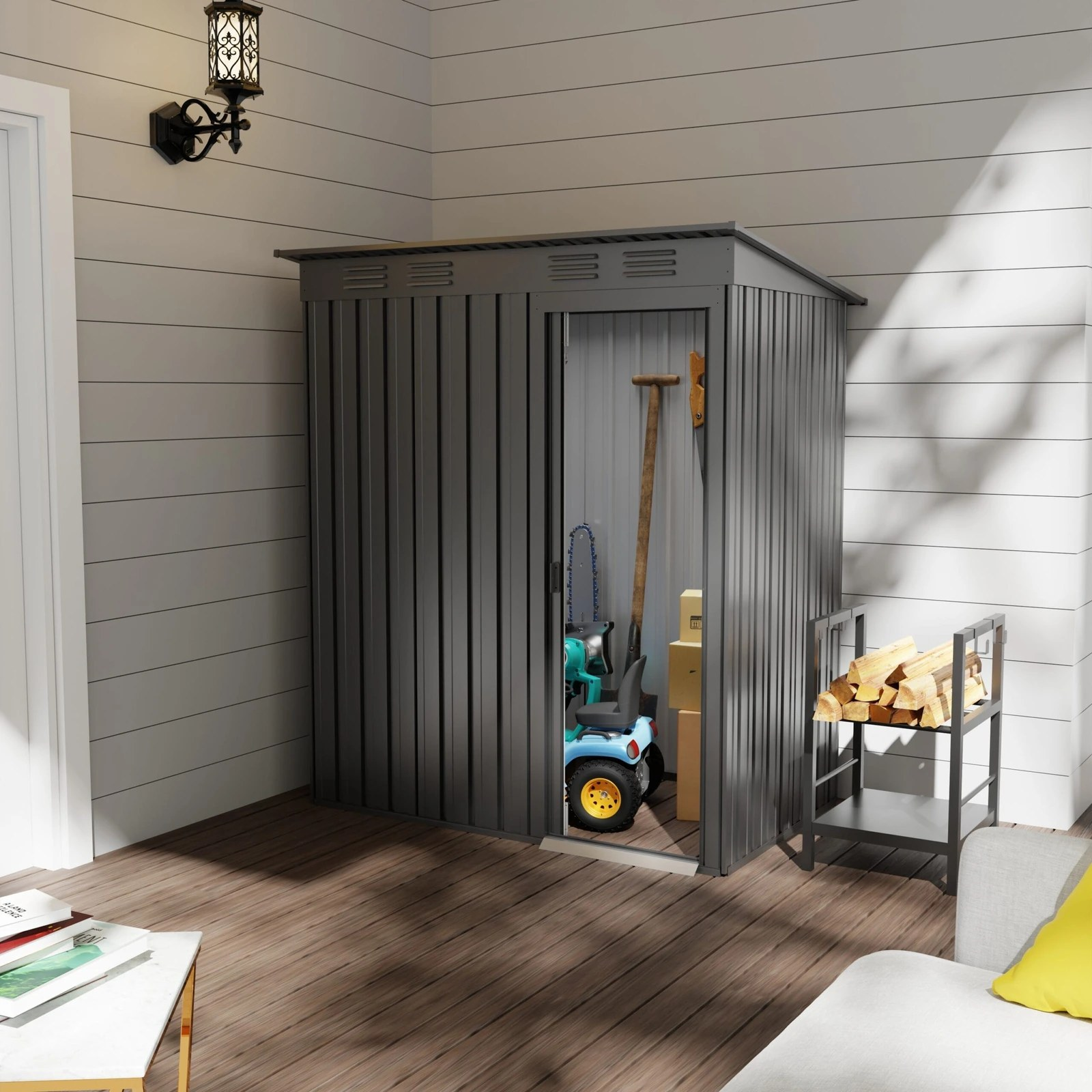
Classic metal garden sheds are a practical starting point for many retail and distribution programs. LERYOU's current collection includes different footprints, roof directions, door systems, finishes and storage arrangements. Selected concepts use corrugated steel-sheet construction and may be configured with apex or pent roofs.
Access options can include sliding or hinged doors, single or double openings, and front- or side-access layouts, depending on the selected product. This breadth makes the classic category useful when a buyer wants to build a coordinated assortment rather than purchase one isolated model.
When reviewing classic sheds, focus on the range architecture:
- Which footprints cover the intended small, medium and larger storage needs?
- Does the target channel prefer an apex or pent-roof appearance?
- What clear door access is needed for the items users are expected to store?
- Which colors and finishes fit the retailer's existing outdoor-living assortment?
- Can the packaging and assembly approach support the intended sales channel?
A classic shed is not automatically a basic or entry-level product. Its retail position depends on the complete configuration, presentation, accessories and packaging. Compare the full product system instead of using the category name as a specification.
2. Skylight Garden Sheds: Natural Light as a Differentiator
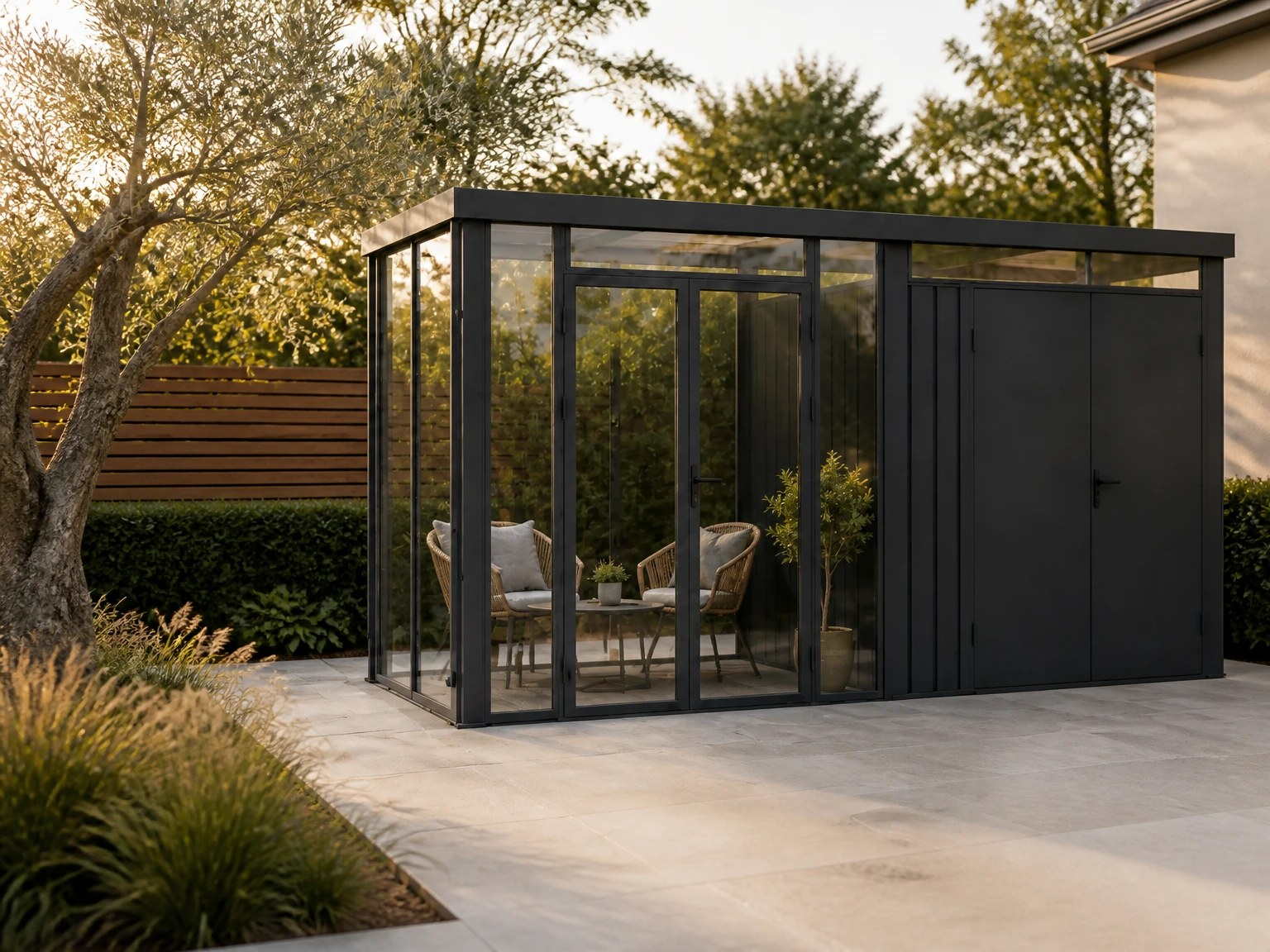
Skylight garden sheds add transparent or translucent upper elements to bring natural light into an enclosed storage concept. This can create a more distinctive exterior and a different user experience from a fully opaque shed.
LERYOU's current skylight concepts include enclosed storage layouts and selected configurations with glazed or sheltered extensions. Depending on the project, available directions may include a glass side section, patio-style extension, privacy screen or enclosed sunroom-style area. These options are not universal and must be confirmed for the selected platform.
For B2B range planning, a skylight shed can serve as a differentiated model beside a more conventional core assortment. Review:
- the position and form of the daylight element;
- the relationship between the enclosed storage area and any extension;
- door access and the likely storage use;
- privacy, color and accessory requirements;
- packaging implications for transparent or translucent components.
First decide whether the project needs daylight inside a storage shed or a more integrated outdoor-living concept. That distinction affects the layout and the information required during specification review.
3. Flat-Wall Garden Sheds: A Contemporary Visual Direction
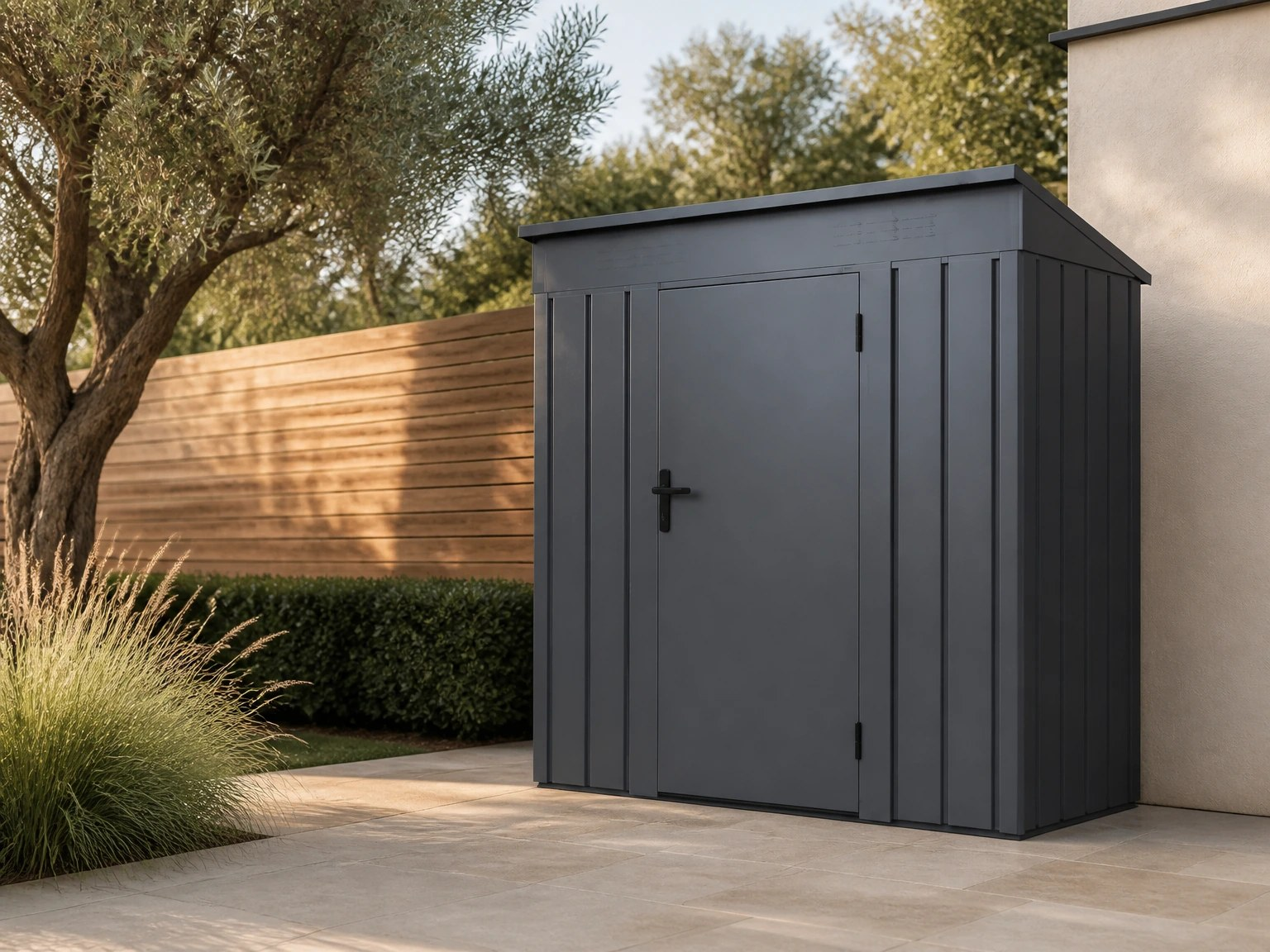
Flat-wall garden sheds offer a cleaner, more understated alternative to conventional corrugated-shed styling. Their flat or low-profile wall appearance can fit contemporary gardens, modern housing developments and design-led retail collections.
LERYOU's flat-wall portfolio includes compact and larger directions, with single-door and wider-access configurations available across selected concepts. Project options may include dimensions, roof profile, door design, floor system, color, accessories, branding and packaging.
The wall profile is only one part of the design. Check how the exterior treatment works with the roof, door and trim details, then review:
- the visual language expected by the target customer;
- the relationship between footprint and access width;
- whether the product is positioned as discreet storage or a garden feature;
- how colors coordinate with other outdoor products in the range;
- which configuration details can be standardized across multiple models.
Flat-wall products can help a seller create a distinct design tier, but the final assortment still needs practical size and access choices. Visual differentiation should support, rather than replace, the storage use case.
4. Heavy-Duty Garden Sheds: A More Substantial Storage Position
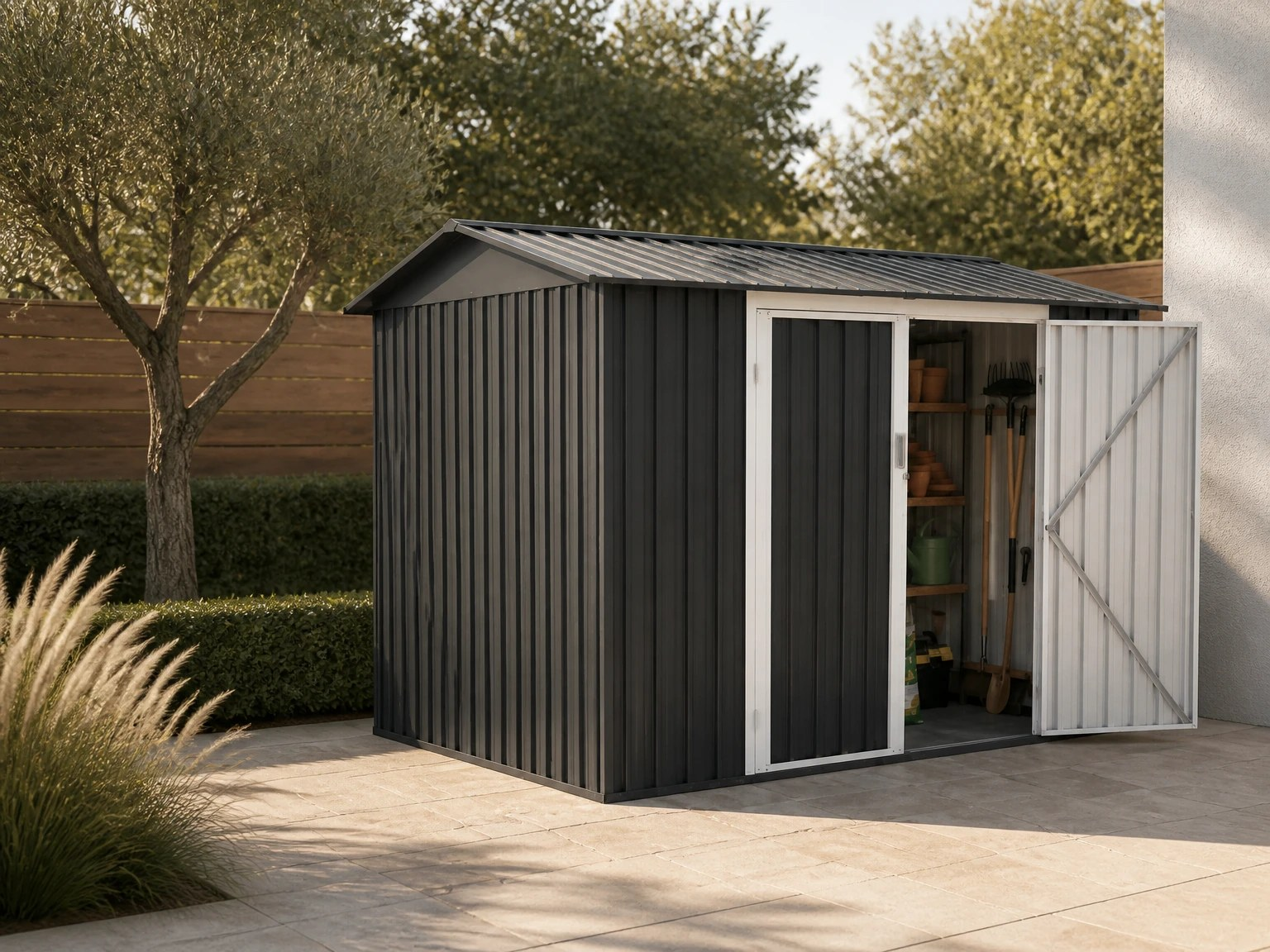
Heavy-duty garden sheds are intended for buyers seeking a more substantial enclosure and premium exterior direction. LERYOU's current concepts include thicker flat steel panels and reinforced structural designs, with fully enclosed layouts and wide front-access or double-door configurations available on selected models.
Larger formats may be considered for bicycles, garden machinery, tools and other bulky outdoor items. The intended use should be stated at the beginning of the inquiry because it affects footprint, access and configuration decisions.
For this category, avoid treating “heavy-duty” as a complete technical specification. Request model-specific information and confirm:
- the intended stored items and required access route;
- the selected wall and frame arrangement;
- door width and opening configuration;
- base and interior storage options;
- destination-market requirements that need documented review;
- packaging and assembly details for the selected size.
No structural performance should be assumed from the product name alone. If a project has wind, snow, load or other performance requirements, they must be supplied and evaluated for the exact configuration.
5. Multi-Functional Garden Sheds: Storage Plus a Second Use
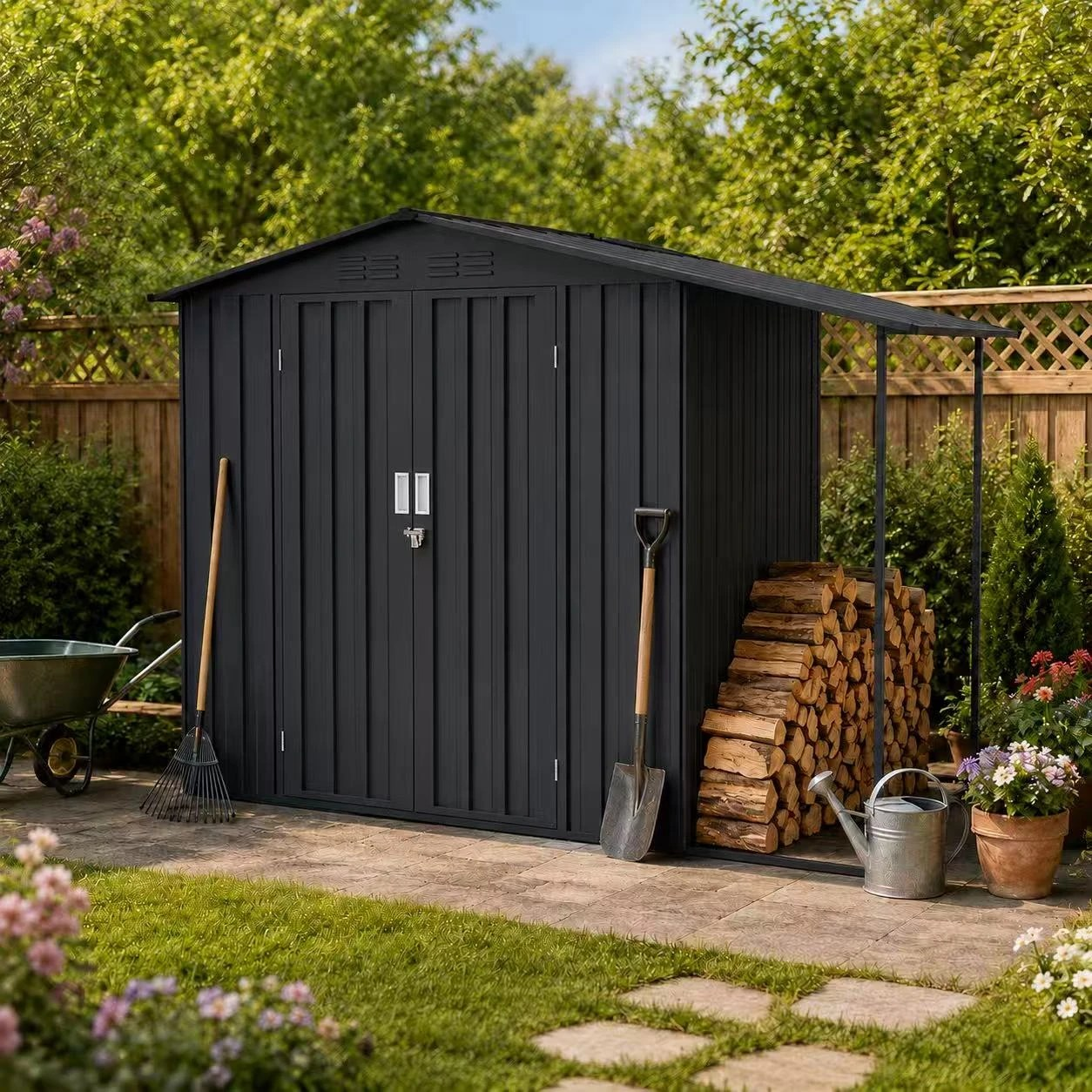
Multi-functional garden sheds combine an enclosed storage area with another practical zone. LERYOU's current concepts include plant-growing space, covered side storage and other useful extensions. Selected layouts can help separate tools and equipment from plants, bicycles, firewood or sheltered outdoor items.
This type can add a specialist or lifestyle-led product to a retailer's assortment. It can also make efficient use of an outdoor footprint by giving different items their own zones. However, the buyer should define the primary and secondary uses before choosing a layout.
Confirm the following points:
- What must remain inside the enclosed main shed?
- What is the extension intended to hold or support?
- Does the project require a plant-growing, bicycle-storage, firewood-storage or sheltered-equipment direction?
- How should the two zones be accessed and separated?
- Which doors, colors, accessories and packaging presentation fit the program?
Main shed dimensions, extension type, openings, accessories, branding and packaging are project variables. Buyers should confirm that the requested combination is compatible rather than assuming every extension can be added to every base model.
How B2B Buyers Should Compare Metal Garden Shed Types
Models can look attractive in isolation and still overlap once placed in the same catalogue. Compare them against the same practical criteria before fixing the range.
Define the Intended Use
Start with what the end customer is likely to store. Hand tools, bicycles, garden machinery, seasonal items and mixed outdoor storage create different access and space priorities. If a second use such as plant growing or covered storage is required, identify it separately.
Map Footprint and Access Together
Do not choose footprint without reviewing the door and placement. A larger shed with unsuitable access may be less useful than a smaller model with a better opening arrangement. Consider both the stored items and the route users will take to move them in and out.
Match Design to the Sales Channel
Classic corrugated forms can anchor a broad assortment, while skylight, flat-wall and multi-functional concepts can provide visual differentiation. A heavy-duty direction may support a more substantial storage position. The right mix depends on the retailer, customer profile and product presentation.
Review Assembly and Packaging Early
Metal sheds are systems of panels, profiles, doors, hardware and instructions. Review the assembly method, part identification, package breakdown and documentation before finalizing the product. E-commerce, retail-store and distribution channels may have different handling and presentation needs.
Confirm Customization at Model Level
Colors, doors, roof profiles, floors, extensions, accessories, branding and packaging may be available as project options, but compatibility varies. Send the requested configuration for review and keep the approved specification, manual, artwork and packaging files aligned.
For a deeper technical review, see the Guia sobre materiais e estrutura de galpões de jardim de metal. If supplier evaluation is the current priority, use the separate guide on how to choose a metal garden shed manufacturer.
How to Build a Balanced Garden Shed Range
A practical assortment can be planned in three layers:
- Core models: Classic sheds in a limited set of footprints and access arrangements for broad storage needs.
- Differentiated models: Skylight or flat-wall concepts that create a visible reason to trade up or choose a different style.
- Specialist models: Heavy-duty or multi-functional concepts for more substantial storage or combined-use requirements.
This framework does not require every buyer to carry all five types. A focused range with clear differences is often easier to present than a large assortment of overlapping models. Review where each product sits, which customer need it addresses and whether another model already serves the same role.
The full Garden Shed Solutions category can be used as a starting point for model comparison.
What to Include in a Metal Garden Shed Inquiry
An effective B2B inquiry should explain the commercial context as well as the preferred product. Include:
- destination country or market;
- sales channel and target customer;
- intended storage use;
- preferred shed type or reference model;
- footprint and access direction;
- roof, door, color, floor or extension preferences;
- expected quantity for quotation review;
- private-label, instruction and packaging requirements;
- any destination-market performance or documentation requirements.
If some details are undecided, state the range goal and the decisions that remain open. LERYOU can then review relevant directions through its Capacidades de OEM e ODM. Commercial terms, feasibility and the final configuration should be confirmed for the specific project.
Perguntas frequentes
What are the main types of metal garden sheds?
Useful range-planning categories include classic, skylight, flat-wall, heavy-duty and multi-functional garden sheds. Each can cover more than one footprint, roof, door or layout, so the product type should not be treated as a fixed specification.
Which metal garden shed type should a retailer start with?
The answer depends on the target market and channel. A classic shed can provide a broad core direction, while a skylight or flat-wall product can add differentiation. Heavy-duty and multi-functional models may suit more specialized use cases. Start with distinct customer needs, then select the smallest range that covers them clearly.
Can doors, roofs and colors be customized?
These elements may be available as project options on selected models. Compatibility and feasibility must be confirmed for the exact shed platform and requested configuration.
Is a heavy-duty shed always the best option?
No. A more substantial structure is not automatically the right choice for every footprint, customer or channel. Compare intended use, access, design position, assembly, packaging and project requirements.
Can one shed combine storage with plant-growing or covered space?
Selected multi-functional concepts combine enclosed storage with a plant-growing area, covered side storage or another practical extension. The required layout and compatibility should be confirmed during project review.
Plan Your Metal Garden Shed Range With LERYOU
Before selecting SKUs, give every model a clear job in the range. Define the target market, sales channel, intended uses and preferred product directions before comparing individual configurations.
Entre em contato com a LERYOU with your range brief, reference products and packaging or branding requirements. The team can review suitable garden shed directions and confirm the details that apply to your selected project.
 English
 Deutsch
 Français
 Español
 Italiano
 Polski
 日本語
日本語 한국어
한국어 Nederlands
 Čeština
 Português do Brasil
 Русский