
Choosing between a polycarbonate and glass greenhouse is not simply a question of which material is “better.” The right choice depends on product positioning, visual expectations, structure, package handling, assembly, destination market and the type of retail program being developed.
For professional buyers, the comparison should cover the complete greenhouse system. Panel material, frame, connectors, doors, vents, base and packaging must work together. This guide outlines the questions to ask before selecting a greenhouse range.
1. Define the Market Position First
Start with the intended customer and sales channel. A garden center display program, home-improvement range and e-commerce assortment may place different value on appearance, package format, ease of handling and price position.
Clarify:
- target country and climate considerations;
- retail, wholesale or e-commerce channel;
- expected product size and garden setting;
- entry, mid-market or premium positioning;
- package and delivery limitations;
- assembly expectations;
- private-label and artwork requirements.
This context helps determine whether one glazing direction or a mixed range is more appropriate.
2. Compare the Visual Character
Glass is often selected for a clear, traditional or premium greenhouse appearance. It can create strong display impact and a familiar garden structure.
Polycarbonate panels create a different visual effect. Depending on the panel construction and finish, they may diffuse light and reduce direct visibility through the greenhouse. This can suit practical growing programs and products designed around manageable panel handling.
Appearance should be assessed with the actual frame color, profiles, connectors and product size. A material sample alone does not show the complete product position.
3. Review Light Requirements Carefully
Both systems are used to create growing environments, but light transmission and diffusion depend on the exact panel or glass specification. Do not rely on a generic percentage taken from another product.
Ask for documentation relevant to:
- the proposed glazing material;
- panel construction and surface treatment;
- exact thickness or glass type;
- frame spacing and panel size;
- intended crop or consumer use;
- destination-market requirements.
If a quantified light-performance claim is required, it should be supported for the selected material and configuration.
4. Consider Handling and Breakage Risk
Glass and polycarbonate require different handling approaches through production, packaging, distribution and installation.
Glass needs packaging and instructions that reflect its weight, edges and breakage risk. The final product should be reviewed for safe handling at the relevant size and package format.
Polycarbonate is generally handled differently, but panels still need protection against scratching, bending, edge damage and incorrect orientation. Protective film, part identification and installation guidance should match the approved panel.
The comparison should include the full logistics route, not only factory assembly.
5. Match the Frame to the Glazing
The frame, panel-retention system and glazing material form one structure. A frame designed for one material should not be assumed suitable for another without engineering review.
Confirm:
- frame material and finish;
- profile and connector arrangement;
- panel or glass retention method;
- roof and wall module sizes;
- door and vent integration;
- base and anchoring interface;
- replacement-panel process where applicable.
Final performance requirements must be evaluated for the exact greenhouse model, dimensions and glazing configuration.
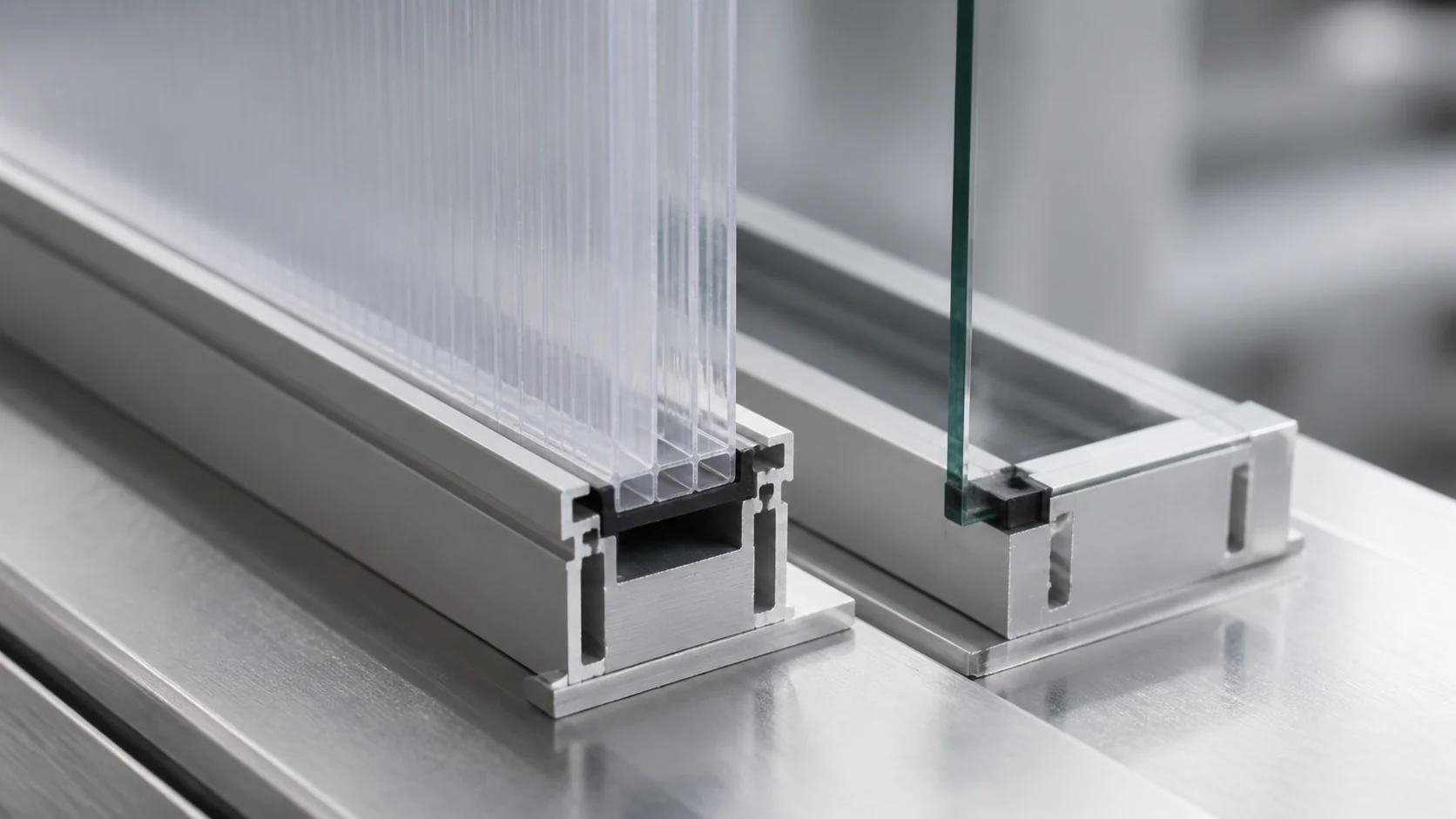
6. Compare Packaging and Distribution
Packaging can influence which greenhouse is practical for a retail program. Review carton size, package count, component protection, hardware organization and manual placement.
For glass products, confirm how individual panes, corners and edges are protected and identified. For polycarbonate products, confirm how panels are kept flat, protected from abrasion and distinguished by position or orientation.
Do not assume fixed container quantities or packaging-test results before the final product and pack have been approved.
7. Review Assembly Experience
Assembly quality affects reviews, returns and customer support. Compare:
- number and identification of glazing pieces;
- clarity of panel or pane orientation;
- sequence for installing frame and glazing;
- door and vent adjustment;
- hardware organization;
- replacement or service information;
- language and safety requirements for the market.
A finished display sample should be reviewed together with the actual manual and package.
8. Consider Maintenance and Replacement
Maintenance expectations depend on the selected material, surface, connectors and local environment. Buyers should avoid broad “maintenance-free” claims.
Ask how users should clean the glazing, which products or methods must be avoided, how vents and doors are adjusted, and whether replacement components can be identified from the manual. Instructions should be written for the exact supplied material.
9. Decide Whether the Range Needs One or Both
A retailer does not always need to choose only one material. A structured greenhouse range might use polycarbonate for a practical core assortment and glass for a more premium visual direction. The decision depends on market demand, display space, delivery constraints and the ability to explain the differences clearly.
Avoid creating multiple SKUs that differ only superficially. Each model should have a clear product role.
Comparison Summary
| Review area | Polycarbonate direction | Glass direction |
|---|---|---|
| Visual position | Practical, light-diffusing appearance depending on panel | Clear, traditional or premium appearance depending on glass |
| Handling | Protect against scratches, bending and wrong orientation | Protect against weight, edges and breakage |
| Structure | Must match panel construction and retention system | Must match glass type, pane size and retention system |
| Packaging | Keep panels flat, separated and identified | Protect panes, corners and edges carefully |
| Assembly | Clear panel orientation and film instructions | Clear handling, pane identification and safety instructions |
This table describes comparison areas, not universal performance rankings.
Frequently Asked Questions
Is polycarbonate always more suitable for e-commerce?
Not automatically. Package dimensions, product size, panel construction, protection and carrier requirements must be reviewed for the exact model.
Is glass always the premium choice?
Glass often supports a premium visual direction, but overall positioning also depends on frame design, finish, details, size, packaging and retail presentation.
Can the same greenhouse frame use both materials?
Do not assume so. Glazing retention, dimensions, weight and structural requirements may differ. Confirm compatibility with the manufacturer.
Which material performs better in a specific climate?
That decision requires the exact greenhouse, glazing specification, frame and target requirements. Provide the market and performance criteria before requesting evidence.
Select the Right Greenhouse Program
Compare LERYOU’s
polycarbonate greenhouse range
and
glass greenhouse range,
explore
greenhouse and growing solutions,
review
OEM and ODM capabilities,
or
contact LERYOU
to discuss the intended market and product position.
 English
 Deutsch
 Français
 Español
 Italiano
 Polski
 日本語
日本語 한국어
한국어 Nederlands
 Čeština
 Português do Brasil
 Русский