
Choose a cold frame by usable growing space, lid control and how it will be fixed in the garden. For a polycarbonate cold frame, compare the panel construction, frame connections and opening arrangement together. The most useful retail specification explains how customers will place their plants, reach them and adjust ventilation.
A garden cold frame can support seed starting, young-plant care and the transition from indoor growing to outdoor conditions. Retail buyers should connect those tasks to a clear product configuration, an understandable assembly process and a complete pack of components.
Start with the growing task and available space
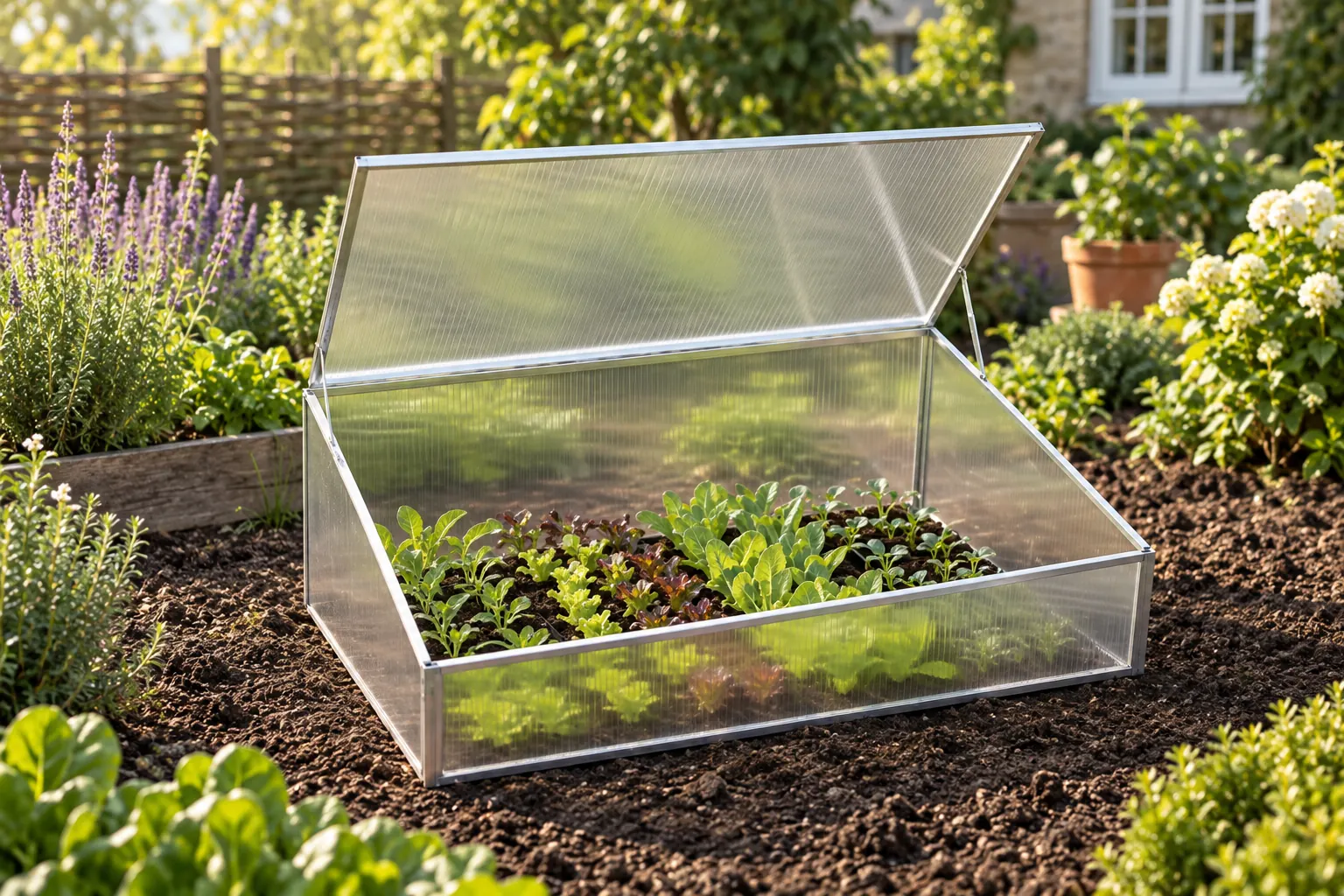
A cold frame is a low enclosure with a glazed lid. Its growing area sits close to the ground, and the lid provides access from above. This makes tray layout and working reach more important than the external footprint alone.
Define whether the range is intended for seed trays, small pots or plants growing directly in a bed. Ask how customers will lift trays out, water the rear corners and close the lid as plants grow taller. Leave room outside the enclosure for the person tending it and for the lid to open fully.
For a raised-bed application, match the actual bed dimensions and support edges. A similar sales size does not establish that two products fit together. Check the fixing arrangement and whether the lid will clear nearby fencing or planting.
Where shoppers need upright shelves or room to stand, compare the formats before choosing a larger cold frame. The cold frame, mini greenhouse and greenhouse cabinet comparison explains those different space requirements.
What to check in a polycarbonate cold frame
Panels and their connection to the frame
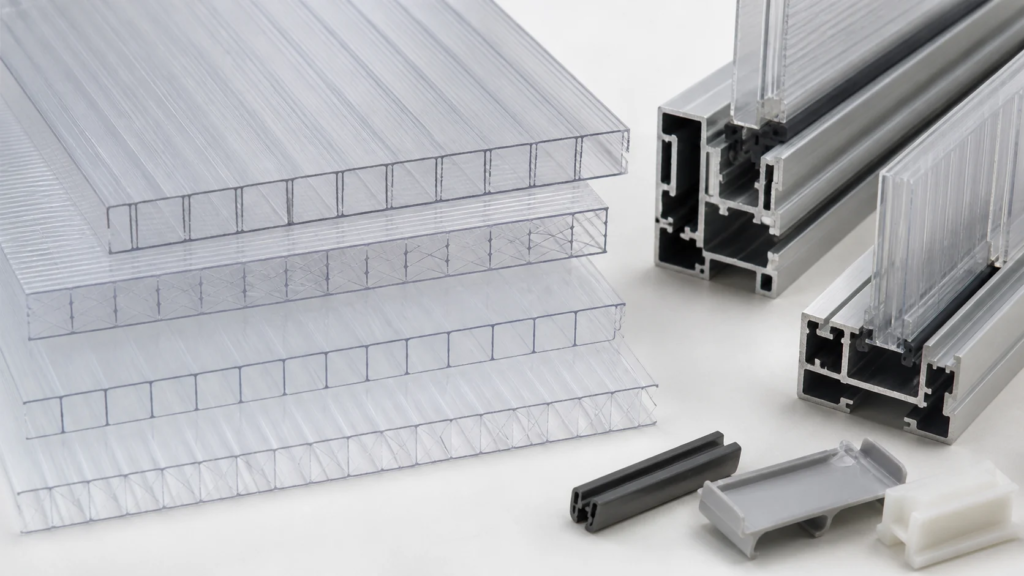
Record the panel material and thickness for the selected model. Look at how each panel is retained, how the corners connect and which parts arrive pre-assembled. These details affect assembly instructions, replacement parts and the way the finished enclosure is handled.
Ask for a sample of the complete panel-and-frame section rather than judging a loose sheet in isolation. Check the edge finish, panel seating and the fit of the lid when closed. If a supplier offers different glazing options, keep their specifications and product images separate.
For LERYOU’s compact nursery cold-frame format, the construction uses 4 mm polycarbonate panels with an aluminium frame pre-assembled to the panels. The polycarbonate nursery cold frame provides a starting point for selecting the footprint and window arrangement.
Lid movement and ventilation
Inspect the lid as a working part of the product. It should give access to the growing space and allow the opening to be adjusted for plant care. Check the hinges, lid supports, closing position and the clearance needed behind and above the frame.
A single broad lid provides one opening zone. Two independent lids allow the customer to reach or ventilate one section while leaving the other closed. Compare how easily a tray can be removed and how the open lid is held in position.
Ventilation needs attention as weather changes. Clear customer instructions should explain the intended opening positions, how to secure the lid and when to close it in adverse weather. An opening shown in a product photograph should match the supplied hardware and instructions.
Compare single-window and divided layouts
| Layout | Practical difference | What to compare |
|---|---|---|
| Compact single-window cold frame | One hinged top window opens the growing space from above. | Reach to the rear, lid support, tray access and the space needed to lift the lid. |
| Compact double-window cold frame | Two independent top windows divide access within a compact footprint. | Usable opening beneath each window, centre members and how trays pass through the opening. |
| Larger double-compartment cold frame | A wider growing layout provides two covered sections. | Internal growing dimensions, separate lid operation, assembly space and carton size. |
LERYOU’s compact single-window and double-window formats have a 107 x 55 cm footprint, while the larger double-compartment format has a 107 x 110 cm footprint. The listed height range is approximately 28–40 cm. Use the internal dimensions and lid clearance to assess tray fit rather than dividing the external dimensions by a tray size.
These layouts can form different steps within one retail range. A useful upgrade should add growing area, a different access arrangement or another clear customer benefit. Keep the product name, photograph and component list aligned with that difference.
Plan the garden position and ground fixing
Choose a stable, level position with practical access and suitable drainage. Assess how exposed the position is to wind and how rain moves around the enclosure. The ground interface should suit the chosen use, whether plants are in trays or growing in the soil beneath.
Lightweight enclosures need a defined fixing method. Establish where the fixing points are, which supplied parts secure the product and which ground conditions they are intended for. Fixing a frame to a raised bed is a different arrangement from securing it directly to prepared ground.
LERYOU’s nursery cold-frame products include ground-fixing provision. Specify the intended installation surface when preparing an enquiry so the fixing components and assembly instructions can be considered together. Moving the enclosure seasonally should also be addressed in the handling instructions.
Review assembly, packaging and spare parts
Pre-assembled panel sections reduce the number of individual frame-to-panel connections the customer makes. There are still joints, openings and fixing parts to check. Assemble a sample using the same manual, hardware pack and component labels intended for the retail product.
During the review, note any orientation that is easy to reverse, any part that is difficult to identify and any step that needs a clearer illustration. Confirm how the lid support is fitted and how the finished unit is secured before it is used outdoors.
Packaging should protect panel faces, edges and long frame members. Compare the packing arrangement with the actual product configuration, including the number of lid sections. Keep small hardware in an identified pack, and make the manual version easy to match to the supplied model.
| Purchasing record | Details to capture | Why it helps |
|---|---|---|
| Growing space | External footprint, internal dimensions, low and high sides, usable lid opening. | Supports accurate listings and tray-fit questions. |
| Construction | Panel material and thickness, frame sections, joints and pre-assembled parts. | Makes supplier quotations easier to compare. |
| Operation | Number of lids, hinges, supports, closing positions and ground fixings. | Connects the product image with everyday use. |
| Retail pack | Carton dimensions and weight, protection, hardware identification, manual and replacement parts. | Supports delivery, assembly and after-sales service. |
The garden product supplier evaluation and RFQ checklist helps organise the wider sample, documentation and quotation review.
Frequently asked questions
What is a garden cold frame used for?
It provides a low covered space for seedlings, young plants and seasonal cultivation. It can also help gardeners gradually move suitable plants from indoor growing into outdoor conditions.
Does a polycarbonate cold frame keep every plant frost-free?
An unheated cold frame does not provide a guaranteed minimum temperature. Choose plants and seasonal use for the local conditions, and include ventilation and weather management in the care instructions.
Is one lid better than two?
Compare the access required. A single lid opens one broad area; independent lids let users open separate sections. Tray dimensions, reach and the space available for the lid are more useful selection criteria than lid count alone.
Can a cold frame sit on a raised bed?
It can be part of a matched arrangement. Confirm the bed dimensions, support edges, fixing points and lid clearance before combining the products.
Does the external size show how many trays will fit?
No. Frame members, centre sections and the clear opening reduce the space available for placing and lifting trays. Use the internal drawing and a physical tray-fit check.
What does pre-assembled frame-to-panel construction mean?
The frame is already attached to the panel sections. The customer joins the supplied sections and fits the remaining components according to the manual.
What should retailers include in a cold-frame enquiry?
Send the target growing task, footprint, preferred lid layout, installation surface, panel requirements and retail-pack needs. Include sample quantities, destination and the documentation needed for the sales channel.
Build a clear cold-frame range brief
Start with the required growing area and access pattern, then select the glazing, lid layout, ground fixing and retail pack. Explore LERYOU’s nursery and growing range to coordinate cold frames with related garden products.
 English
 Deutsch
 Français
 Español
 Italiano
 Polski
 日本語
 한국어
 Nederlands
 Čeština
 Português do Brasil
 Русский
 ไทย
