For retailers, wholesalers, importers, distributors and private-label buyers
Choosing garden sheds for a commercial program starts with the customer task and sales channel—not with a long list of models. A controlled assortment connects storage use, footprint, access, roof, structure, finish, packaging and support documentation to a clear price architecture.
Short answer: how should a buyer choose garden sheds?
Define the target user, stored items, site footprint, access requirement, price position and delivery channel. Then compare roof form, door opening, wall and frame system, base and floor direction, ventilation, accessories, package data, assembly support and product-specific evidence. Give every SKU a distinct job in the range.
1. Segment the storage task
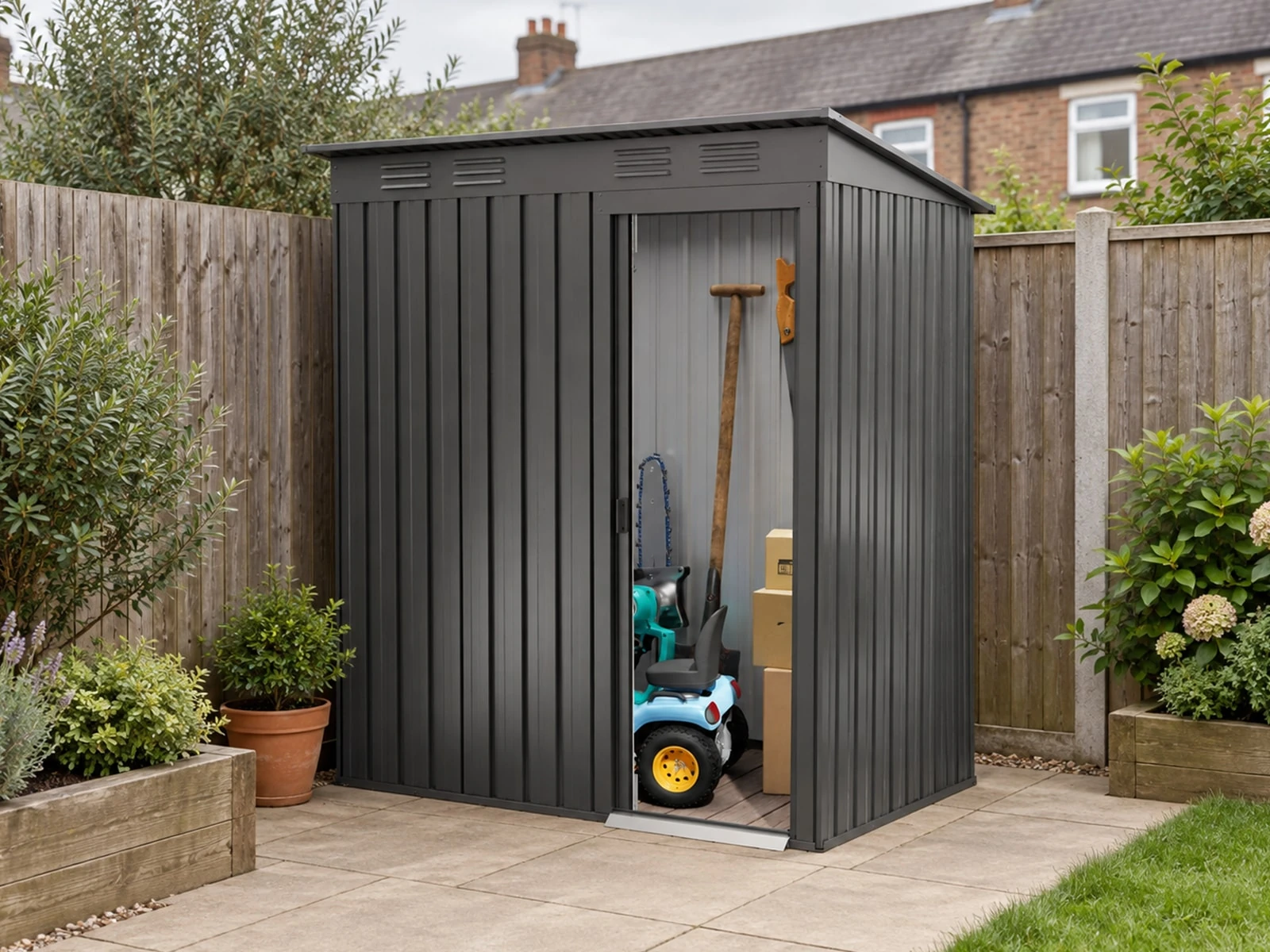
A compact tool shed, bicycle-capable shed, mower-storage product and multifunctional garden building are not interchangeable. Record the object dimensions and movement path. Door width, height and opening method can matter more than a nominal shed label.
- Hand tools and accessories: prioritize organization, shelves/hooks direction and manageable footprint.
- Bicycles or mowers: prioritize clear opening, turning space and base/floor interface.
- Long-handled equipment: prioritize usable wall height and internal organization.
- Mixed outdoor storage: prioritize access, zoning and a product size that remains commercially practical.
2. Build a size ladder instead of isolated SKUs
LERYOU’s current product records include compact classic sheds and larger platforms, but dimensions vary by product. Use exact external, base, door and package dimensions from the selected configuration. A useful assortment may contain compact, core and larger-footprint roles without presenting every possible size.
3. Select roof and access together
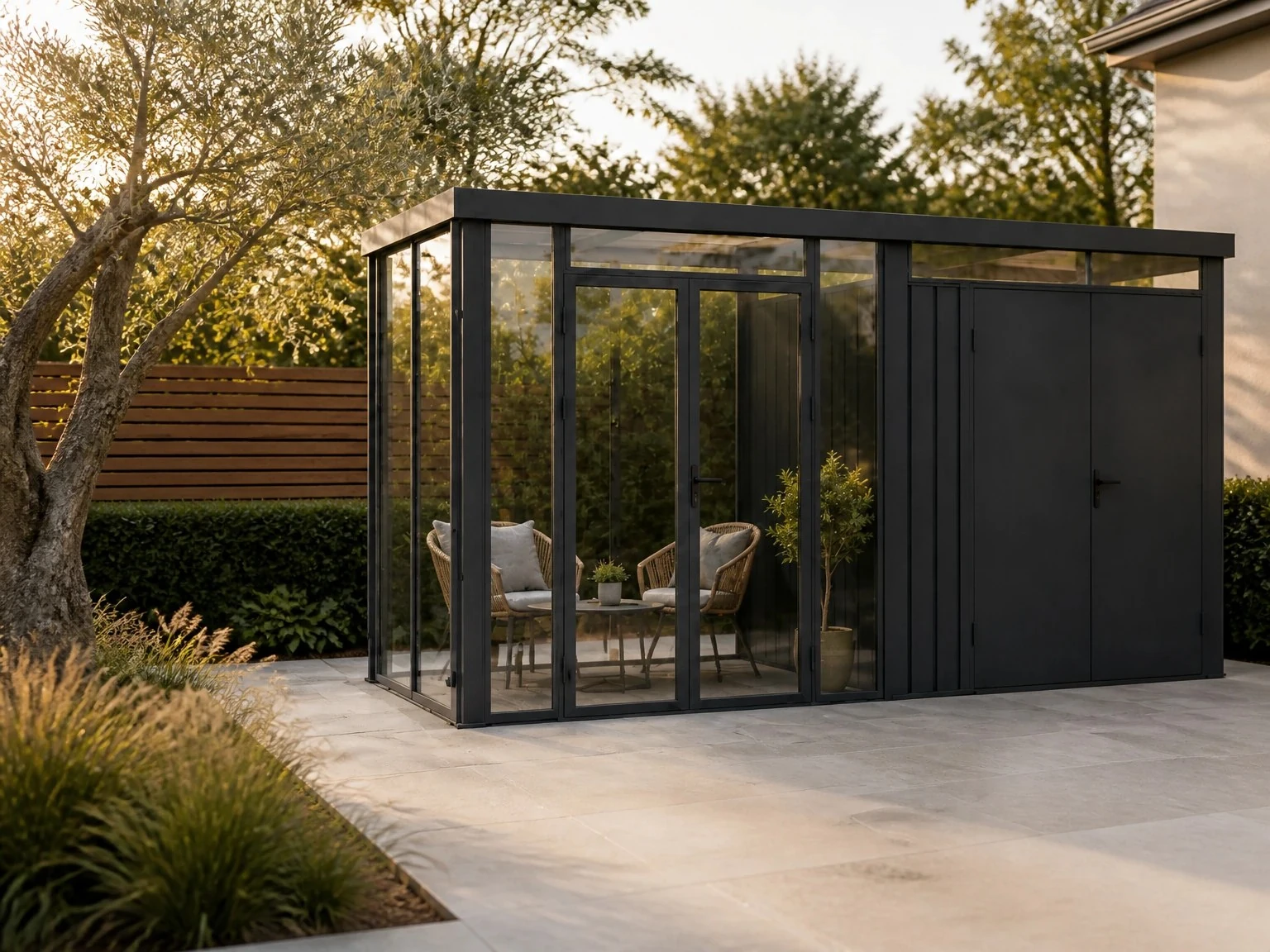
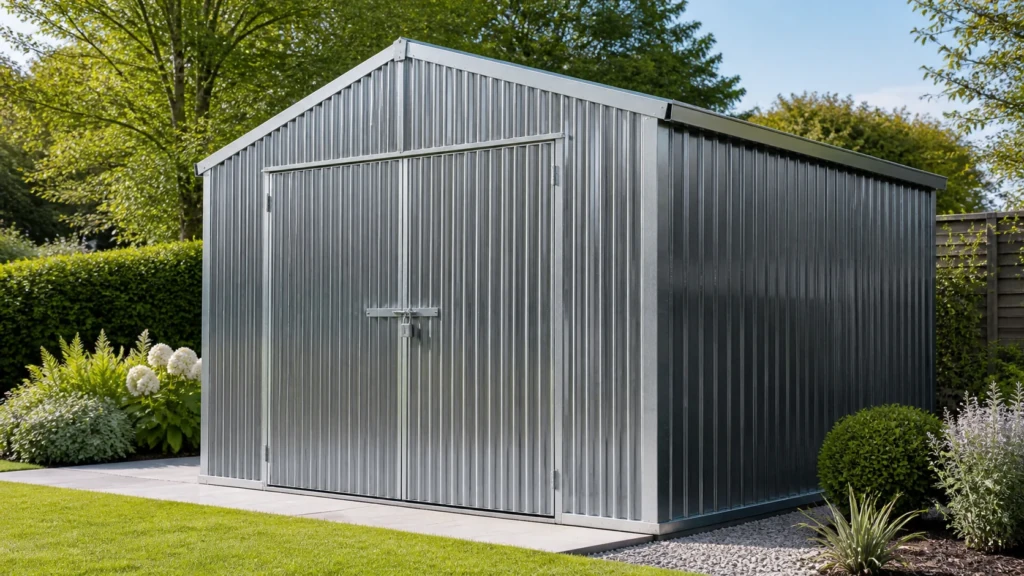
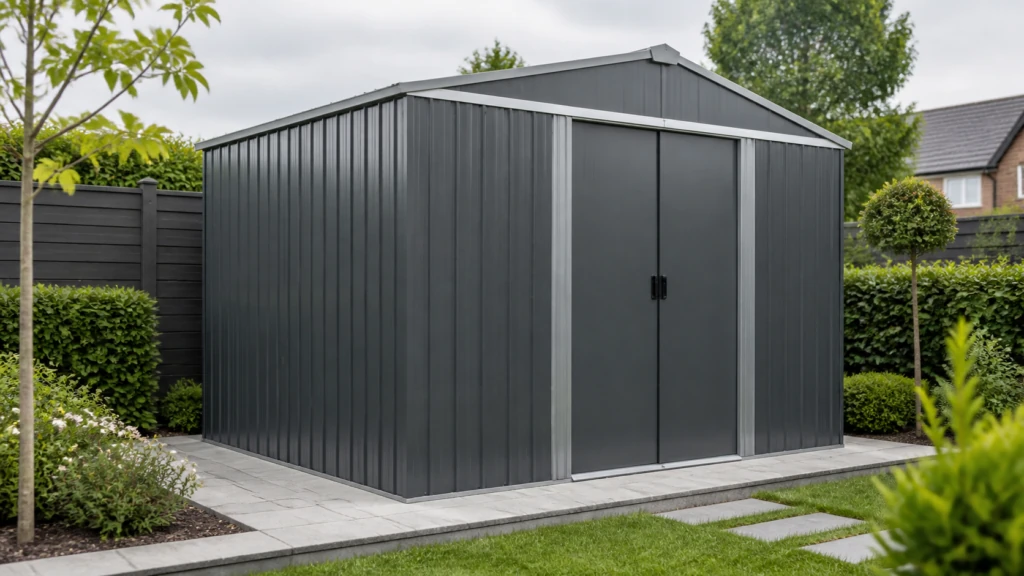
Apex, pent and low-profile roof directions change height distribution, drainage orientation and visual position. Door type—single, double, hinged, sliding or side access—changes the movement path. Review roof, door and site placement on one drawing rather than as separate catalogue filters.
4. Compare the complete structure
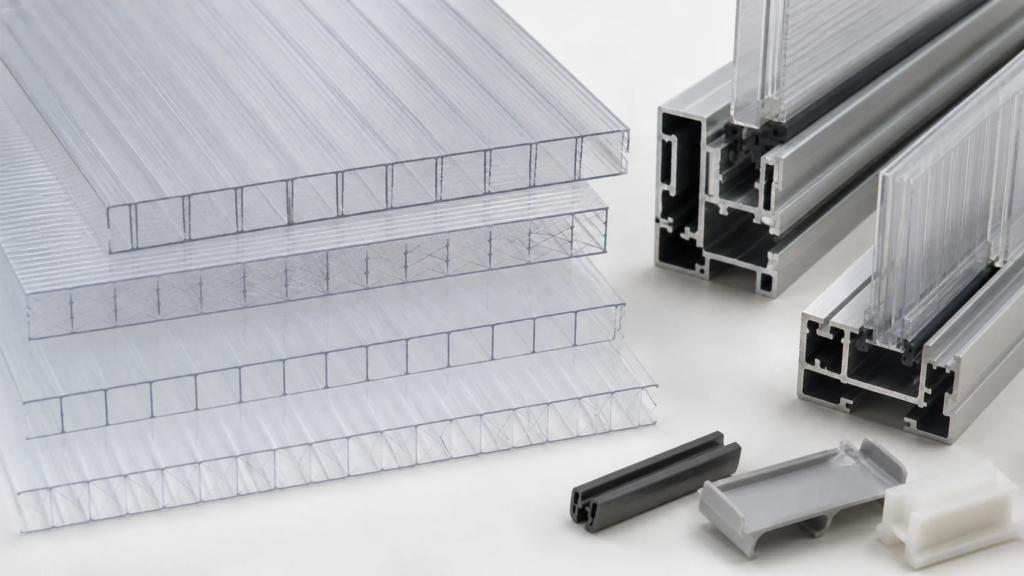
Wall material alone does not define the shed. Review wall and roof panels, frame, corners, base, fasteners, doors and assembly sequence. If a market requires specific performance evidence, ask whether it applies to the exact model, size and configuration.
The materials and structure guide and metal shed parts list provide deeper specification fields.
5. Control options and upgrades
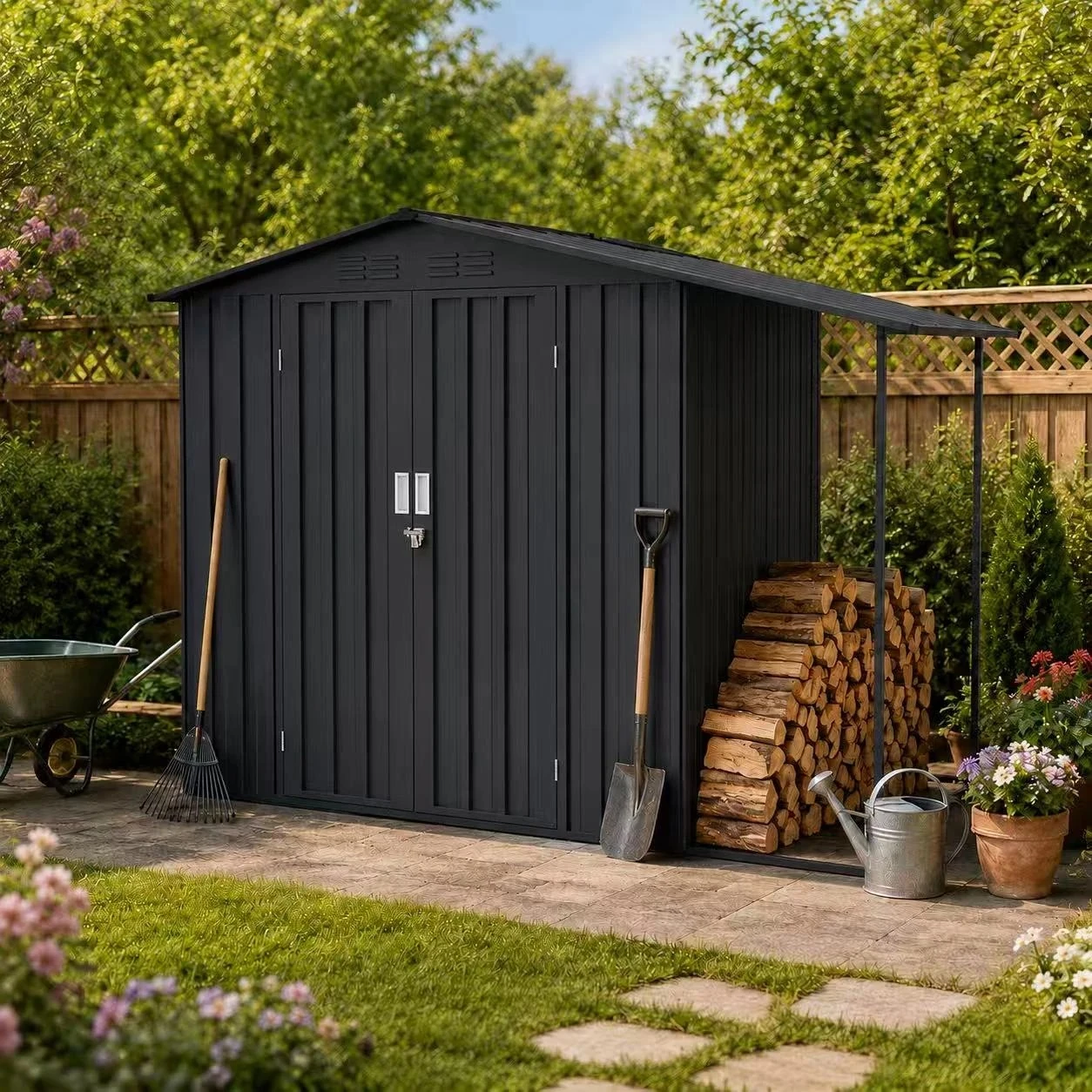
LERYOU’s records include colour and size directions, roof and door alternatives, skylight or side-window directions, floor options, shelves, tool hooks, racks and locks across selected products. Treat every option as configuration-specific. An upgrade should be visible, explainable and supportable in the product page, manual, package and after-sales files.
6. Match the channel to the package
E-commerce, store delivery and wholesale distribution can tolerate different package lengths, weights and handling steps. Approve the actual pack-out: panel protection, profile separation, hardware bags, part labels, manual location and carton identification. Do not publish container quantities before the SKU mix and carton data are fixed.

7. Use a controlled RFQ
| RFQ field | What to provide | Why it matters |
|---|---|---|
| Market and channel | Country, retailer type, wholesale or e-commerce route | Shapes evidence, packaging and product-data needs |
| Storage task | Objects, access pattern and customer use | Determines footprint, doors and organization |
| Product direction | Roof, wall, frame, base, floor, finish and options | Creates a comparable configuration |
| Commercial inputs | Quantity range, destination, packaging and branding | Defines quotation scope without premature promises |
| Approval files | Drawing, parts list, sample, manual, artwork and evidence | Controls change before production |
Use the shed quotation comparison checklist after suppliers return offers.
Frequently asked questions
There is no universal number. Build compact, core and larger roles only where demand, package economics and price steps are distinct enough to justify separate SKUs.
Review them together. Roof form changes height distribution and drainage, while the footprint, doors and intended storage task determine whether the product is practical.
Doors, base/floor direction, lighting or ventilation, internal organization, locks and finish can matter, but availability must be confirmed for the selected product.
Approve the specification, drawings, sample where required, parts list, manual, packaging, labels, artwork and the exact evidence used for market claims.
Build a controlled garden shed assortment
Compare LERYOU garden shed solutions, review garden shed OEM/ODM support, or submit your market, channel, target sizes and packaging requirements.
Content scope reviewed against LERYOU’s current product knowledge records in September 2026. Final specifications, packaging, evidence and supply scope must be confirmed for the selected product and destination market.
 English
 Deutsch
 Français
 Español
 Italiano
 Polski
 日本語
日本語 한국어
한국어 Nederlands
 Čeština
 Português do Brasil
 Русский