For garden-shed buyers, retailers, importers and assortment managers
Which garden shed material is more durable, and which costs less to sell and support? Metal, resin (plastic) and wood can all be viable, but no material label answers those questions by itself. The structure, finish, installation conditions, package, maintenance instructions and evidence for the exact model matter more than a generic ranking.
Short answer: compare the complete quoted shed and its landed and after-sales costs. Metal can support a broad range of roof, door and finish directions; resin can provide moulded components that do not rust but still need UV, temperature and joint checks; wood can offer a natural appearance and repairable components. Each benefit depends on the selected product and how it is made, installed and maintained.
LERYOU’s current garden-shed supply is metal-led. Resin and wood are discussed as competing material directions for buyer evaluation—not as LERYOU product lines.
Metal vs resin vs wood: what is the practical difference?
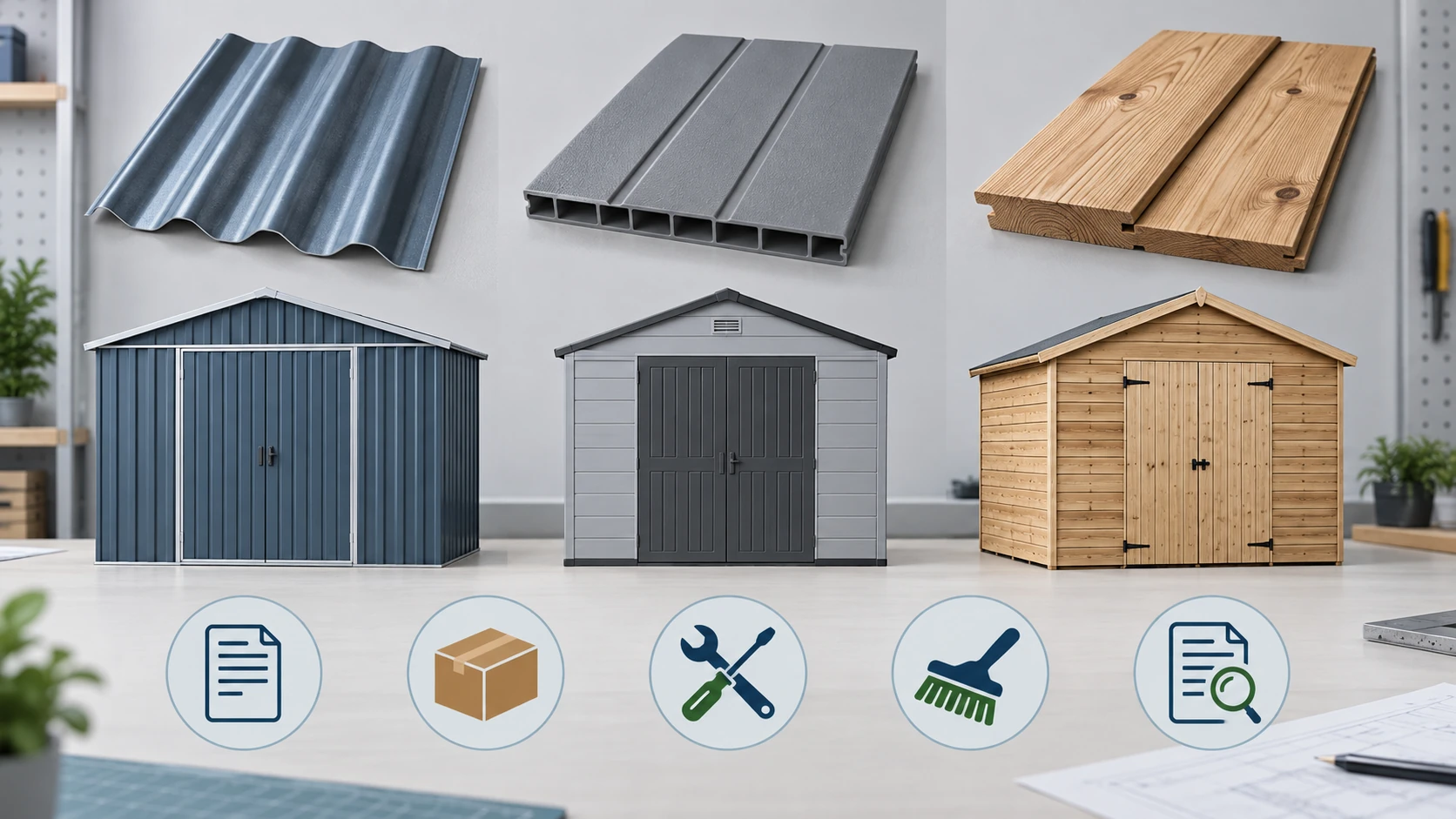
For a retailer, the best material is the one whose exact model meets the intended storage job, target price, site conditions and customer-support capacity. Ask for model-specific evidence before calling one shed “stronger,” “cheaper,” “maintenance-free” or “faster to assemble.” Resin is a type of plastic; formulations and reinforcements differ, so a resin claim should not be assumed for every plastic shed.
| Buyer question | Metal shed | Resin / plastic shed | Wood shed |
|---|---|---|---|
| What controls durability? | Steel, coating, connections, roof and wall geometry, base and installation | Resin formulation, wall structure, reinforcement, joints, UV exposure and temperature range | Timber species and grade, treatment, moisture detailing, roof, fixings and upkeep |
| What cost belongs in the comparison? | Panels and frame, finish, hardware, carton protection, assembly and replacement parts | Moulded parts and tooling, reinforcement, carton volume, assembly and replacement panels | Timber and treatment, package weight, installation, periodic finishing and replacement parts |
| What should the buyer inspect? | Coating/finish evidence, panel edges, fasteners, ventilation and base | UV and temperature claims for the exact formulation, joints, supports and base | Moisture protection, treatment instructions, joint details and maintenance schedule |
| What may affect assembly? | Panel identification, frame alignment, fastener count and anchoring | Part size, joint fit, reinforcement and base preparation | Panel squareness, fixing sequence, roofing and site preparation |
| What should the retail listing show? | Exact included structure, dimensions, door opening, finish and required base | Exact panel and support system, dimensions, access and required base | Exact timber and finish scope, dimensions, access and upkeep instructions |
Do not use this matrix as a lifespan or price ranking. Compare quotations and test records for equivalent size, use and destination market; ask suppliers to identify the SKU and configuration behind every claim.
How to compare durability without inventing a lifespan
Durability is a property of the complete shed in its intended setting, not simply of “metal,” “resin” or “wood.” A retail team should ask what can fail or require maintenance on the selected model: roof and wall joints, surface finish, panel supports, door hardware, foundation interface and fasteners. Evaluate those points against expected weather, location, use and care instructions.
- Metal: confirm the steel and finish specification, exposed edges, drainage and any product-specific corrosion or structural evidence. A coating claim does not describe every joint or cut edge.
- Resin/plastic: confirm the actual polymer system, reinforcement, joint design and evidence for claimed UV or temperature performance. “Plastic” is not one formulation.
- Wood: confirm timber species/grade, treatment, moisture detailing and the maintenance the retailer will need to explain to customers.
Do not publish a universal service-life figure for a material category. If a supplier provides a warranty or test report, identify the covered model, conditions and exclusions before quoting it.
Compare total cost, not just the unit quote
A fair B2B comparison uses the same target footprint, access requirement, destination and quantity. Then calculate landed unit cost + handling and assembly support + expected maintenance and replacement support. These inputs can change the range decision even when one supplier has the lowest ex-factory price.
- Purchase and freight: compare the quoted configuration, number of cartons, packed dimensions, weights and loading assumptions.
- Retail handling: consider damage risk, missing-part processes, manual clarity and time needed for customer support.
- Ownership and after-sales: identify finish care, replacement hardware/panels and the scope of any warranty.
Ask each supplier to separate included items from optional bases, floors, vents, locks and accessories. Do not present a generic metal/resin/wood price tier as a product quote.
Translate material choice into a retail role
A range should give each material a distinct reason to exist. The buying team can define entry, core and premium positions, but the labels must follow actual product differences. Avoid using material alone as a proxy for quality.
- Entry role: controlled footprint, clear use case, limited configuration and straightforward package story.
- Core role: repeatable sizes, practical access, understandable upgrades and stable support documentation.
- Premium role: visible design differences, upgraded structure or finish, and evidence that supports the price step.
What buyers should check on metal sheds
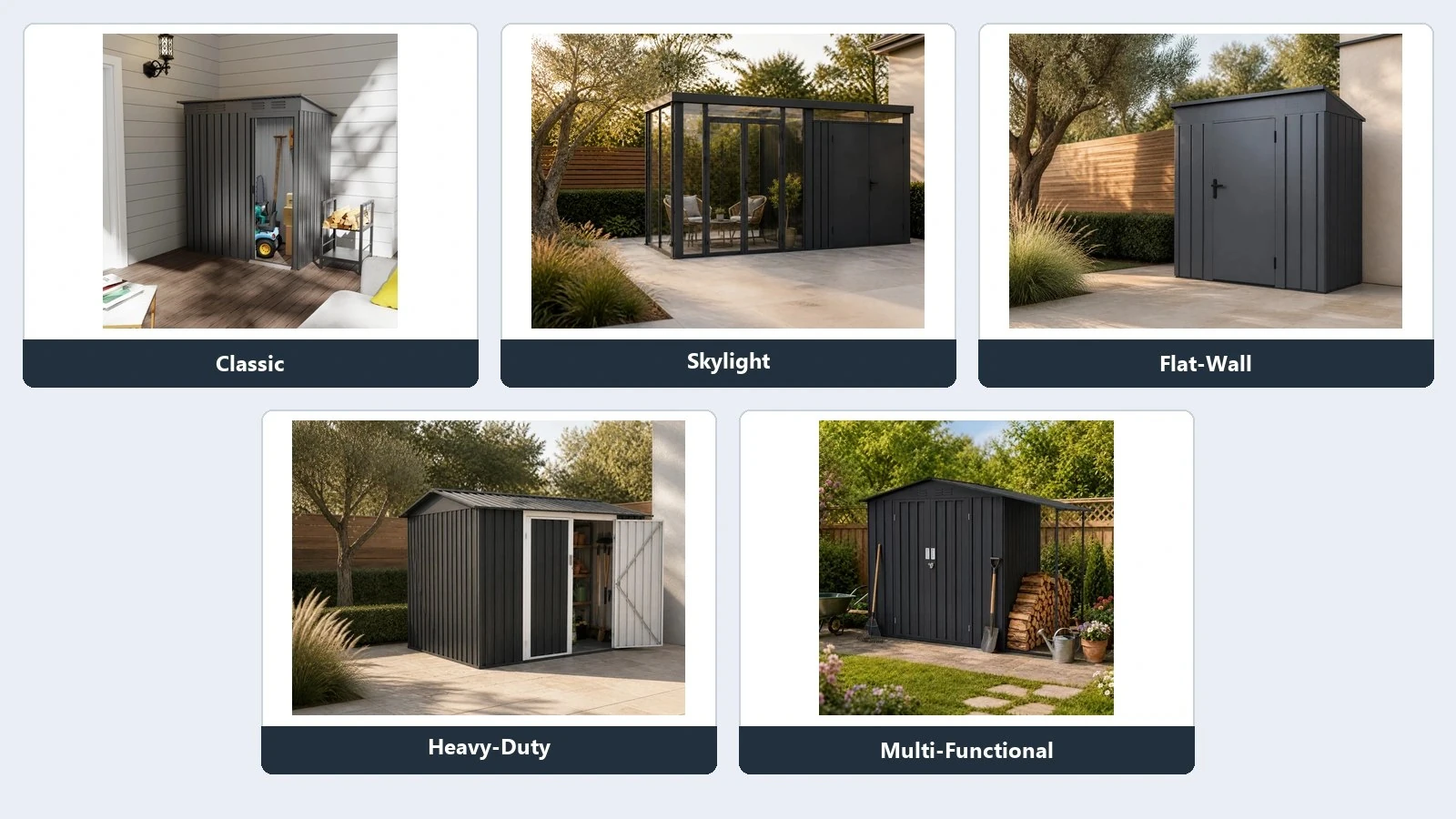
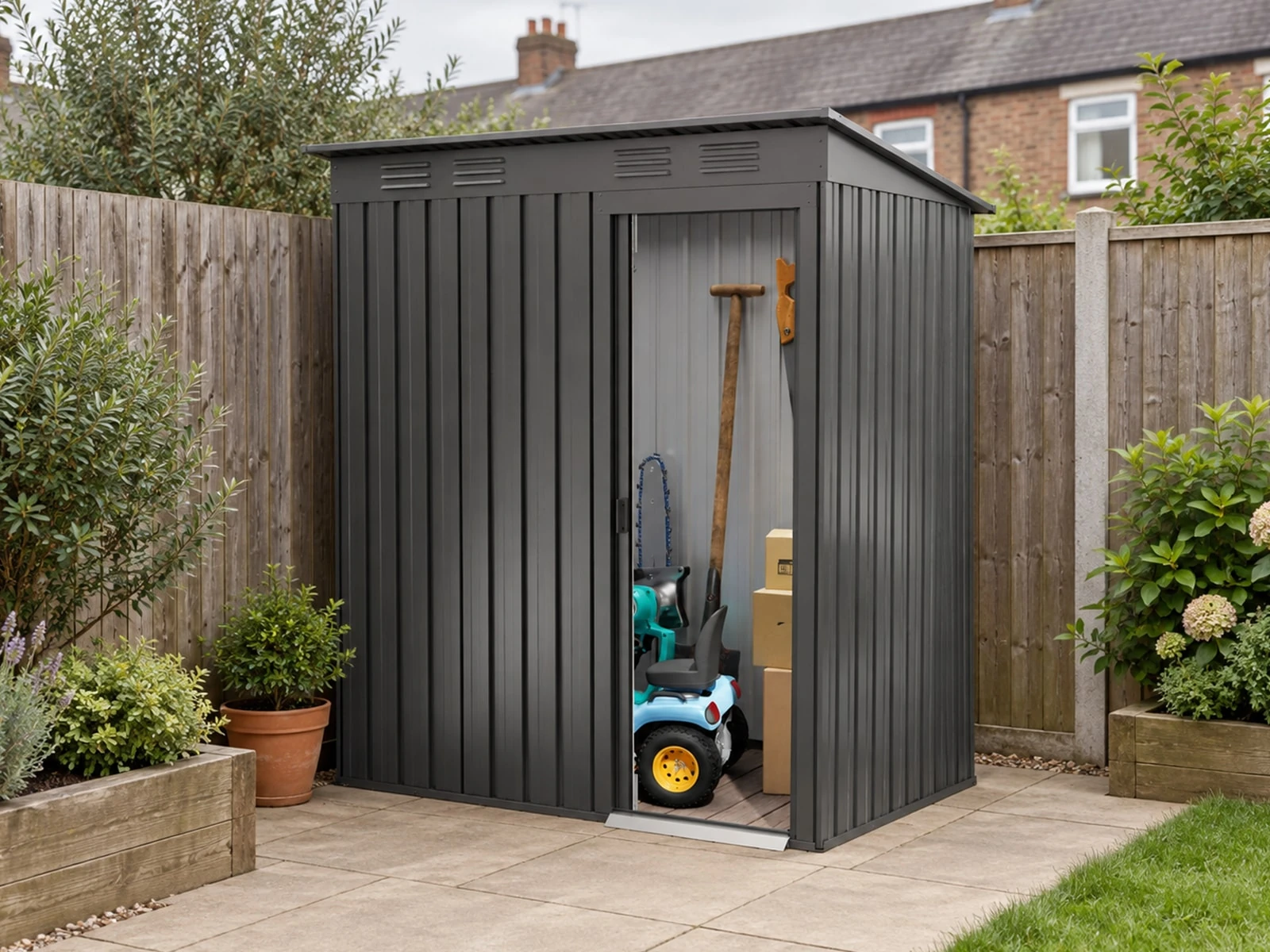
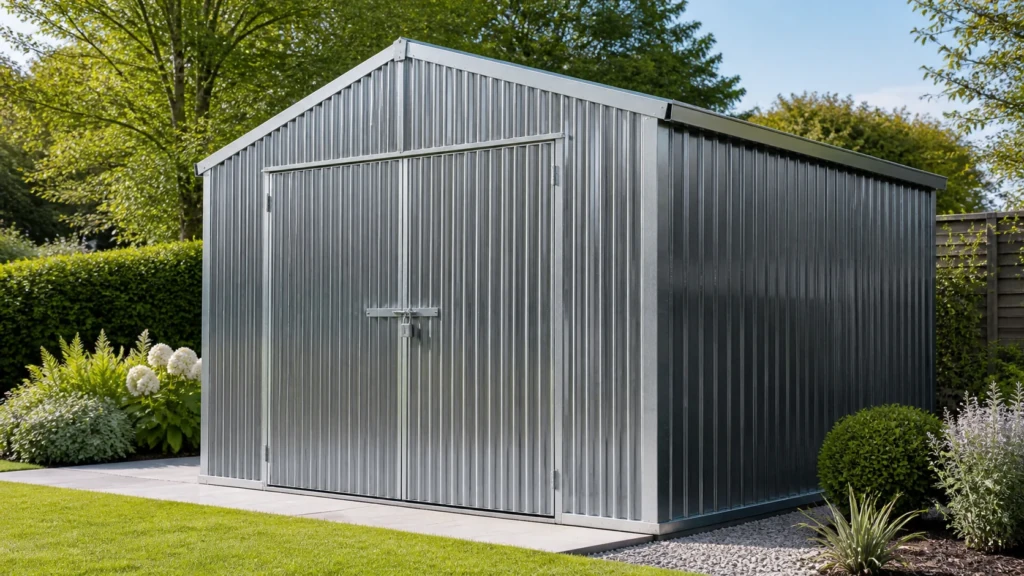
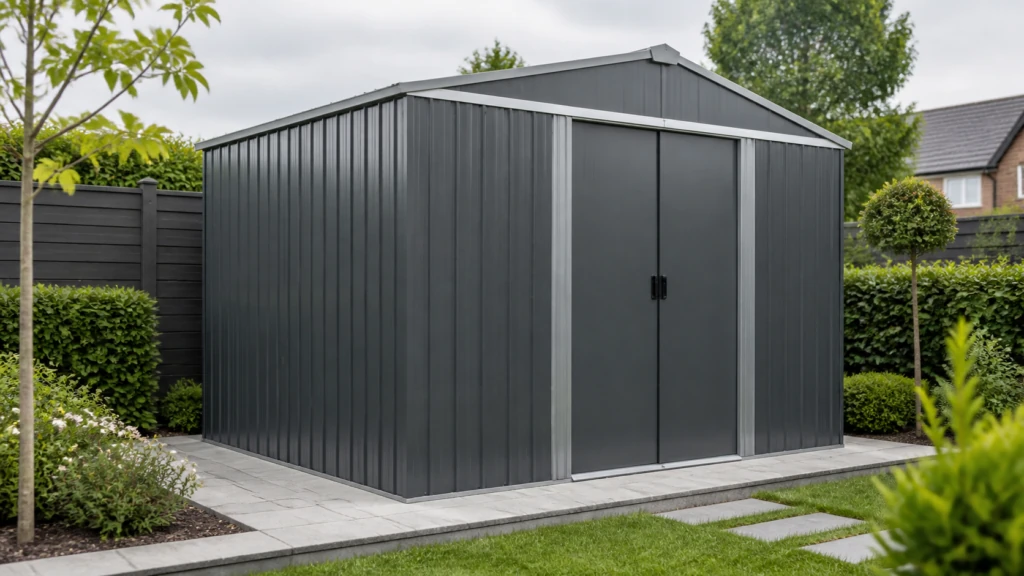
Review wall and roof panel form, frame structure, base, doors, roof geometry, fasteners, coating or finish, ventilation, accessories and floor direction as one system. LERYOU’s records include classic corrugated steel sheds, skylight products, flat-wall sheds, heavy-duty directions and multifunctional shed combinations. Exact sizes and options depend on the selected product.
Use the metal shed materials and structure guide to organize the technical fields and the metal garden shed types guide to define range roles.
Packaging and assembly can change the commercial result
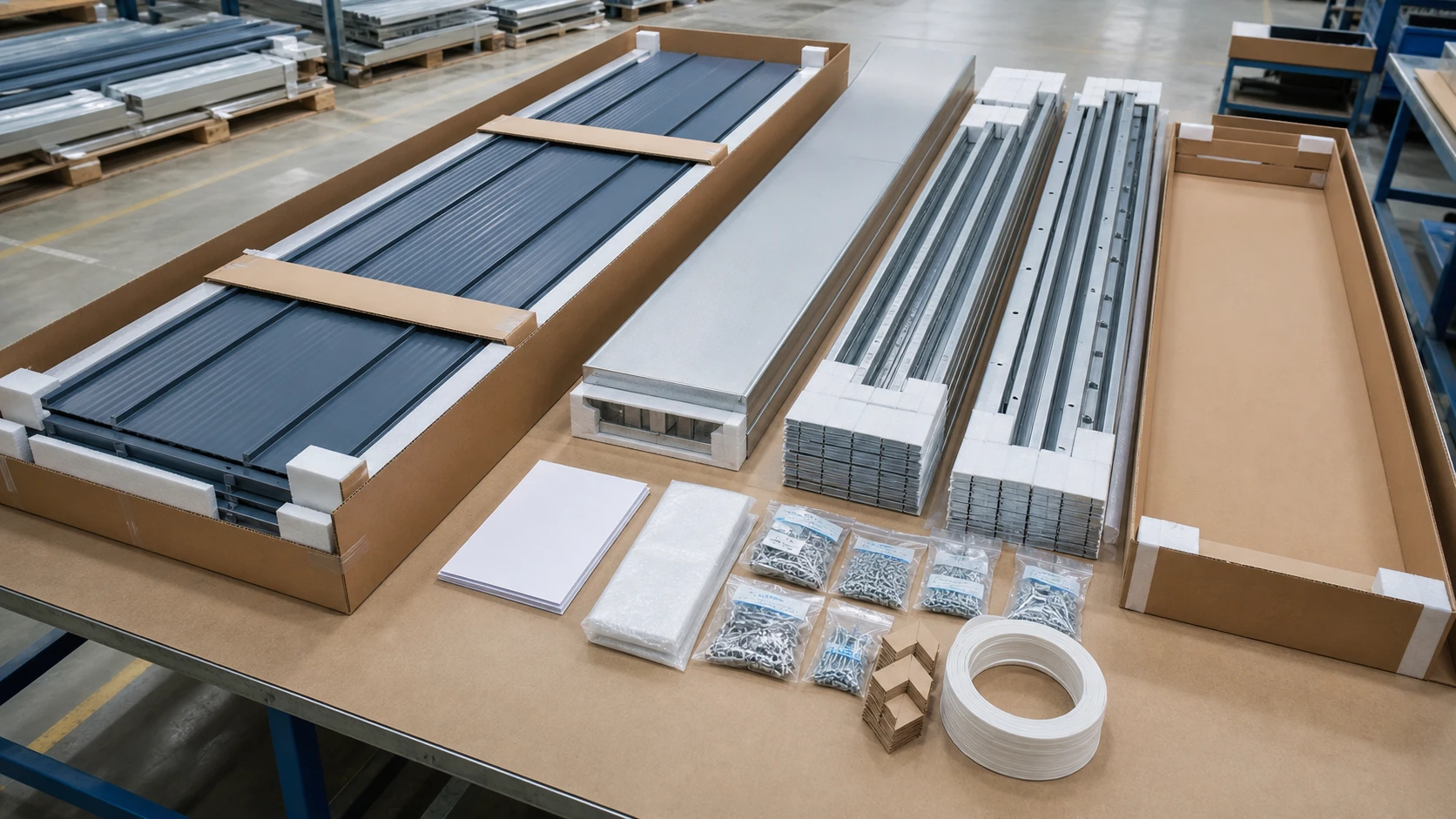
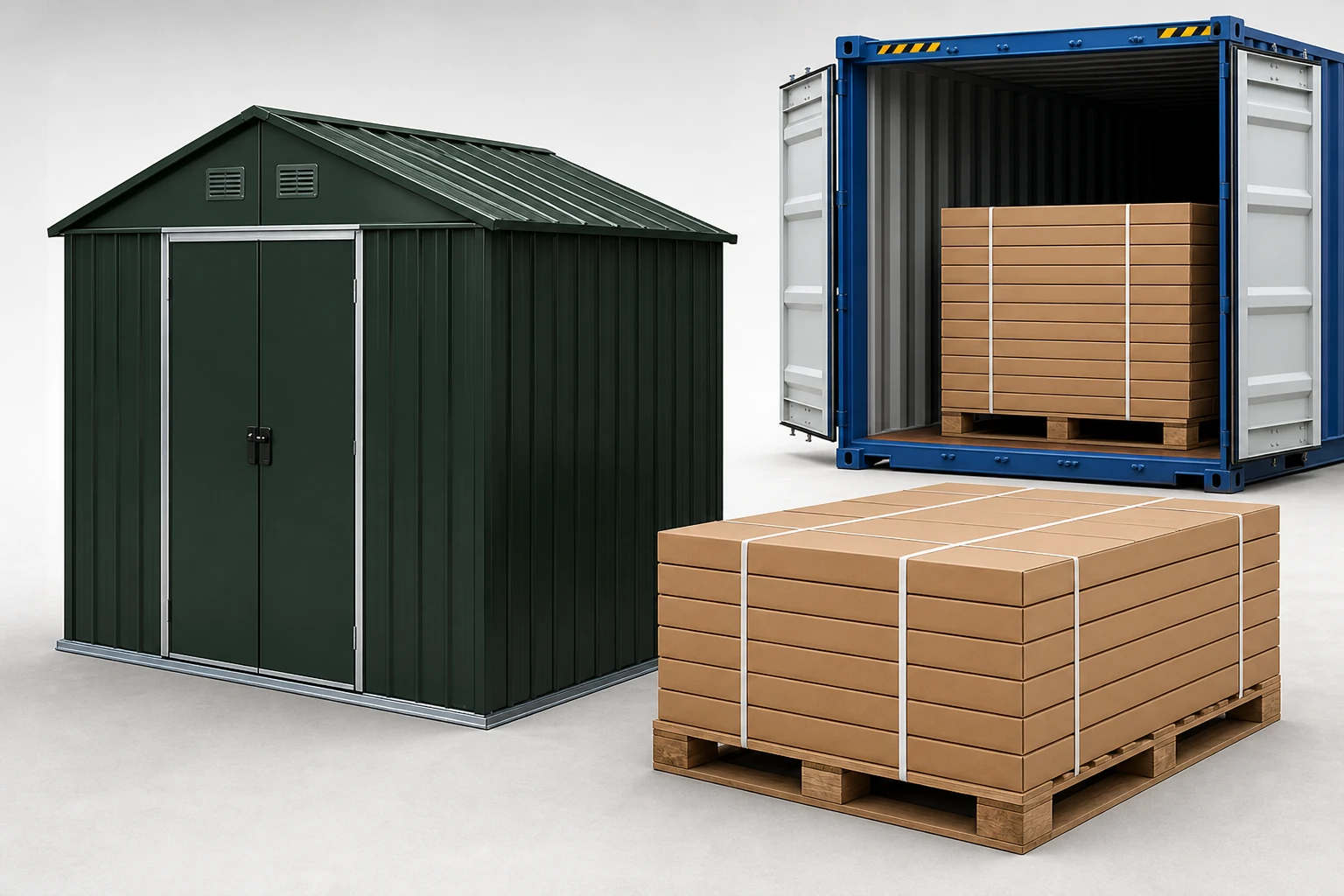
A material that looks attractive in a catalogue may create high handling or support costs if the pack is poorly designed. Request carton dimensions, weights, component protection, hardware separation, part labels and manual revisions after the configuration is fixed. Test the actual assembly sequence rather than relying on an “easy assembly” claim.
Can installation times be compared? Only if the examples use equivalent size, foundation readiness, number of installers, tools and completion standard. Record the actual model, test conditions and steps. A generic claim that all resin, wood or metal sheds take a certain number of hours is not a reliable retail promise. A workshop-style shed also needs a separate review of intended use, access, foundation and any services; it should not be treated as a storage shed merely because the outer dimensions match.
Do not copy generic durability claims
Weather, corrosion, UV, wind, snow, fire and maintenance statements require product- and market-specific support. Ask each supplier to identify which evidence applies to the exact material, structure, size and configuration. Keep unsupported comparisons out of packaging and product listings.
RFQ fields for a fair material comparison
- Target market, channel, intended use and price position.
- Required footprint, height, access and stored-item direction.
- Material, structure and finish fields that each supplier must disclose.
- Base, floor, ventilation and accessory expectations.
- Packaging, labelling, manual and after-sales identification requirements.
- Evidence required for claims in the destination market.
- Quantity range, destination and approval process.
Frequently asked questions
There is no universal winner. Compare the selected model’s structure, finish or treatment, joints, base, installation instructions and evidence for the expected site conditions. Metal, resin and wood each have different failure and maintenance points.
Compare equivalent models using landed cost, carton handling, assembly support, expected maintenance and replacement parts. Material alone does not establish a reliable price or lifetime-cost ranking.
Not by category alone. Review the exact resin formulation and reinforcement alongside the metal shed’s coating and connections or the wood shed’s treatment and moisture detailing. Ask for model-specific evidence.
Yes, but only with comparable size, prepared base, installer count, tools and completion criteria. Ask each supplier for a model-specific assembly test or documented steps instead of a universal time claim.
Assess the selected shed’s corrosion, moisture or UV-related details and its maintenance instructions for that location. The material name alone does not prove suitability.
No. Structure, material specification, dimensions, connections, base, assembly and supporting evidence determine the answer for the selected model.
Choose according to customer use, price architecture, package limits, installation expectations, maintenance story and the team’s ability to support each product accurately.
LERYOU’s current garden shed offer is metal-led. Resin and wood are comparison categories in this guide; any other supply scope must be confirmed before it enters an RFQ.
Compare external and usable dimensions, frame, walls, roof, base, doors, ventilation, hardware, accessories, packaging, instructions, evidence, exclusions and after-sales parts.
Review a metal garden shed range
Explore garden shed solutions, review the metal garden shed product direction, or send LERYOU your product brief for a configuration review.
Content scope reviewed against LERYOU’s current product knowledge records in October 2026. Final specifications, packaging, evidence and supply scope must be confirmed for the selected product and destination market.
 English
 Deutsch
 Français
 Español
 Italiano
 Polski
 日本語
日本語 한국어
한국어 Nederlands
 Čeština
 Português do Brasil
 Русский