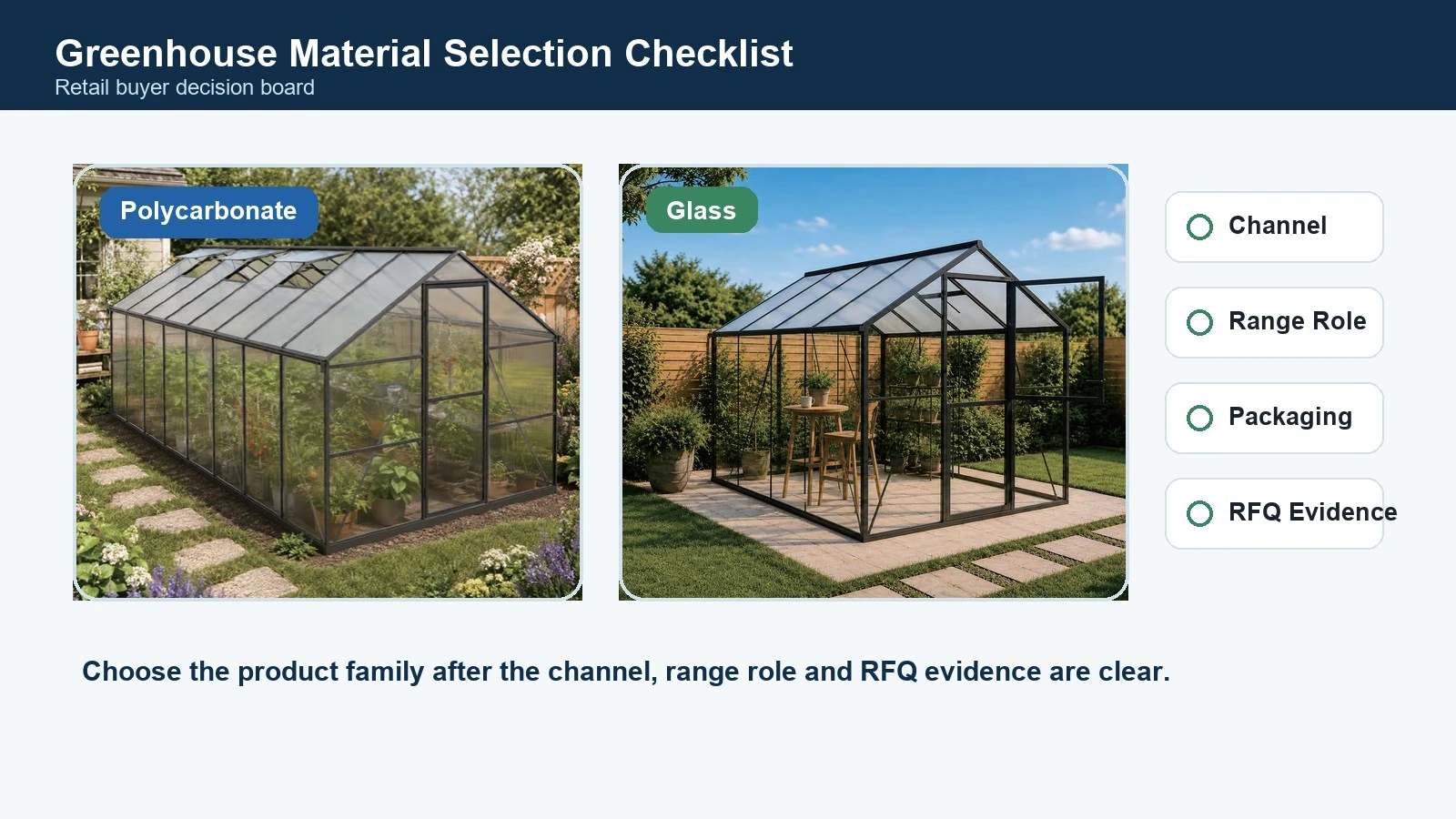
Większość dyskusji na temat materiałów szklarniowych zaczyna się od tego samego pytania: czy kupujący powinien wybrać poliwęglan czy szkło? To uczciwe pytanie, ale zwykle nie jest to pierwsza decyzja, jaką musi podjąć kupiec detaliczny lub menedżer produktu.
W przypadku programu szklarni B2B wybór materiału wpisuje się w szerszą decyzję sourcingową. Kupujący musi określić kanał sprzedaży, rolę produktu, klasę rozmiaru, trasę pakowania, potrzeby dokumentacyjne, oczekiwania posprzedażowe i dowody do wyceny, zanim dostawca będzie mógł udzielić użytecznej odpowiedzi. Szklarnia z poliwęglanu, szklarnia ze szkła i kompaktowy produkt do uprawy szkółkarskiej mogą być ważnymi kierunkami. Właściwy wybór zależy od tego, co kupujący próbuje sprzedać i jak produkt będzie przemieszczał się przez kanał.
Ta lista kontrolna została napisana dla kupców detalicznych, importerów, dystrybutorów, zespołów centrów ogrodniczych i menedżerów produktu, którzy muszą przekształcić ogólną preferencję materiałową w jasny brief sourcingowy. Nie zastępuje ona specyfikacji technicznej, przeglądu konstrukcyjnego ani wyceny dostawcy. Ostateczne materiały, wymiary, wymagania dotyczące wydajności, opakowanie, warunki handlowe i dowody rynkowe muszą zostać potwierdzone dla wybranej szklarni i rynku docelowego.
Jeśli Twój zespół nadal potrzebuje bezpośredniego porównania materiałów, zacznij od istniejącego Szklarnia z poliwęglanu a szklarnia szklana przewodnika LERYOU. Jeśli przygotowujesz szerszy brief zakupowy, skorzystaj z Lista kontrolna zakupu szklarni dla importerów wraz z tym artykułem.
Zacznij od roli kupującego, nie od nazwy materiału
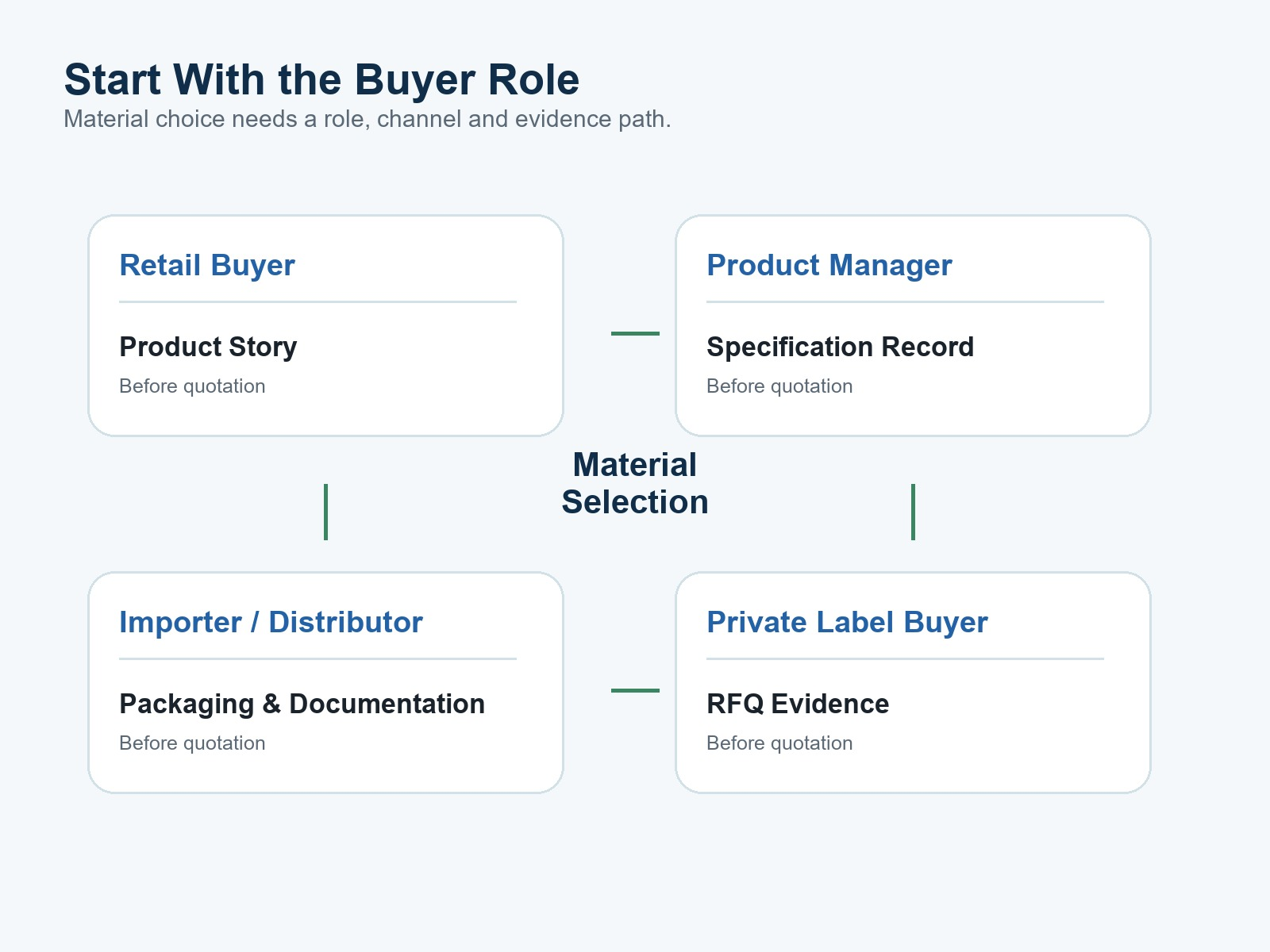
Decyzje materiałowe stają się łatwiejsze, gdy kupujący najpierw zdefiniuje komercyjną rolę szklarni. Produkt, który sprawdza się jako element ekspozycyjny w centrum ogrodniczym, może nie być najłatwiejszym produktem e-commerce do wysyłki. Praktyczna szklarnia podstawowa może nie tworzyć wystarczającej różnicy wizualnej dla premiumowej oferty detalicznej. Kompaktowy produkt do uprawy może być lepszym sezonowym dodatkiem niż substytutem szklarni typu walk-in.
Przed omówieniem materiału zapisz rolę kupującego:
- Kupiec detaliczny: potrzebuje historii produktu, logiki półkowej lub ekspozycyjnej, informacji o opakowaniu i jasnego powodu do utrzymywania modelu w magazynie.
- Menedżer produktu: potrzebuje kontrolowanych specyfikacji, zapisów zatwierdzeń próbek, plików opakowań, instrukcji i danych produktowych.
- Importer lub dystrybutor: potrzebuje jasności RFQ, informacji o kartonach i wysyłce, oczekiwań dokumentacyjnych i wymagań na poziomie rynku.
- Kupiec private-label: potrzebuje zakresu produktu, własności artworków, zatwierdzeń etykiet i instrukcji oraz spójnej kontroli plików.
Ten sam materiał może wspierać różne role, ale nie automatycznie. Produkt z poliwęglanu wybrany do szerokiej oferty detalicznej, produkt ze szkła wybrany do pozycji podnoszącej wizualnie asortyment oraz produkt do uprawy szkółkarskiej wybrany jako kompaktowy dodatek powinny mieć każdy osobne uzasadnienie biznesowe.
Zdefiniuj kanał przed wyborem rodziny produktów
Szklarnia nie jest sprzedawana w próżni. Warunki kanałowe wpływają na wybór materiału, ponieważ wpływają na opakowanie, wyjaśnienie, obsługę i wsparcie posprzedażowe.
Dla każdego kanału docelowego zapytaj:
| Pytanie kanałowe | Dlaczego ma to znaczenie przed wyborem materiału |
|---|---|
| Gdzie produkt będzie sprzedawany? | Centra ogrodnicze, retail home-improvement, e-commerce i kanały hurtowe mogą potrzebować różnych opakowań, materiałów wizualnych i danych produktowych. |
| Jak klient zrozumie różnicę? | Jeśli kupujący nie potrafi wyjaśnić, dlaczego dany materiał lub model istnieje, SKU może tworzyć zamieszanie zamiast konwersji. |
| Jak produkt będzie obsługiwany? | Szkło, płyty poliwęglanowe, ramy, okucia i kartony mają różne potrzeby w zakresie ochrony i identyfikacji. |
| Jakie dokumenty są potrzebne? | Instrukcje, etykiety, specyfikacje, dane produktu i grafiki powinny być zgodne z zatwierdzonym produktem. |
| Które decyzje muszą zostać potwierdzone przed wyceną? | Otwarte kwestie dotyczące materiału, rozmiaru, drzwi, wentylacji, dachu, kartonu i brandingu powinny być widoczne w zapytaniu ofertowym. |
To właśnie na tym etapie wiele projektów zakupowych staje się chaotycznych. Zespoły porównują jednocześnie próbkę materiału, zdjęcie produktu i cenę, nie uzgadniając, jakie zadanie ma spełniać produkt. Czystszy proces polega na tym, aby najpierw zdefiniować kanał sprzedaży, następnie wybrać rodzinę produktów, a dopiero potem poprosić dostawcę o potwierdzenie specyfikacji na poziomie modelu.
Oddziel porównanie materiałów od wyboru linii produktowej
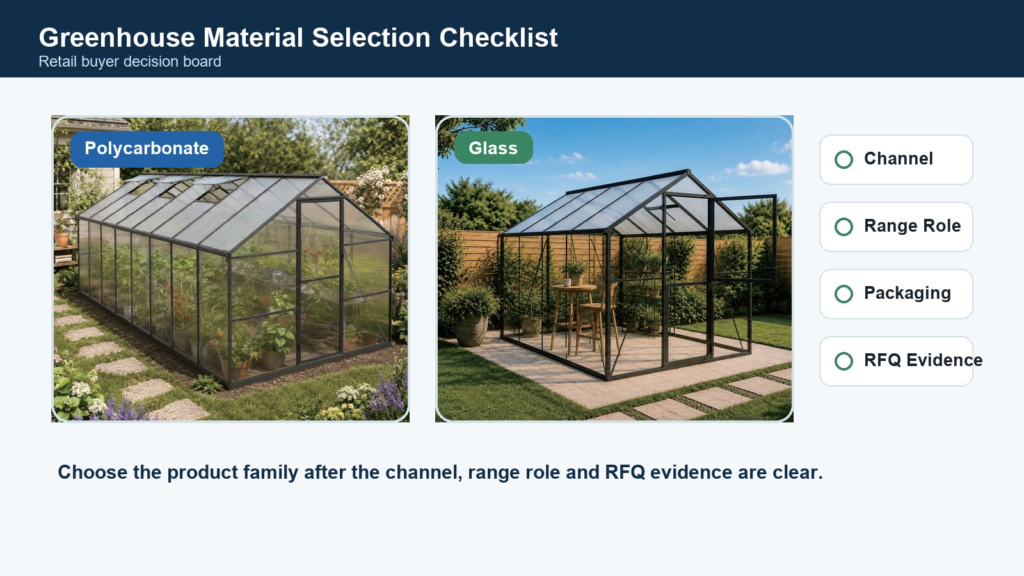
Dotychczasowe pytanie o porównanie materiałów jest nadal przydatne. Poliwęglan i szkło mogą różnić się wyglądem, obsługą, pakowaniem, kwestiami związanymi z wymianą części oraz pozycjonowaniem detalicznym. Jednak decyzja zakupowa w handlu detalicznym nie powinna kończyć się na “poliwęglan kontra szkło”.”
Użyj porównania materiałów, aby odpowiedzieć na jedno pytanie:
Który kierunek materiałowy może pasować do tego programu?
Użyj wyboru linii produktowej, aby odpowiedzieć na inne pytanie:
Którą rodzinę szklarni, kierunek rozmiarowy, konfigurację i pakiet dokumentacji powinniśmy poprosić LERYOU o sprawdzenie?
Takie rozróżnienie zapobiega powielaniu treści i słabym zapytaniom ofertowym. Kupujący może uznać, że poliwęglan jest głównym praktycznym kierunkiem, ale nadal musi wybrać między konfiguracjami kompaktowymi, średnimi, przyściennymi, w kształcie litery T lub ulepszonymi. Inny kupujący może preferować szkło jako kierunek premium pod względem wizualnym, ale nadal musi potwierdzić panele ścienne, opcje dachu, drzwi, wentylację, półki i opakowanie, zanim wycena stanie się miarodajna.
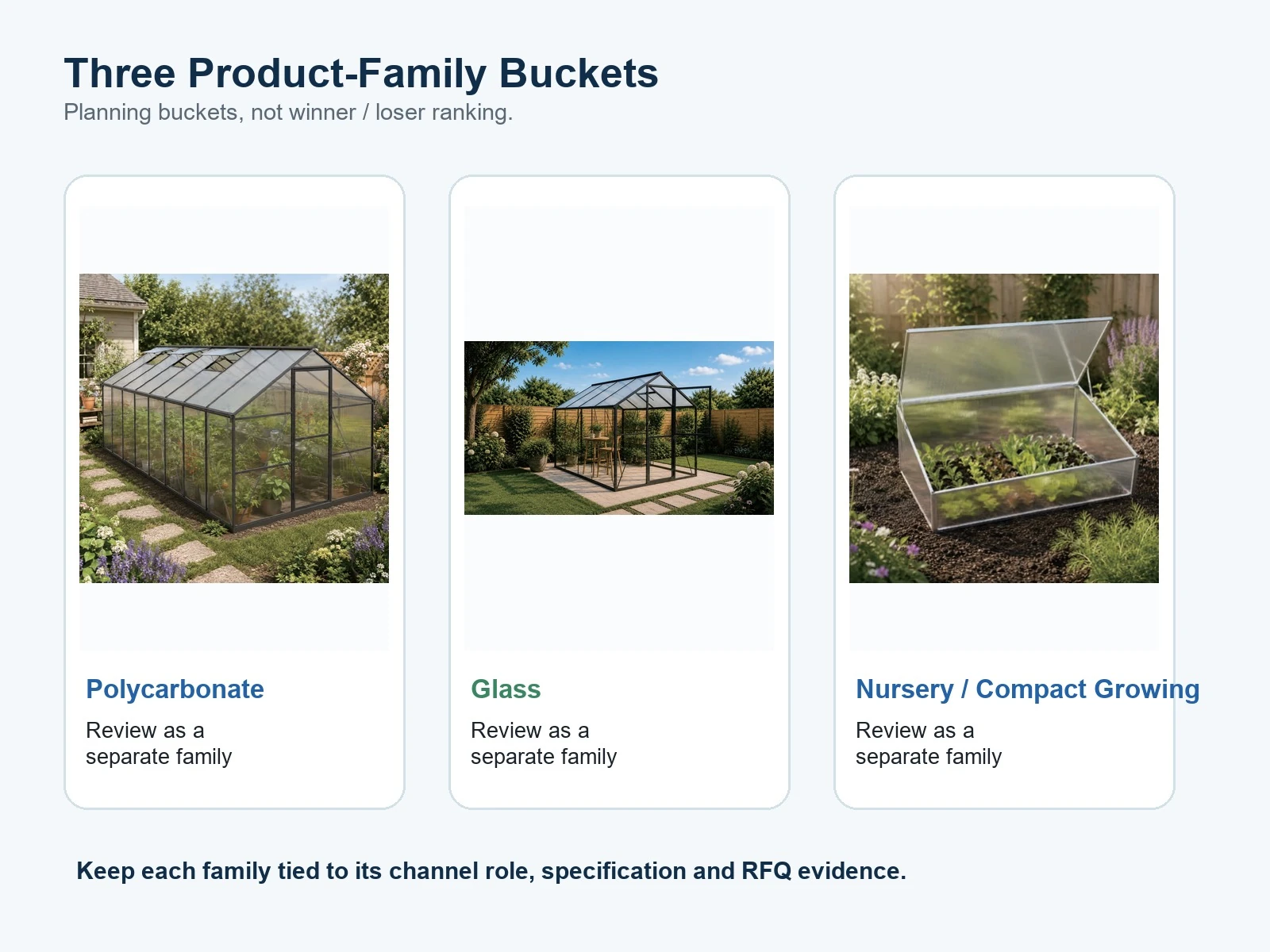
Użyj trzech grup rodzin produktowych
Na pierwszym etapie poszukiwania dostawców podziel program na grupy rodzin produktowych. Łatwiej tym zarządzać niż porównywać wszystkie modele naraz.
Kierunek szklarni z poliwęglanu
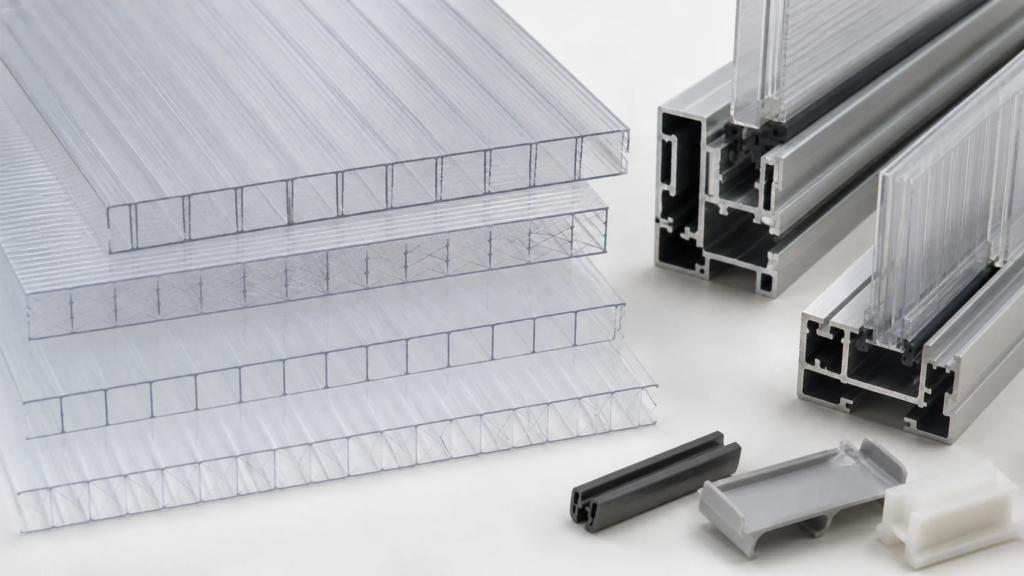
LERYOU's Szklarnia z poliwęglanu obejmuje standardowe formaty 6 ft, 8 ft i 10 ft, ulepszone konfiguracje z grubszymi panelami, układy w kształcie litery T, koncepcje ścianek cokołowych oraz oszczędzające miejsce konstrukcje przyścienne. Konfiguracje referencyjne wykorzystują ramy aluminiowe z poliwęglanem komorowym 4 mm lub litymi panelami PC 1,8 mm, natomiast wybrane konfiguracje ulepszone wykorzystują PC 6 mm lub 8 mm.
Dla kupujących detalicznych kierunek poliwęglanowy sprawdza się najlepiej, gdy rola produktu jest praktyczna i oparta na szerokiej gamie rozmiarów: wiele klas rozmiarowych, łatwe w zarządzaniu opakowanie, jasne wyjaśnienie montażu oraz historia produktu skoncentrowana na codziennej uprawie ogrodowej. Dokładny wybór paneli, ramy, drzwi, okna dachowego, rynny, koloru i opakowania nadal wymaga potwierdzenia na poziomie modelu.
Kierunek szklarni szklanych
LERYOU's Szklana szklarnia obejmuje szklarnie Prestige, konfiguracje w kształcie litery T oraz koncepcje dwufunkcyjne łączące szklarnię z przestrzenią magazynową. Wybrane konfiguracje Prestige wykorzystują ramy aluminiowe ze ścianami ze szkła hartowanego 4 mm. Opcje dachu szklanego lub poliwęglanowego, rynny, regulowane okna, systemy drzwi, kolory i półki różnią się w zależności od konfiguracji.
For buyers, glass can support a more visual or premium garden-positioning story. The risk is assuming that “glass” already defines the product. It does not. The buyer still needs to confirm which areas use glass, whether the roof uses glass or another material, how panes are protected, and what the assembly and documentation requirements are.
Nursery and compact growing direction
Nursery and compact growing products can support a greenhouse range without trying to replace the greenhouse itself. Cold-frame, raised-bed or compact growing products may serve seasonal, entry-level or add-on roles for retailers that want a broader gardening offer.
Plan these products as a separate family. A compact growing product should not be compared with a walk-in greenhouse only by material. It should be compared by use case, packaging, merchandising, price position and customer task.
5. Match Material Direction to Retail Range Role
A useful range normally has roles rather than random models. For a retail buyer, each product should answer a question:
- Why should this SKU exist?
- Which customer does it serve?
- What makes it different from the next SKU?
- What does the sales team or product page need to explain?
- What evidence does the supplier need to confirm before launch?
Use this simple role map:
| Rola zakresu | Suitable material/product direction to review | What to confirm before RFQ |
|---|---|---|
| Core practical range | Kierunek szklarni z poliwęglanu | Size class, panel direction, door type, vent layout, carton and manual requirements. |
| Premium visual option | Glass greenhouse direction or selected glass-wall configuration | Wall and roof material, pane protection, frame finish, access, shelving and packaging. |
| Space-saving solution | Lean-to or wall-attached greenhouse direction where available | Wall condition, installation dimensions, roof direction, drainage and market requirements. |
| Compact seasonal add-on | Nursery/growing products or cold-frame direction | Product task, package size, assembly steps, merchandising and replacement-part expectations. |
| Private-label program | Any confirmed family with approved artwork scope | Logo, carton artwork, labels, manual, barcode, approval ownership and file control. |
This table is not a ranking. It is a buying tool. A buyer may choose one family or combine several, but each item should have a clear range role.
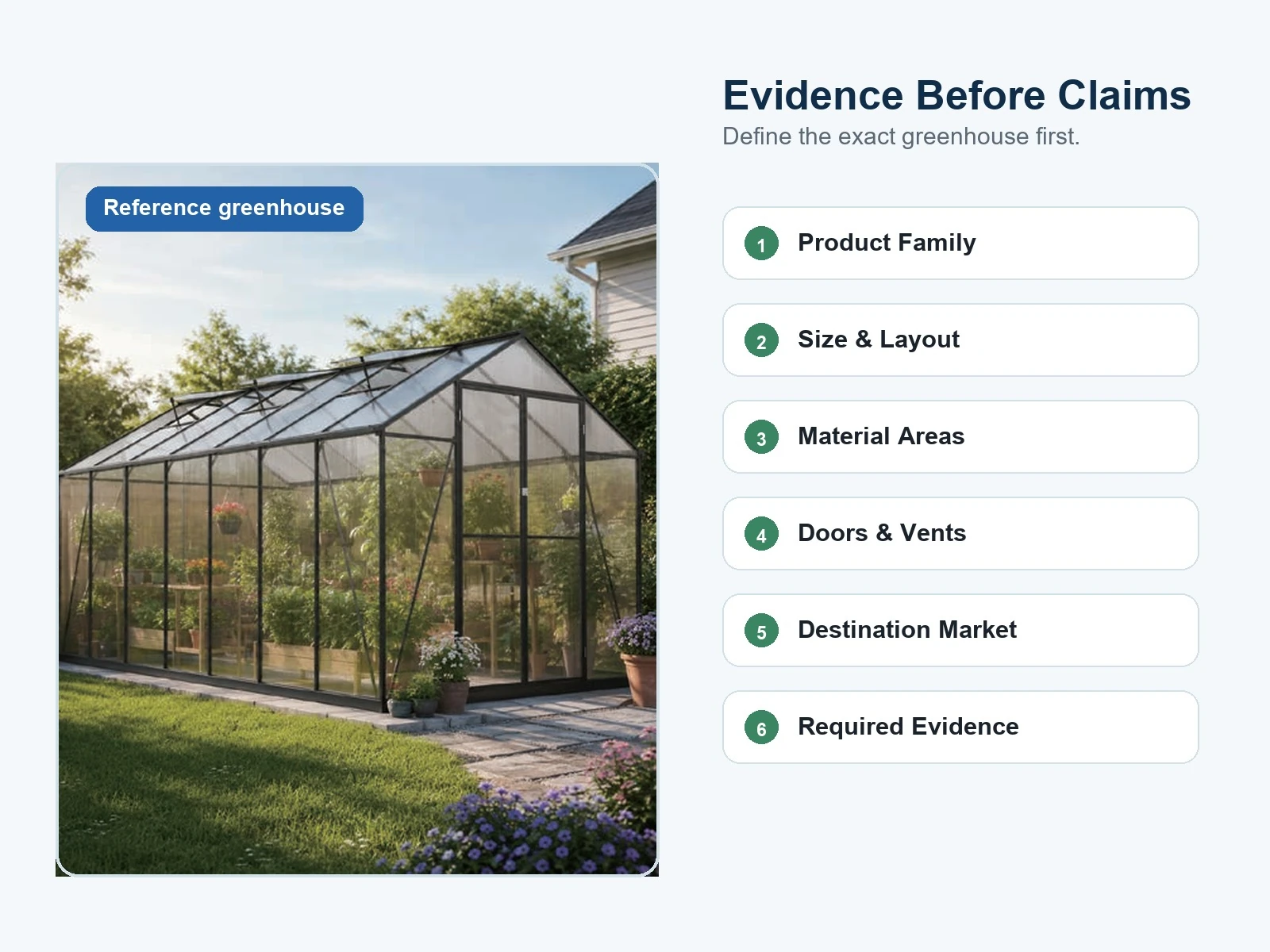
6. Ask for Evidence in the Right Order
B2B buyers often ask for certificates, test data or performance claims before the product is even defined. That can slow the project down because the supplier does not know which configuration the evidence should apply to.
Use this order instead:
- Confirm the product family and reference model.
- Confirm the size direction and layout.
- Confirm the material areas: roof, wall, panels, panes and related parts.
- Confirm door, vent, gutter, base and accessory scope.
- Confirm destination market and channel.
- Identify any required structural, material, labeling, manual or packaging evidence.
- Ask whether the evidence exists for that exact model and configuration.
This wording matters. Do not ask, “Is this greenhouse certified?” as if every model shares one answer. Ask, “For this selected model, size and destination market, what documentation can be reviewed?” That is more precise and less likely to create unsupported marketing claims.
7. Build a Material Selection Scorecard
A scorecard helps a buyer compare real options without reducing the decision to price. The scorecard should be short, practical and linked to the channel.
| Obszar decyzyjny | Pytanie kupującego | Supplier response needed |
|---|---|---|
| Rola produktu | Is this core, premium, compact, add-on or specialist? | Recommended product family and reference models. |
| Material direction | Is the program leaning polycarbonate, glass or open comparison? | Material areas and model-specific options. |
| Klasa rozmiaru | What footprint or retail size range is being considered? | Available reference formats and open compatibility checks. |
| Obsługa | Are there glass panes, PC panels, long profiles or fragile parts? | Packing logic, component protection and handling notes. |
| Montaż | Can customers identify parts and follow the sequence? | Manual scope, hardware grouping and part identification. |
| Market evidence | Are there required reports, labels or documents? | Evidence tied to the exact selected configuration. |
| Marka własna | Who owns artwork, barcode, labels and manual approval? | File-control workflow and approval checkpoints. |
| RFQ readiness | Is the brief specific enough for quotation? | Open questions and required buyer inputs. |
The scorecard also improves internal review. A product manager can show why a greenhouse was selected, what remains open and what the supplier must confirm before sample approval.
8. Keep Packaging and Documentation in the Same Decision
Material choice affects more than the visible greenhouse. It can affect how parts are protected, identified and explained to the end customer.
For polycarbonate products, the buyer should confirm panel protection, orientation, part labels and the relationship between panels and frame assembly. For glass products, the buyer should confirm pane protection, edge handling, package separation and safety notes where applicable. For compact growing products, the buyer should confirm whether the package and instructions match the simpler product role.
Packaging questions should include:
- package count and package dimensions for the selected model;
- grupowanie komponentów;
- hardware bag and small-part identification;
- manual language and diagram requirements;
- carton artwork and label ownership;
- private-label file control;
- replacement-part or after-sales information required by the channel;
- whether packaging changes if the material or size changes.
LERYOU's Możliwości page can be used as a process link for specification confirmation, customization review, approval and shipment preparation. Keep the language process-based. Do not turn process support into promises about fixed lead time, shipment volume or test results.
9. Avoid Five Common Material-Selection Mistakes
Mistake 1: Treating the material name as the specification
“Polycarbonate greenhouse” or “glass greenhouse” is not enough for quotation. The buyer still needs model, size, frame, panel or pane area, door, vent, packaging and documentation context.
Mistake 2: Comparing a premium image with a practical specification
Images help buyers understand the product direction, but they do not prove structural performance, carton design, manual quality or final market compliance.
Mistake 3: Moving price comparison ahead of scope
Two quotes are not comparable if one includes packaging, manual requirements and private-label artwork while the other leaves them open.
Mistake 4: Copying claims from one configuration to another
Panel thickness, glass type, roof option, door mechanism or performance evidence should not be copied across models unless confirmed for the selected configuration.
Mistake 5: Adding too many similar SKUs
If two products serve the same customer, channel and range role, the buyer may be adding complexity rather than choice. Use material direction to create meaningful range structure, not cosmetic variation.
10. Prepare the RFQ Brief
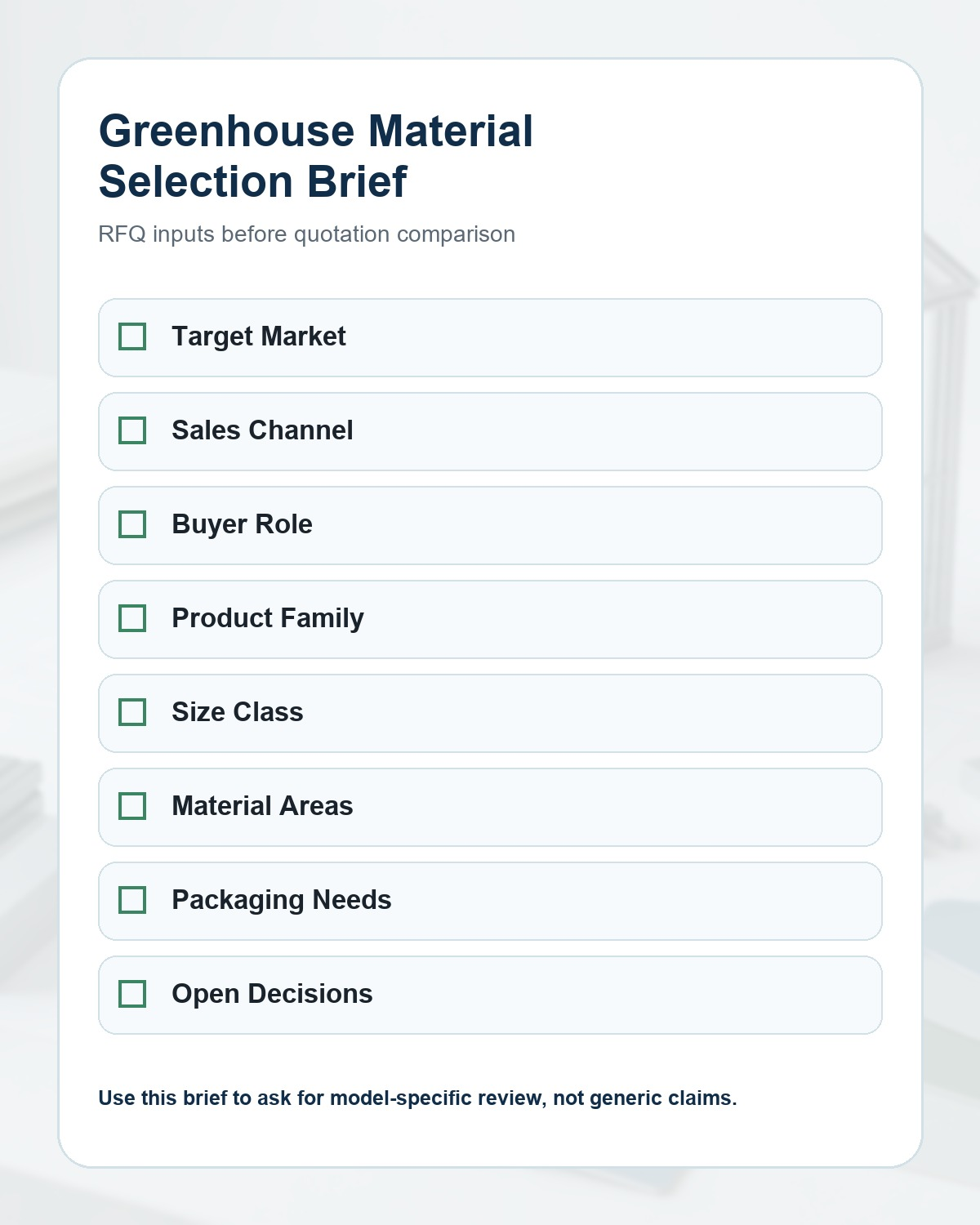
Once the buyer has selected a likely material direction, the RFQ should be specific enough for the supplier to respond. It does not need every detail finalized, but it should show what is decided and what remains open.
Należy uwzględnić:
- kraj lub region docelowy;
- kanał sprzedaży;
- buyer role and product range role;
- product family: polycarbonate, glass, nursery/growing or open comparison;
- preferred size class or footprint direction;
- reference product page, image or model if available;
- material areas that matter: roof, wall, panel, pane, frame and finish;
- door, vent, gutter, base and accessory preferences;
- packaging, manual, label and private-label requirements;
- zakres ilości, jeśli jest dostępny;
- destination-market evidence or documentation requirements;
- open decisions where LERYOU should recommend options.
This turns the conversation from “Which material is better?” into “Which product direction can support this retail program, and what must be confirmed before quotation?”
Najczęściej zadawane pytania
Is this article replacing the Polycarbonate vs Glass Greenhouse guide?
No. The existing Szklarnia z poliwęglanu a szklarnia szklana guide covers direct material comparison. This article covers the next buying task: turning material direction into a retail sourcing brief.
Should a retail buyer choose polycarbonate or glass before contacting LERYOU?
Not always. If the range role, target market and channel are clear, the buyer can ask LERYOU to review both directions. The inquiry should state which decisions are confirmed and which remain open.
Can one greenhouse range include both polycarbonate and glass products?
Yes, if each product has a clear role. A range might include a practical core product and a more visual upgrade direction. Final models, materials, packaging and commercial terms still need confirmation.
Can product managers use this checklist for private-label projects?
Yes. Private-label buyers should add artwork, label, barcode, manual, packaging and approval ownership to the brief. A logo request alone does not define the full private-label scope.
Can performance be assumed from the material family?
No. Wind, snow, thermal, UV, structural or compliance claims must be tied to the exact model, material specification and destination market. Treat these as review requirements, not generic claims.
CTA: Send a Greenhouse Material Selection Brief
If your team is deciding between polycarbonate, glass or compact growing products, prepare a short material-selection brief before requesting a quotation. Start with your target market, sales channel, product role, preferred material direction, size class, packaging needs, documentation requirements and open decisions.
Review LERYOU's Rozwiązania dla szklarni i upraw, porównaj Szklarnia z poliwęglanu oraz Szklana szklarnia directions, or skontaktuj się z LERYOU with your project brief. Final feasibility, specifications, evidence, commercial terms and timing should be confirmed for the selected program.
 English
 Deutsch
 Français
 Español
 Italiano
 Polski
 日本語
日本語 한국어
한국어 Nederlands
 Čeština
 Português do Brasil
 Русский