
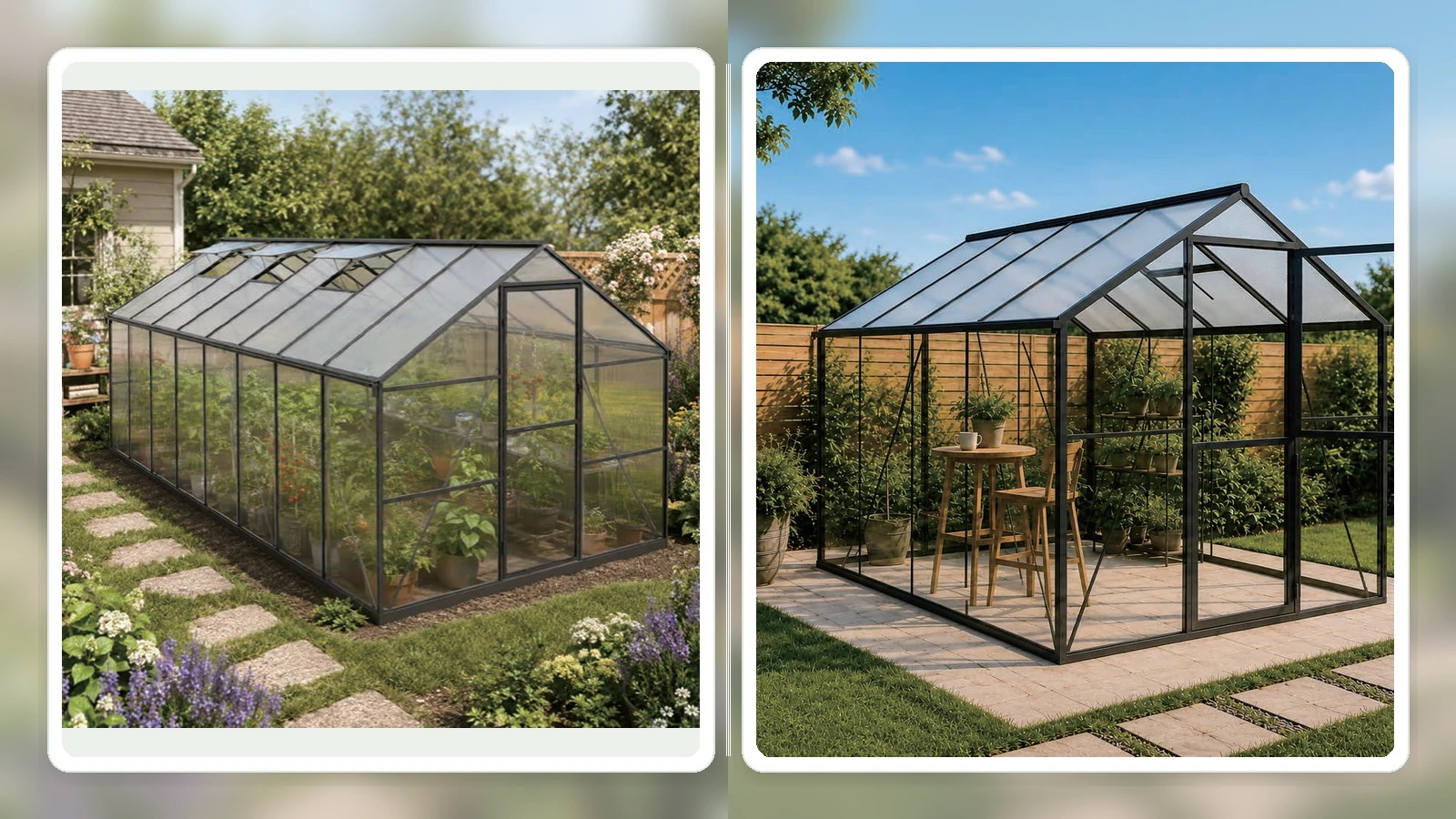
Greenhouse Buying Checklist for Importers — A practical visual overview for comparing greenhouse type, configuration, packaging and inquiry inputs.
A greenhouse quotation can look complete and still leave the buyer with unanswered questions. The model name may be clear, for example, while the intended use, access arrangement, packaging requirements or destination-market expectations remain undefined. Those missing details usually reappear later, when a specification, sample or order is already under review.
For importers and retailers, the useful starting point is not a catalogue page. It is a written buying brief. The brief should explain who will buy the product, where it will be sold, how it is expected to be used and which decisions the supplier still needs to help resolve.
This greenhouse buying checklist is designed for that stage. It covers product family, layout, configuration, assembly, packaging and RFQ inputs without assuming that one material or design is right for every program. Final dimensions, materials, options and performance requirements must be confirmed for the selected greenhouse.
Start With the Market, Not the Model
Before comparing individual greenhouses, define the commercial setting. The same product may be unsuitable for two buyers with different sales channels, customer expectations or handling requirements.
Write down:
- the destination country or region;
- the intended sales channel;
- the main customer group;
- the expected retail position;
- the likely installation environment;
- the proposed assortment size;
- whether the program is wholesale, retail, e-commerce or private label.
These points give context to later decisions. A garden-center display model, a boxed e-commerce product and a private-label retail line do not necessarily need the same assortment structure, packaging presentation or documentation.
Avoid using a target price as the only starting point. Price matters, but it does not explain the product role. A supplier can respond more usefully when the buyer describes the market and the decisions behind the request.
Choose the Product Family First
LERYOU's Rozwiązania dla szklarni i upraw cover more than one product direction. At the buying-brief stage, separate the range into clear families before discussing individual models.
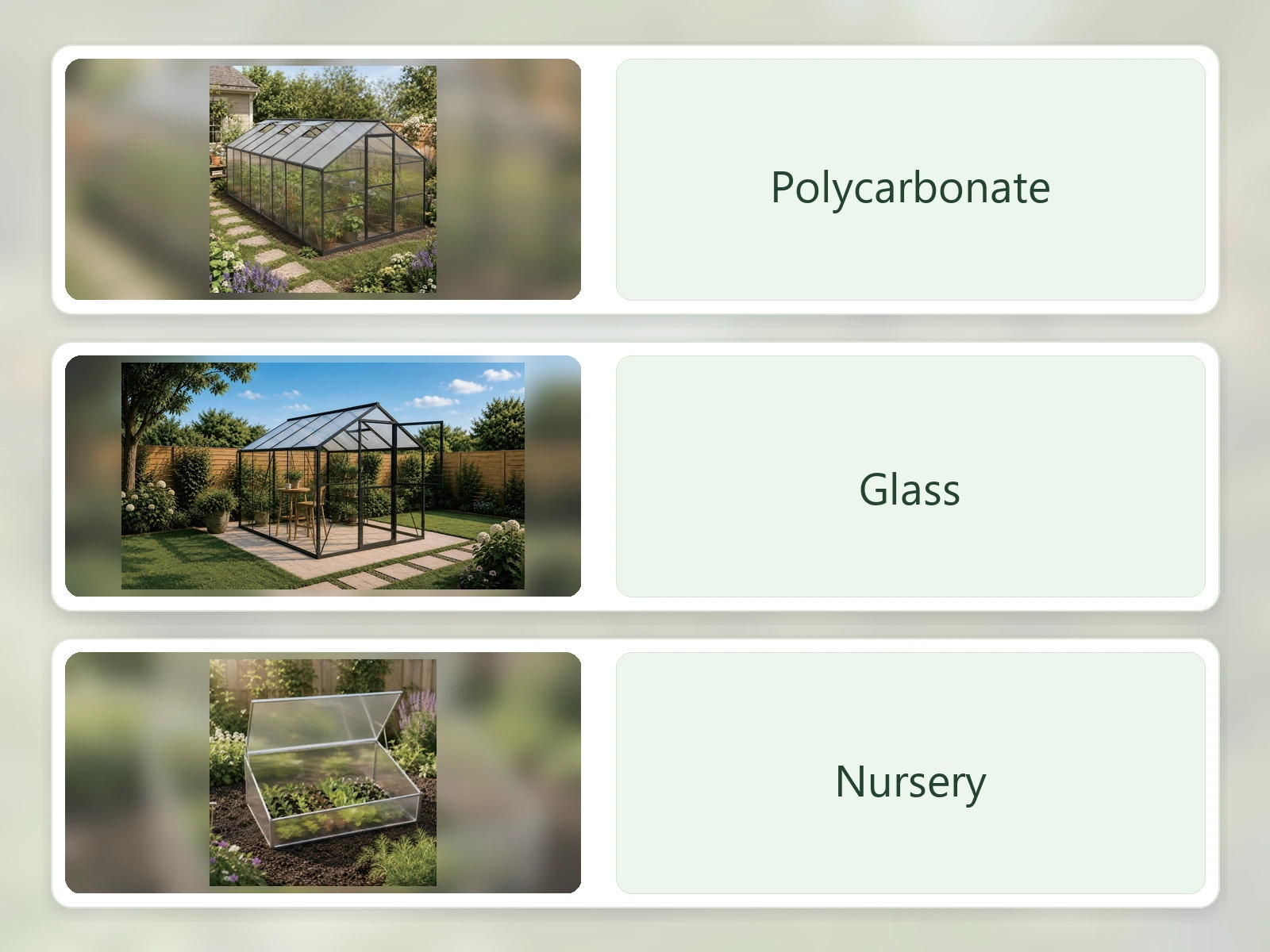
Greenhouse Product Family Comparison — Polycarbonate, glass and compact nursery-growing directions serve different assortment roles.
Szklarnie z poliwęglanu
Polycarbonate greenhouses can cover multiple footprints, panel directions, frame colors, door arrangements and greenhouse forms. The category can include freestanding, lean-to, dwarf-wall and T-shaped concepts, subject to the selected platform.
For an importer, the first question is not simply whether the greenhouse uses polycarbonate. It is how that product should sit in the range. Is it intended as a compact garden model, a broader family of sizes or a more distinctive structural format? Model-level panel, frame and performance details should be confirmed after the range role is clear.
Szklarnie szklane
Glass greenhouses can support growing and outdoor-leisure positions where clarity, frame appearance and layout are important to the product concept. LERYOU's public range includes Prestige, T-shaped and selected dual-use directions. Glazing, roof, door, window, gutter and shelving arrangements vary by configuration.
Do not treat “glass greenhouse” as a finished specification. Confirm which areas use glass, whether another roof material is part of the selected design and what the buyer expects from access, ventilation and interior use.
Nursery and Compact Growing Products
Produkty do uprawy i pielęgnacji roślin include cold frames, raised beds, nursery beds, elevated planters and potting benches. These products can complement a greenhouse range or serve buyers who need smaller seasonal growing formats.
They should be planned as their own product family. A compact cold frame and a walk-in greenhouse solve different merchandising and end-use tasks, even when both use polycarbonate and aluminium components.
If the material decision is still open, use the existing polycarbonate vs glass greenhouse guide for a more focused comparison. The buying checklist should record the decision, not repeat the full material analysis.
Define the Intended Use and Assortment Role
“For gardening” is too broad to guide a product review. State what the end customer is expected to do with the greenhouse and how the model fits the buyer's range.
Useful questions include:
- Is the product intended for seed starting, plant protection, general garden cultivation or a combined growing-and-leisure use?
- Will it be the core greenhouse in the range, an entry point, a premium visual option or a specialist format?
- Is the buyer planning one model or a coordinated family?
- Does the sales channel favor a compact footprint, multiple size steps or a visually differentiated shape?
- Will nursery products be sold as complements or as a separate seasonal group?
These decisions help prevent assortment overlap. If two models serve the same customer, footprint and price position, adding both may create complexity without giving the retailer a clear reason to stock them.
For a first inquiry, it is acceptable to leave some decisions open. Mark them clearly. A useful brief might say that the buyer wants a compact and a mid-sized polycarbonate direction but needs supplier input on suitable door and ventilation arrangements. That is more actionable than presenting an incomplete model code as a final choice.
Confirm Space, Footprint and Layout
Overall size is only one part of space planning. Importers should consider the installation area, access route and internal use together.
Zapis:
- preferred external footprint or size range;
- available installation space;
- freestanding, wall-attached or another layout direction;
- door position and access preference;
- whether wider entry is needed for equipment or trays;
- internal circulation or zoning requirements;
- whether an integrated storage or leisure area is part of the concept.
Do not infer compatibility from a photograph. Door type, number of openings and the relationship between roof, wall and extension elements must be checked for the chosen platform.
If local planning, base preparation or installation constraints apply, identify them early. The supplier can only review a destination-market requirement when it is included in the project brief and tied to a specific configuration.
Review the Product as a System
A greenhouse is not just a frame plus glazing. It is a system of panels, profiles, doors, windows, hardware, drainage elements, instructions and packaging. Each part needs to be reviewed in context.
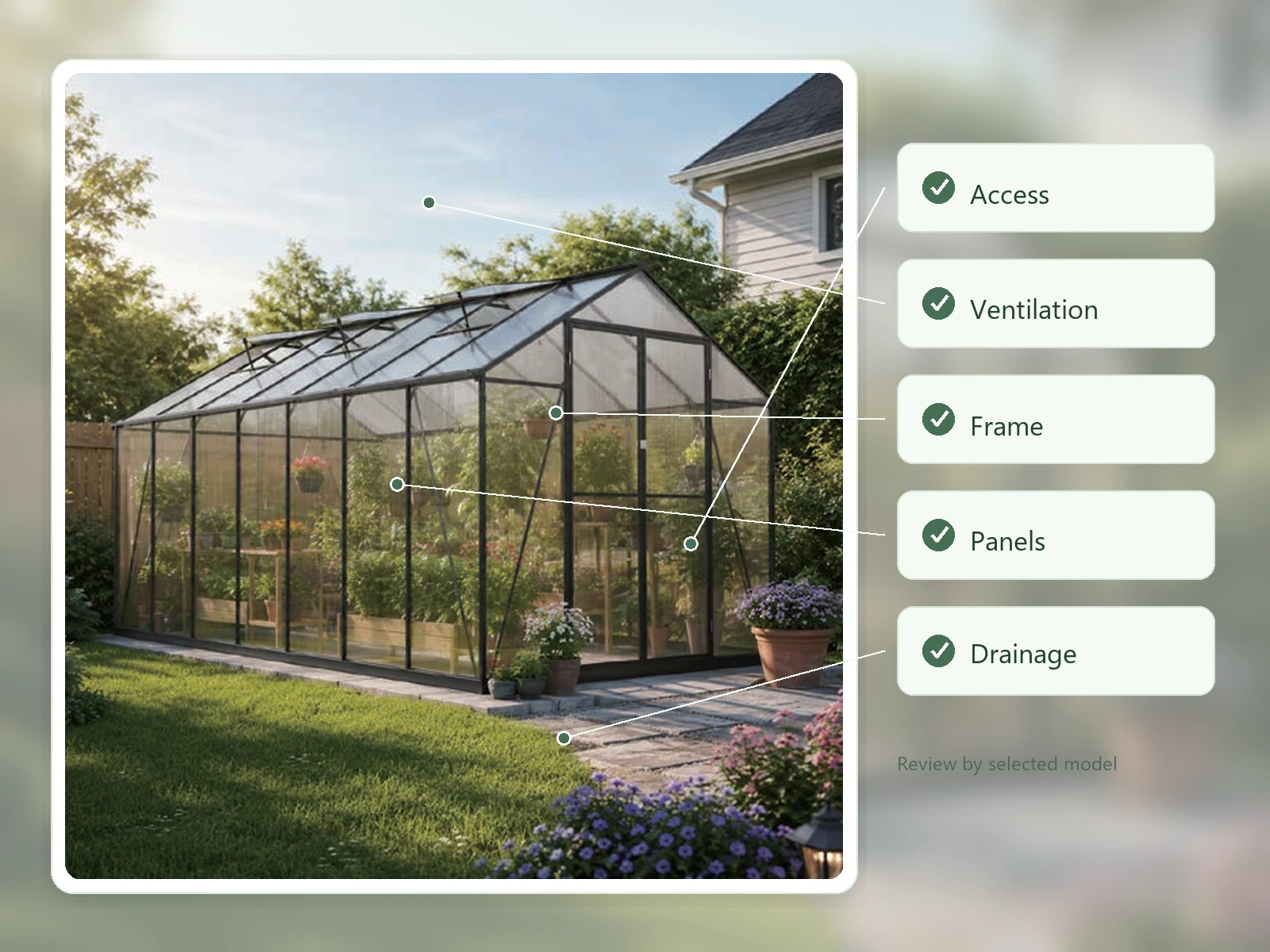
Greenhouse Configuration Review — Importers should review access, ventilation, frame, glazing and drainage at model level.
Frame and Glazing Direction
State the preferred frame material, finish or color direction and the glazing family under consideration. Then request model-specific confirmation. Do not carry a panel specification from one greenhouse into another without evidence that both use the same approved system.
Doors and Daily Access
Confirm the opening position, door mechanism and access needs. Single, double, hinged and sliding directions may be available on selected platforms, but they are not universal. The buyer should explain what users need to move through the opening and how much clearance the installation site provides.
Ventilation and Water Management
Ask which windows, vents and gutter arrangements apply to the selected model. The number, position and operation of openings can affect product use and assembly. Avoid treating a picture of one reference model as proof of every available configuration.
Base, Anchoring and Interior Options
Confirm whether a base, anchoring provision, floor, shelving or other interior component is included, optional or outside the product scope. Requirements vary by model and project. List the desired outcome first, then let the configuration review determine what is compatible.
State Performance and Market Requirements Without Guessing
If the destination market requires specific structural performance, materials, labeling, documentation or testing, include that requirement in the inquiry. Do not assume that a general product description proves compliance for the final configuration.
A practical request identifies:
- the destination market;
- the requirement or reference document;
- the greenhouse model and size under review;
- any required test report, calculation or product documentation;
- whether the requirement applies to the product, packaging or both.
Wind, snow, load, thermal or UV-related claims should only be used when verified for the exact product specification. A buyer should also distinguish between a requested target and an already documented result.
This approach protects both sides. It gives the supplier a defined review task and prevents a general range statement from being mistaken for a project-level commitment.
Check Assembly, Packaging and Documentation
Many large garden products use flat-pack packaging, but the package breakdown and assembly arrangement vary by model. Review these points before the product is finalized, especially for retail and e-commerce programs.
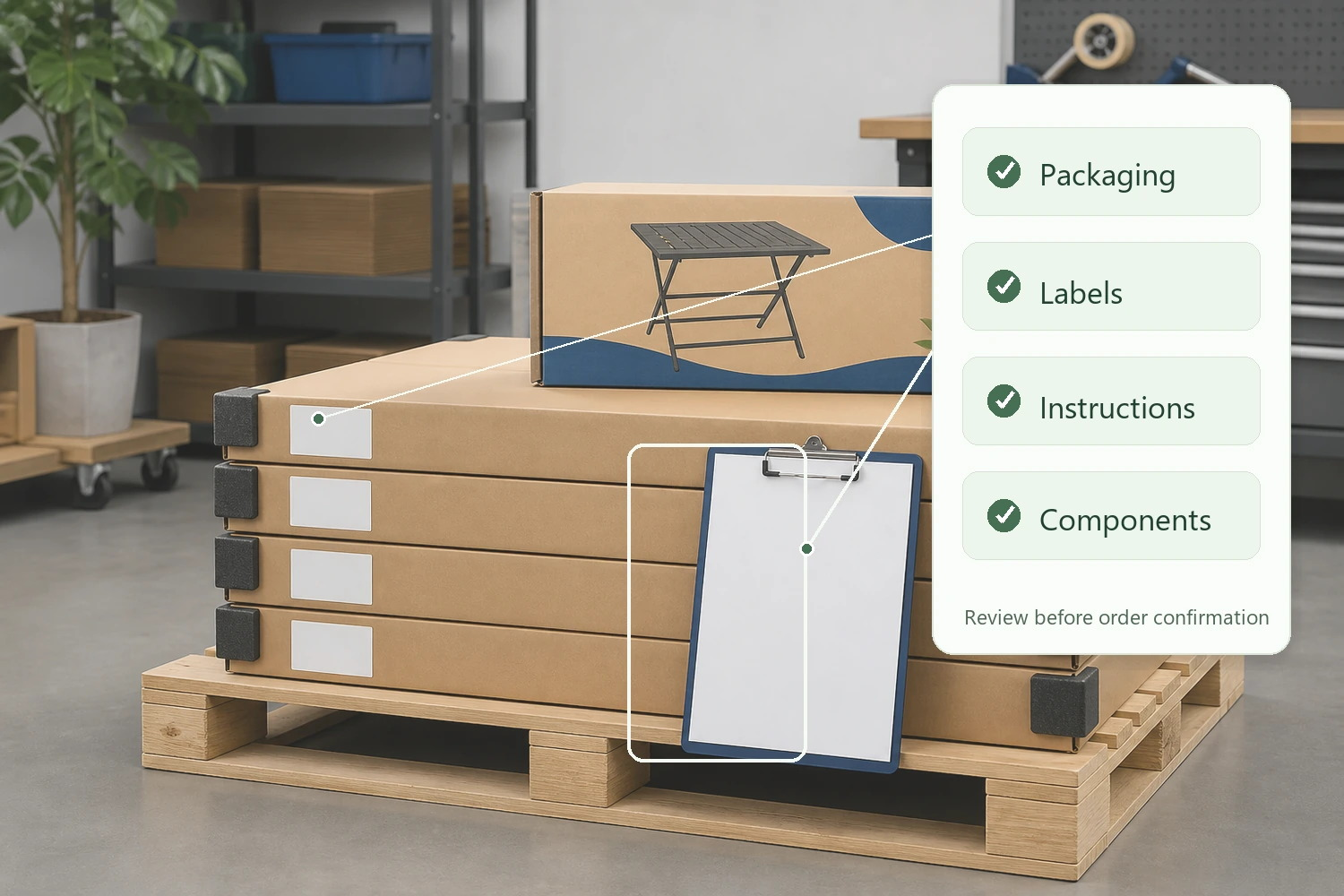
Greenhouse Packaging and Documentation Review — Packaging, labels, instructions and component organization should be reviewed before an order is finalized.
Ask for confirmation of:
- package count and package dimensions for the selected configuration;
- component and hardware organization;
- part labels and identification method;
- assembly instructions and language requirements;
- protective materials and handling notes;
- carton artwork, barcode and private-label requirements;
- replacement-part and after-sales information expected by the sales channel.
Packaging should be reviewed together with the specification. A change in size, panel arrangement, accessories or hardware can affect cartons, instructions and artwork. Keep the approved product files and approved packaging files aligned.
LERYOU's Możliwości page outlines a process covering specification confirmation, customization review, approval and production or shipment preparation. Use those stages as checkpoints rather than treating packaging as the final administrative step.
Separate Standard Selection From Customization
An importer should identify which requirements are essential and which are preferences. This makes feasibility review faster and reduces unnecessary versions.
Depending on the product platform, project options may include dimensions, colors, roofs, doors, panels, bases, accessories, branding and packaging. Availability must still be confirmed for the selected greenhouse and order scope.
Divide the brief into three columns:
- Required: features the program cannot proceed without.
- Preferred: features that improve the offer but can be reviewed against feasibility.
- Open for recommendation: decisions where the buyer wants supplier input.
Private-label work also needs an ownership list. Note who supplies the logo, carton artwork, labels, manuals and translations, and who gives final approval. Do not assume that a request for private labeling automatically defines the packaging or documentation scope.
For projects that need configuration support, review LERYOU's Greenhouse OEM/ODM process and keep the approved product, artwork and packaging requirements in one project record.
Greenhouse RFQ Checklist
The following information is enough to begin a focused product and quotation review. It does not need to be perfect, but open decisions should be visible.
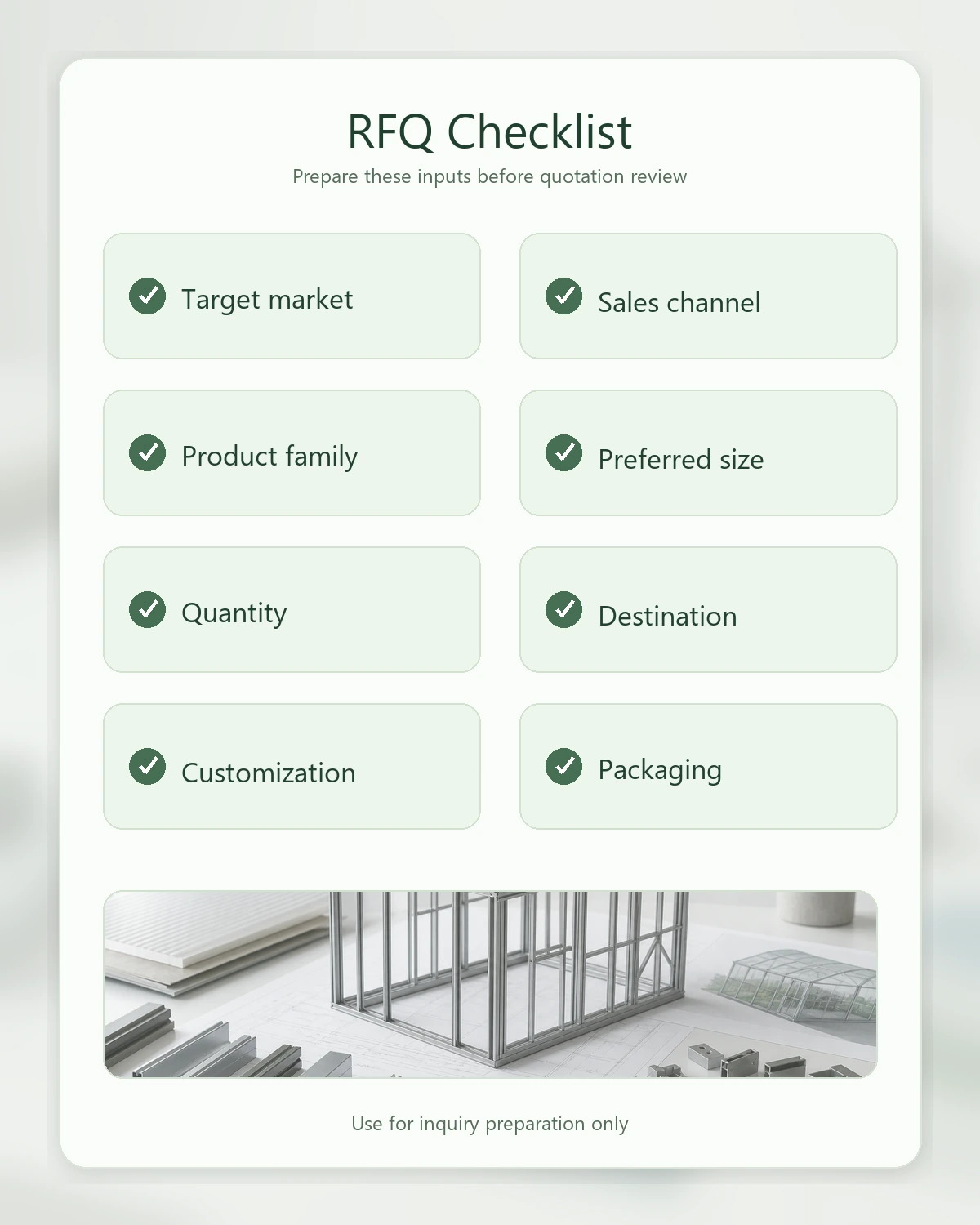
Greenhouse RFQ Checklist — Core information to prepare before requesting a greenhouse quotation or configuration review.
| RFQ field | What the buyer should provide | Why it matters |
|---|---|---|
| Target market | Country or region and relevant channel requirements | Sets the context for product and documentation review |
| Kanał sprzedaży | Retail store, garden center, e-commerce, wholesale or private label | Influences assortment, packaging and presentation |
| Rodzina produktów | Polycarbonate, glass, nursery/growing or an open comparison | Narrows the appropriate reference range |
| Intended use | Growing task, customer group and expected assortment role | Connects configuration to a real buying need |
| Reference | Product link, image, drawing or existing model | Gives the supplier a concrete starting point |
| Preferred size | Footprint, size range or installation-space limit | Supports model and layout review |
| Configuration | Layout, door, ventilation, base, color and accessory preferences | Identifies the decisions that need confirmation |
| Quantity | Expected quantity or range-planning volume | Required for a commercial review without implying a fixed MOQ |
| Destination | Delivery country or port information available at inquiry stage | Supports logistics and market-context review |
| Branding | Logo, labels, manuals, artwork and packaging needs | Defines the private-label scope |
| Wymagania | Performance, documentation or market requirements to be evaluated | Prevents unsupported assumptions |
| Timing | Target program or launch schedule | Helps frame project planning without assuming a supplier lead time |
The public LERYOU FAQ asks buyers to provide a product or reference model, preferred size, quantity, destination, intended application and customization requirements. Add the sales channel, target market and open decisions to make that information more useful for range planning.
Questions to Resolve Before Approving a Model
Before moving from an inquiry to an approved specification, check that the buyer and supplier can answer the following:
- What exact product and configuration are being reviewed?
- Which features are included, optional or still open?
- Which drawings, images or samples define the agreed product?
- What destination-market requirements have been supplied for review?
- Which packaging, labels, manuals and artwork apply?
- Who approves the product specification and packaging files?
- Have changes been reflected across the quotation, specification, manual and carton artwork?
If an answer is missing, mark it as open rather than filling the gap with an assumption. A visible open item is easier to manage than an unrecorded expectation.
Najczęściej zadawane pytania
What information does a greenhouse importer need for a quotation?
Provide the product or reference model, preferred size, quantity, destination, intended use and customization requirements. Add the target market, sales channel, packaging needs and any performance or documentation requirements that must be evaluated.
Should a buyer choose polycarbonate or glass before contacting a supplier?
Not necessarily. A buyer can request a comparison if the market position is clear. Product positioning, structure, installation, packaging and transport requirements should be considered before confirming the material direction.
Can greenhouse size, color, doors and packaging be customized?
These may be project options on applicable platforms. Availability and compatibility must be confirmed for the selected greenhouse, specification and order scope.
Can performance be assumed from the product family?
No. Wind, snow, load, thermal, UV or other performance requirements must be reviewed for the exact model and configuration. A category name or reference photograph is not project-level evidence.
Does an inquiry need every specification finalized?
No. It should identify what is decided, what is required and what remains open. Clear open questions allow the supplier to recommend relevant product directions without treating a preference as an approved specification.
Prepare a Greenhouse Brief for LERYOU
A useful greenhouse inquiry gives the supplier enough context to compare real options. Start with the target market, sales channel, product family, intended use, preferred size, quantity, destination and customization needs. Attach reference images, drawings or an existing model when available, and list any requirements that still need review.
Skontaktuj się z LERYOU with that brief to discuss the relevant greenhouse or growing-product direction. Final feasibility, specification, commercial terms and project timing should be confirmed for the selected program.
 English
 Deutsch
 Français
 Español
 Italiano
 Polski
 日本語
日本語 한국어
한국어 Nederlands
 Čeština
 Português do Brasil