
Choose metal garden fence panels as part of a complete system: panels, posts, connections and the interface with the ground. Start with the boundary’s purpose and layout, then compare the material specification, panel dimensions, finish and installation components. This gives retailers a clearer basis for comparing quotations and building a coherent range.
An open picket fence, a decorative screen and a privacy panel can create very different garden spaces. The most useful product information explains what each arrangement provides, which components are included and how the sections connect.
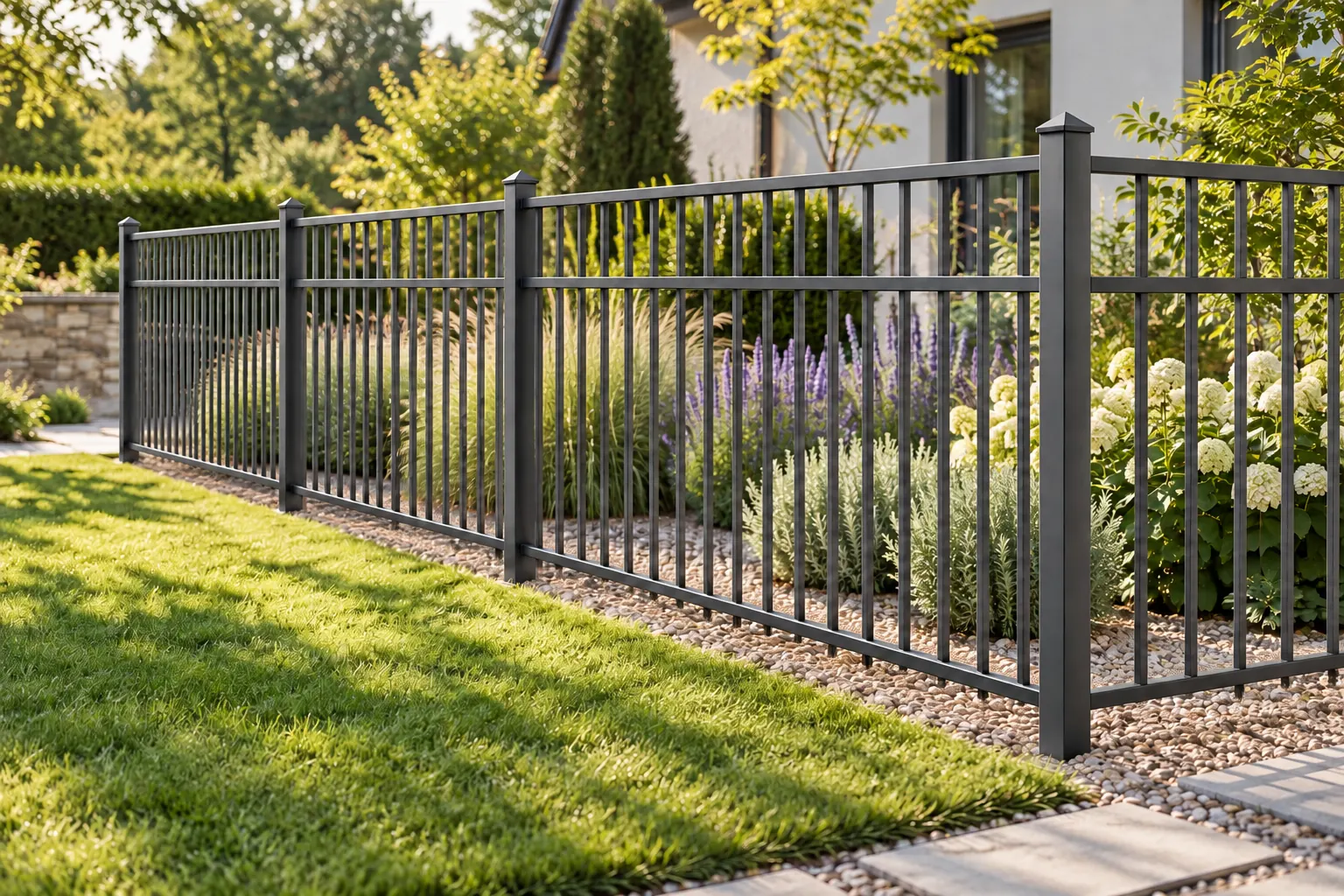
Start with the purpose of the garden boundary
Decide whether the range is intended to mark an edge, divide a patio, provide decorative screening or create a more enclosed space. Assess the view through the panel from both sides and at an angle. A product photograph taken straight on can give a different impression from the view along a garden path.
Open vertical pickets preserve sightlines through the fence. Patterned panels divide the view according to their openings. More closely filled panels provide a different level of screening. Compare these layouts with the customer’s intended use rather than treating every metal panel as a privacy fence.
| Panel direction | Useful selection question | What to review |
|---|---|---|
| Open picket panel | Is a visible boundary with an open view required? | Picket spacing, rail arrangement, panel frame and connections to posts. |
| Decorative or patterned panel | Where should the garden remain visible through the design? | Opening pattern, viewing angle, edge finish and fixing positions. |
| Privacy-oriented panel | Which views should the panel screen? | Infill arrangement, gaps, overall height and the complete supporting system. |
LERYOU’s garden fence range includes modular sections and different panel formats. Select the required layout before comparing materials, sizes and accessories.
Plan the panel run before counting panels
Draw the proposed fence line, including corners, ends, changes in direction and any access opening. Measure the available run and identify where posts will stand. Distinguish the visible panel width from the installation spacing required by the complete panel-and-post system.
A straight run may need different posts or connections at its ends and intermediate positions. Corners and gates add further arrangements. Use a component schedule to identify the required pieces for each position, rather than multiplying the panel count by a single hardware pack.
For changes in ground level, ask how the selected system addresses the change. A stepped layout and a panel designed to follow a slope are different constructions. Review the resulting lower gaps, post positions and appearance before selecting a configuration.
Separate panel size from finished fence height
Record the panel’s own dimensions alongside its installed position. Clearance beneath the panel, post caps and any base components can affect the finished outline. A product’s nominal height does not describe every part of the installation.
Use a drawing showing panel dimensions, post spacing, connection positions and the intended ground interface. This helps suppliers quote the same arrangement and supports clearer retail listings.
What to compare in contemporary metal fence panels
Frame, pickets and infill materials
Identify the material of each major component separately. The posts, frame, pickets and infill do not necessarily use the same material. Compare section shapes, joints, end closures and visible connections on a complete sample.
LERYOU’s available configurations include powder-coated aluminium structures with aluminium, metal or PVC panel options, depending on the model. A metal frame with a different infill should be described clearly in the specification and retail listing.
For an open picket format, inspect how the vertical members meet the rails and how the framed panel connects to the posts. For decorative boundary products, compare the panel design with the fitting arrangement; LERYOU’s decorative aluminium garden barrier provides another product direction for garden range planning.
Finish and handling details
Record the coating system, colour reference and surface appearance for the selected product. Review exposed edges, joints, caps and fasteners together. Check how the finish is protected when panels and hardware are packed, moved and assembled.
A finish sample is useful for colour and texture, while an assembled section shows corners, joints and contact points. Establish the cleaning and care instructions for the supplied configuration. Keep service-life or corrosion claims tied to relevant product evidence and the conditions covered by that evidence.
Review posts, connections and the installation surface
Evaluate the post and panel as a matched assembly. Check bracket positions, fixing access, end and corner arrangements, post caps and any packers or spacers. Confirm that the supplied hardware corresponds to the drawing and manual.
Ground-set posts and surface-mounted posts need different installation arrangements. A paved appearance does not by itself establish that a surface can support a particular mounting system. The installation brief should identify the supporting construction and the requirements for the chosen post arrangement.
Where a gate is part of the range, specify the opening, handing, hinge and latch arrangement, clearance and supporting posts. Keep the gate’s component list separate enough to make the order scope clear. A matching panel design alone does not establish the gate’s hardware or installation requirements.
Make the retail pack as clear as the panel design
Open and assemble a sample using the same instructions, labels and hardware packs planned for the retail product. Check whether similar brackets can be confused, whether fixing positions are easy to identify and whether all exposed ends have the intended closures.
Panels and posts need protection against rubbing and impact during handling. Separate small hardware from coated surfaces, identify parts consistently and record which items are supplied in each carton or bundle. Packaging dimensions and weight also belong in the quotation comparison.
| Quotation record | Details to capture | Sample review |
|---|---|---|
| Panel layout | Purpose, dimensions, spacing, viewing angle and finish. | View a complete panel from both sides. |
| Post system | End, intermediate, corner and gate positions; connection details. | Assemble the panel and its matching posts. |
| Installation scope | Ground or surface mounting, supplied fixings and supporting construction requirements. | Match the component list to the installation drawing. |
| Retail delivery | Cartons or bundles, protection, labels, manual and replacement parts. | Unpack the retail-ready sample and identify every component. |
The garden product supplier evaluation and RFQ checklist helps organise the wider supplier comparison. Use the flat-pack packaging guide when reviewing protection, hardware identification and customer assembly.
Frequently asked questions
Are all metal garden fence panels privacy panels?
No. Open pickets, patterned screens and more closely filled panels create different views through a boundary. Check the actual infill and viewing angles when selecting a product.
Does the panel width equal the distance between posts?
Not necessarily. Posts, brackets and connection clearances affect the installation spacing. Use the drawing for the complete system when planning the run.
Can a panel fit any metal post?
Compare the connection dimensions, fixing positions and intended hardware. Use a matched panel-and-post assembly rather than assuming that a similar appearance establishes compatibility.
How should buyers compare aluminium and other panel materials?
Record the posts, frame and infill separately, then compare their construction, finish, handling and care requirements. Keep the material description specific to the selected configuration.
Can the same panels be used on sloping ground?
Check the system’s intended layout. Stepping panels and following a slope require different arrangements. Review the posts, connections and resulting gaps for the proposed fence line.
What should a retailer send with a fence enquiry?
Include a layout, dimensions, preferred panel style, material and finish, mounting conditions, gate requirements and destination market. Add the quantity, packaging plan and documentation needed for the sales channel.
Build a coordinated fence range brief
Choose the boundary layout first, then define the panels, posts, connections and retail pack as one system. A clear brief makes quotations easier to compare and gives customers more useful information about the product they are buying.
 English
 Deutsch
 Français
 Español
 Italiano
 Polski
 日本語
 한국어
 Nederlands
 Čeština
 Português do Brasil
 Русский
 ไทย
