Lista de piezas para casetas de jardín metálicas: lo que los compradores minoristas deben comprobar antes de solicitar un presupuesto
Una caseta de jardín metálica se comercializa como un producto de almacenamiento ya montado, pero el comprador no la adquiere como un único artículo. Detrás de cada modelo hay un sistema de piezas: paneles de pared, paneles de techo, perfiles del armazón, rieles de base, componentes de la puerta, elementos de fijación, molduras, etiquetas, manuales y materiales de embalaje.
Para los compradores minoristas y los importadores, la lista de piezas es más que un simple documento de montaje. Ayuda a tu equipo a comprobar si el presupuesto se ajusta al cobertizo seleccionado, si el embalaje es adecuado para tu canal de distribución, si el manual de usuario es realista y si los equipos de posventa sabrán identificar las piezas que falten o estén dañadas.
Esta guía explica cómo revisar la lista de piezas de un cobertizo metálico de jardín antes de solicitar un presupuesto, aprobar una muestra o incluirlo en el catálogo de venta al por menor. No se trata de una lista de materiales universal. Siempre hay que confirmar los componentes y las cantidades exactas para el modelo, el tamaño y la configuración seleccionados.
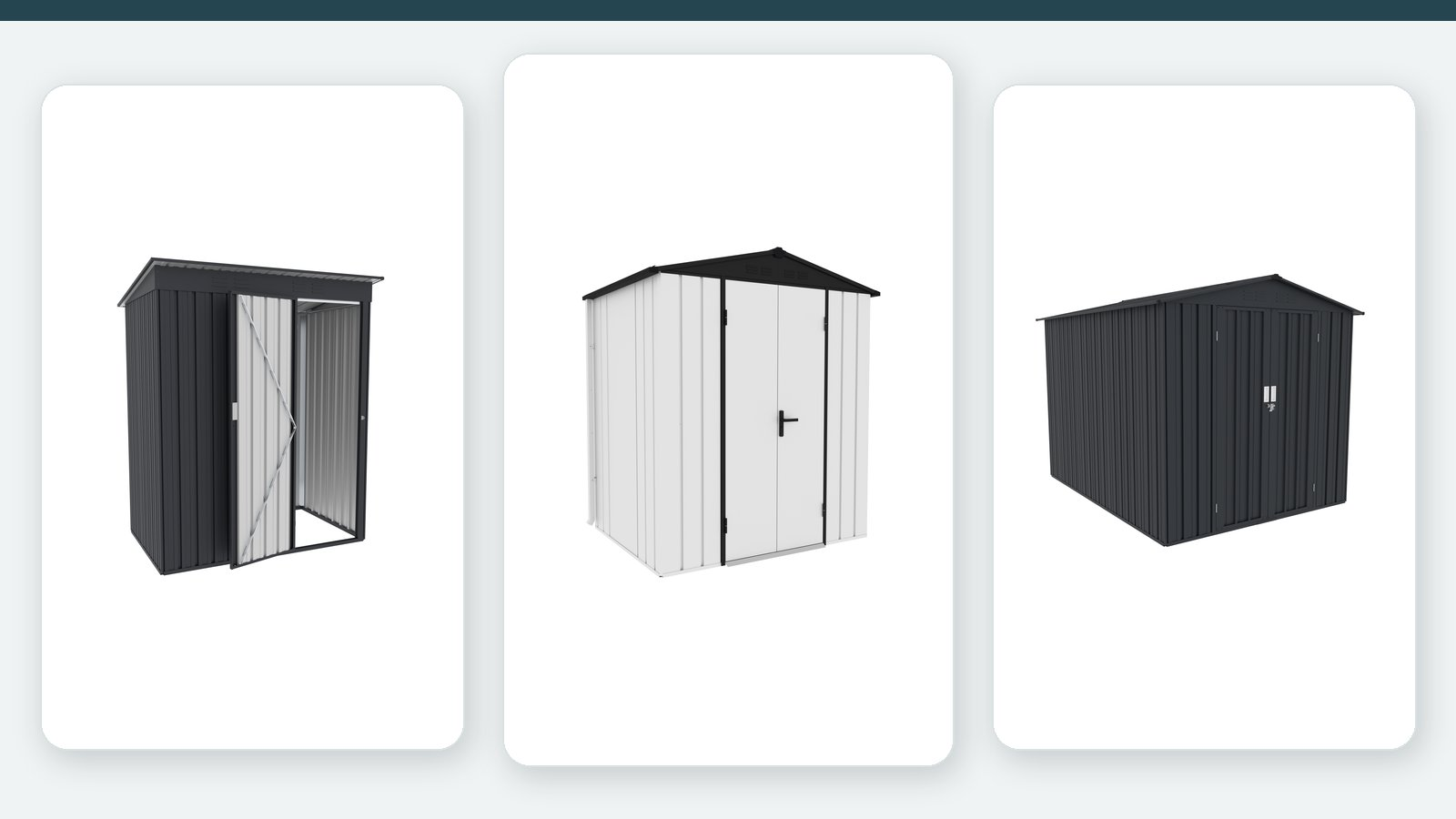
Por qué es importante la lista de piezas antes de elaborar el presupuesto
Muchos cobertizos metálicos parecen similares en las imágenes de los catálogos. Las diferencias reales se aprecian al examinar el kit completo:
- cuántos tipos de paneles hay;
- cómo se unen las piezas del tejado y las paredes;
- cómo está construido el sistema de puertas;
- cómo se identifican los elementos de fijación y los embellecedores;
- cómo se agrupan las piezas dentro del paquete;
- cómo el manual, las etiquetas de la caja y los registros de posventa se corresponden con el producto físico.
Si la lista de piezas no está clara, es posible que el presupuesto parezca aceptable, pero el proyecto puede complicarse durante la revisión de las muestras, la aprobación del embalaje, la publicación en el mercado, la atención al cliente o la gestión de las piezas de recambio.
Para un comprador B2B, la pregunta práctica no es “¿Cuántos tornillos hay en un cobertizo?”. La pregunta más acertada es: “¿Es capaz nuestro equipo de comprender, verificar y dar soporte a cada pieza que llega en el kit?”.”
Empieza con la plataforma de cobertizos homologada
Antes de revisar la lista de piezas, comprueba el modelo del producto. Un cobertizo clásico de metal, uno con claraboya, uno de paredes lisas, uno de alta resistencia o uno multifuncional pueden utilizar diferentes paneles, aberturas, perfiles, detalles del tejado y accesorios.
Al inicio de una solicitud de presupuesto, proporciona al proveedor unas indicaciones claras sobre el producto:
- mercado objetivo y canal de venta;
- tipo de cobertizo o familia de productos previstos;
- tamaño aproximado, orientación o uso de almacenamiento;
- el tipo de tejado, como el de dos aguas, el inclinado o el plano o de baja pendiente;
- tipo de puerta y expectativas de acceso;
- requisito de base o de superficie, si procede;
- canal de distribución, como el comercio electrónico, las tiendas minoristas o la gestión por parte de los distribuidores;
- necesidades en materia de imagen de marca, redacción de manuales y etiquetado.
Esto hace que el debate sobre la lista de piezas se centre en un producto real, en lugar de en un concepto abstracto de cobertizo. Si aún estás planificando la gama de productos, compara primero las principales líneas de productos en LERYOU's Tipos de casetas de jardín metálicas guía.
Componentes principales que suelen incluirse en un kit de caseta de jardín metálica
Las piezas concretas varían según el modelo, pero un kit de caseta de jardín metálica suele incluir varios grupos principales. Los compradores deben examinar cada grupo por separado, ya que cada uno de ellos influye en el montaje, el embalaje y la asistencia posventa.
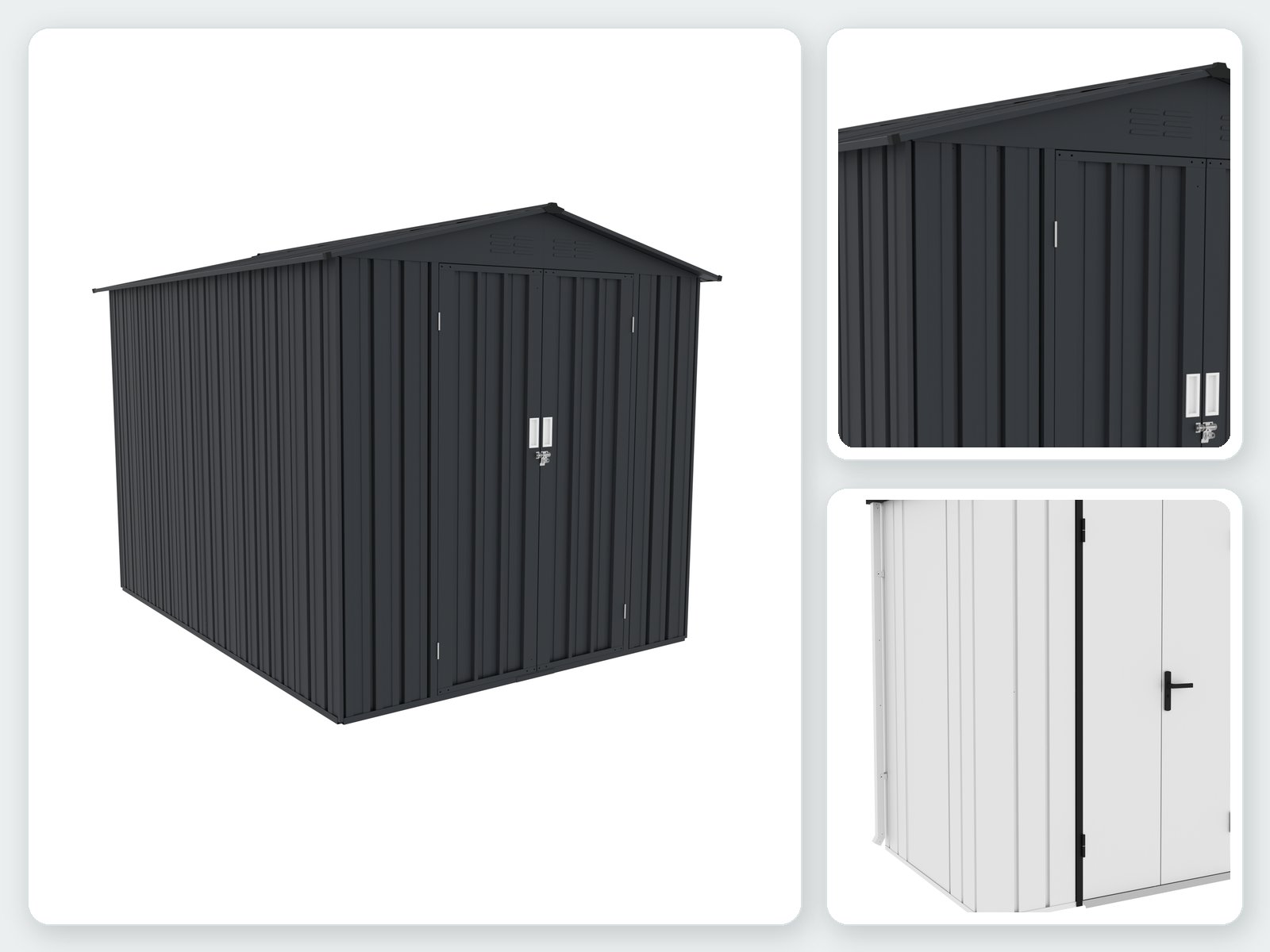
1. Paneles de pared
Los paneles de pared conforman la estructura visible del almacén. Dependiendo de la plataforma, pueden ser de tipo ondulado, con nervaduras verticales o más planos. El comprador no debe juzgar los paneles únicamente por su aspecto. La evaluación debe incluir:
- orientación de los paneles y acabado de los bordes;
- cómo se solapan o se unen los paneles;
- en los puntos donde los paneles se unen con las esquinas, las puertas y las secciones del tejado;
- si es fácil distinguir los paneles de la izquierda y la derecha o los delanteros y traseros;
- cómo se protegen los paneles dentro de la caja;
- si el manual muestra los mismos formularios de panel que el producto empaquetado.
Para los gestores de producto, es aquí donde la promesa visual del cobertizo se enfrenta a la realidad del montaje. Si la página del producto muestra un exterior impecable, pero la lista de piezas resulta difícil de seguir, la presión sobre el servicio de atención al cliente podría aumentar tras el lanzamiento.
2. Paneles de cubierta y elementos de los bordes del tejado
Los elementos del tejado deben ajustarse al concepto de tejado seleccionado. Los diseños de tejado a dos aguas, a un agua y de aspecto plano o de baja pendiente pueden utilizar diferentes detalles en la cumbrera, los bordes, el drenaje y las uniones.
Revisa estos puntos antes de dar tu aprobación:
- orientación y secuencia de los paneles del tejado;
- las piezas de unión de la cumbrera o la parte superior, cuando proceda;
- molduras de los bordes del tejado y la disposición de las esquinas;
- dirección de drenaje indicada en el manual;
- protección del embalaje para los paneles de techo más largos;
- si las piezas del tejado aparecen claramente diferenciadas de los paneles de pared en la lista de piezas.
No des por sentado que todas las casetas de la gama de un proveedor utilizan los mismos accesorios para el tejado. Es necesario comprobar la estructura del tejado en función del modelo concreto.
3. Perfiles de estructura, rieles de base y conectores estructurales
The frame gives the shed its geometry. It also determines how panels, doors, roof sections and base parts align during assembly.
Pide al proveedor que indique:
- corner profiles;
- top and bottom rails;
- roof support profiles;
- door-opening profiles;
- base or floor-related parts;
- internal or external connection pieces;
- any configuration-dependent reinforcement parts.
This section of the parts list is important for sample review. If a frame profile is missing, misidentified or visually too similar to another part, the end user may assemble the product incorrectly even when all parts are physically present.
For deeper structure review, use the Guía sobre los materiales y la estructura de los cobertizos de jardín metálicos alongside the parts list.
4. Door and Access Components
Door parts affect the user's first impression more than many buyers expect. A shed can have an acceptable storage volume but still feel inconvenient if the access system is poorly defined.
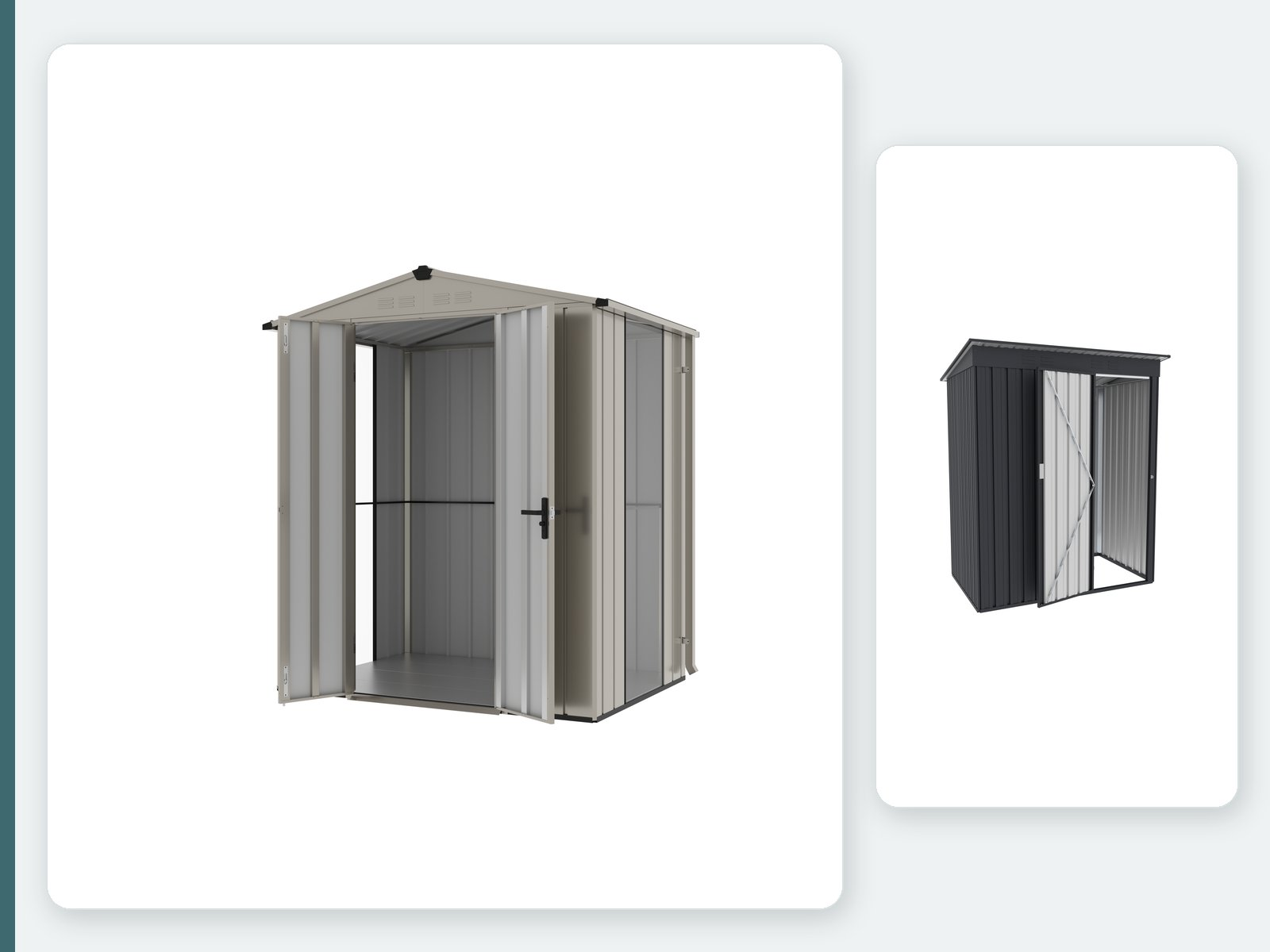
Depending on the selected configuration, the door system may include:
- door panels;
- hinge or sliding-track components;
- handle or latch parts;
- guide rails or stop parts;
- threshold or base relationship parts;
- screws or fasteners dedicated to the door assembly.
For B2B review, confirm whether the manual clearly separates door hardware from general hardware. This helps installers avoid using the wrong screws or fittings in the wrong step.
Door options are platform-specific. Do not assume that a door system available on one shed can be transferred to every model without review.
5. Fasteners, Washers, Hardware Bags and Small Parts
Small parts create a large share of after-sales questions. They are also easy to overlook during quotation because they are not as visible as panels or doors.
The parts list should make hardware easy to identify:
- screws and bolts grouped by type;
- washers or sealing-related parts where applicable;
- nuts, caps, brackets or clips;
- spare or extra hardware if the supplier has approved this for the project;
- clear bag labels that match the manual;
- consistent part codes across carton labels, instructions and after-sales records.
Avoid requesting vague “extra screws” without specifying the project expectation. If the retailer wants spare hardware, that should be confirmed as part of the approved packing plan.
6. Trims, Covers, Vents and Accessory Parts
Some parts do not look structural but still matter for the finished product. Corner trims, edge covers, vents, skylight elements, shelves, hooks or extension-related parts can change the user experience and the retail position.
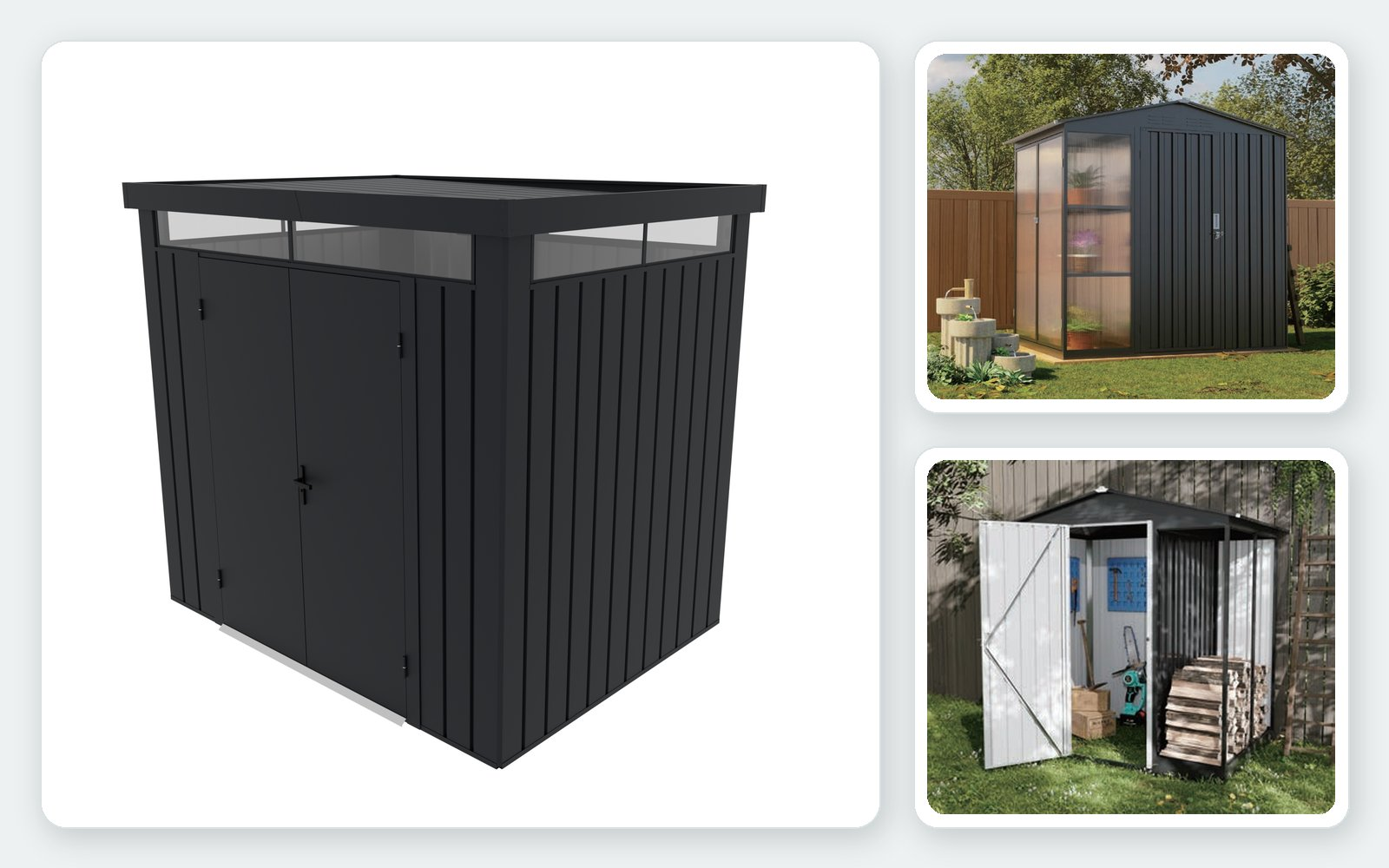
Buyers should confirm whether each item is:
- part of the standard kit;
- optional for selected configurations;
- compatible only with certain sizes or platforms;
- a new development request;
- included in the quotation and packaging plan.
This prevents the common problem where catalogue images, quotation notes and packed parts describe slightly different versions of the product.
Check the Packing List, Not Only the Parts List
A parts list says what components should be in the kit. A packing list explains how those components are packed, labeled and protected.
For importers and retailers, both documents matter. Long panels and profiles may require protection from movement and edge damage. Hardware bags should be easy to find. Instructions should be placed where users can locate them before beginning assembly.
Reseña:
- carton breakdown by product size;
- grouping of panels, profiles, doors and hardware;
- protection for edges, corners and visible surfaces;
- instruction manual placement;
- external labels and part identification;
- whether packaging files match the approved configuration;
- whether the package suits e-commerce, retail-store or distribution handling.
Do not state carton test results, container quantities or damage-performance claims unless they are confirmed for the exact project. If packaging is a major part of the buying decision, also review LERYOU's guide to flat-pack packaging for garden and outdoor products.
After-Sales Review: Can Your Team Identify a Part Quickly?
After-sales teams need more than a nice finished-product image. They need a way to identify which part the customer is describing.
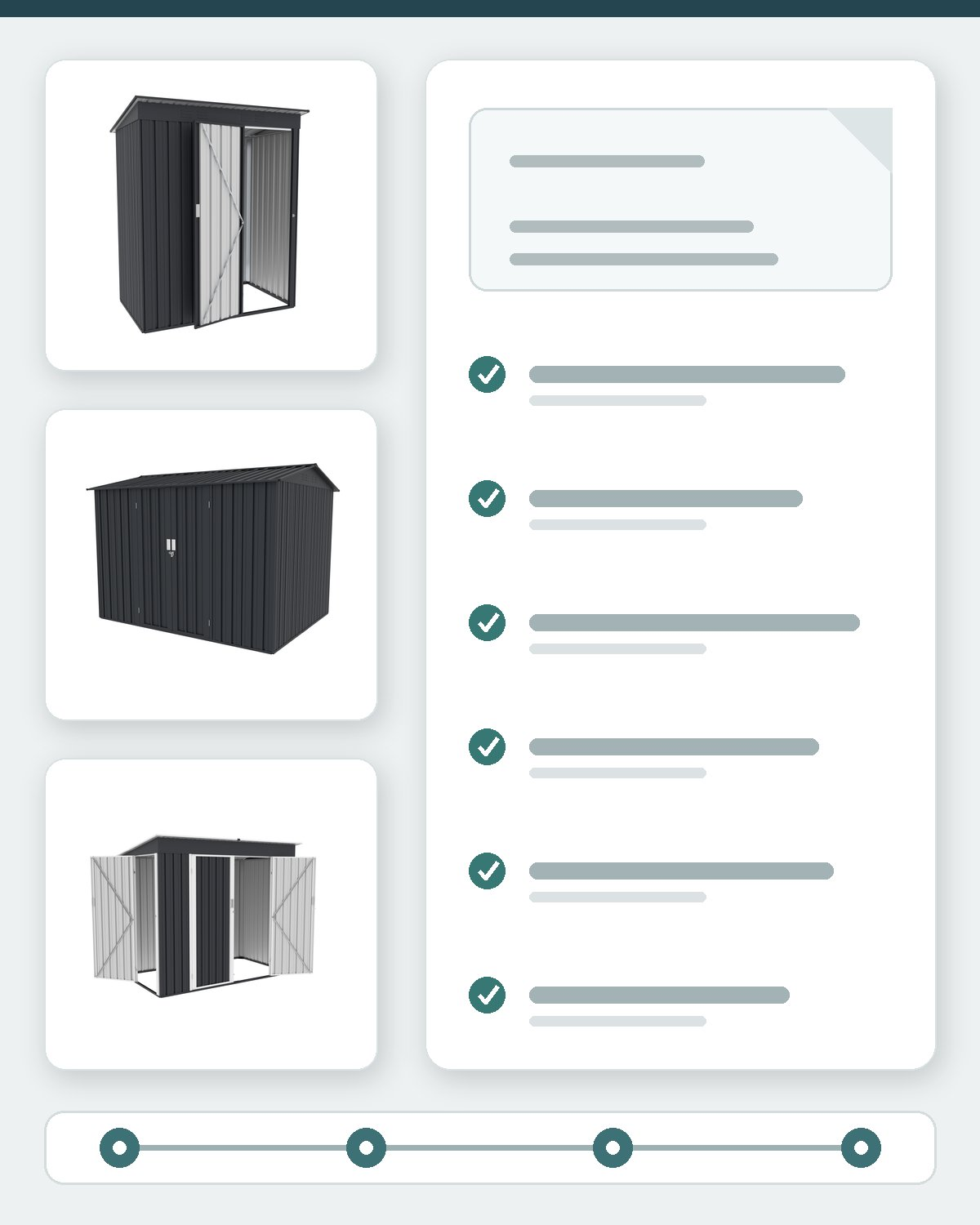
Before launch, ask whether the supplier can support a clear identification flow:
- finished product model or version;
- part number or part code used in the manual;
- carton or bag label reference;
- photo guidance for panels, profiles and hardware;
- relationship between the manual diagram and the actual packed part;
- process for confirming missing or damaged parts.
This does not mean every supplier must promise a universal spare-parts stock program. Spare-parts availability, replacement terms and service process must be confirmed commercially. The important first step is making sure the parts list and manual give both sides the same language.
What Product Managers Should Check Before Listing
For product managers, the parts list supports product data quality. It helps confirm that the listing, manual and real product are aligned before launch.
Use the parts list to check:
- whether the product images match the approved shed version;
- whether the size and configuration described in the listing match the manual;
- whether optional accessories are separated from standard included parts;
- whether assembly claims are realistic and supported by instructions;
- whether replacement-part questions can be answered without guessing;
- whether the same product name, code and version are used across files.
If your team is preparing product data for retail listing, combine this article with the Metal Garden Shed Product Data Checklist for Retailers if available in your internal workflow.
What Procurement Teams Should Ask in an RFQ
A strong RFQ does not need to include every technical detail at the first email, but it should be specific enough for the supplier to understand the requested product system.
Send the supplier:
- target shed type and intended customer use;
- size direction or preferred product range;
- roof and door preference;
- required standard kit contents;
- optional accessories under consideration;
- manual and language requirements;
- packaging channel and label requirements;
- any after-sales part-identification expectation;
- sample review and document-review requirements.
Then ask the supplier to confirm:
- which parts are included in the standard kit;
- which parts are optional or configuration-dependent;
- how hardware bags are labeled;
- how the manual refers to each part;
- how packaging files are controlled after configuration changes;
- what information is needed before quotation can be finalized.
This approach usually creates a more useful conversation than asking for a price against a vague “metal shed” description.
Metal Garden Shed Parts List Review Checklist
Use this checklist before RFQ, sample approval or retail launch.
Product and Version
- Is the shed type clearly identified?
- Is the size or configuration direction clear?
- Are roof, door, base and accessory choices confirmed?
- Is the parts list tied to the same version as the quotation and manual?
Panels and Structure
- Are wall panels easy to identify?
- Are roof parts listed separately from wall parts?
- Are frame profiles, rails and connectors clearly named?
- Are left/right or front/back parts shown clearly?
- Are trims, covers and vents included where applicable?
Hardware and Assembly
- Are fasteners grouped by type?
- Are hardware bags labeled in a way users can follow?
- Does the manual use the same part names or codes?
- Are door components separated from general hardware?
- Are assembly steps consistent with the listed parts?
Packaging and Documentation
- Does the packing list match the parts list?
- Are long panels and profiles protected appropriately?
- Are manual, labels and packaging files aligned with the approved version?
- Are optional accessories separated from standard contents?
- Are after-sales teams able to identify parts from the documentation?
Commercial and Approval Control
- Are optional parts included in the quotation or priced separately?
- Are spare-parts expectations clearly agreed if required?
- Are branding and language requirements documented?
- Are revision changes controlled before sample or production approval?
Common Mistakes to Avoid
Treating the Catalogue Image as the Specification
Images are useful, but they do not replace a confirmed parts list. A catalogue image may not show internal rails, bagged hardware, base details or packaging logic.
Assuming One Parts List Fits Every Shed
Even products in the same family can have different components by size, roof form, door style or accessory package. Confirm the exact model.
Mixing Standard and Optional Parts
If optional shelves, floors, vents, hooks, skylight parts or extensions are shown in marketing material, make sure the quotation states whether they are included.
Ignoring Hardware Identification
Small hardware parts can create disproportionate support issues. Clear labeling and matching manual codes are worth checking early.
Reviewing Packaging Too Late
Packaging is part of the product experience. It affects protection, assembly flow, marketplace complaints and replacement handling. Review it before final approval.
Preguntas frecuentes
What parts are usually included in a metal garden shed kit?
Most kits are built from wall panels, roof panels, frame or rail profiles, door components, fasteners, trims, small hardware and assembly instructions. Exact contents vary by model and configuration.
Should a buyer ask for exact screw quantities before quotation?
For final approval, yes, the selected model should have a clear parts list and hardware breakdown. At early RFQ stage, it is more useful to first define the shed type, size direction, door/roof configuration, packaging channel and documentation requirements.
Are spare parts always included?
No universal assumption should be made. Spare hardware, replacement parts and after-sales service terms must be confirmed for the specific project.
Can the same parts list be used for private-label packaging?
Only if the private-label version uses the same approved configuration. Branding, language, labels, manual files and carton artwork must match the final product version.
What should importers check before approving a sample?
Compare the physical sample against the quotation, parts list, packing list, manual, labels and product images. Any mismatch should be corrected before the product is approved for retail launch.
Work With LERYOU on a Clear Metal Shed Kit Specification
A useful metal garden shed RFQ should define the product system, not just the finished appearance. Send LERYOU your target market, sales channel, shed type, size direction, roof and door preference, packaging expectations and after-sales documentation needs.
You can review the OEM metal garden shed product line, browse Soluciones para casetas de jardín, comparar Tipos de casetas de jardín metálicas, o Ponte en contacto con LERYOU to discuss a parts-list and RFQ review for your program.

 English
 Deutsch
 Français
 Español
 Italiano
 Polski
 日本語
日本語 한국어
한국어 Nederlands
 Čeština
 Português do Brasil
 Русский