Retail buyers often compare garden greenhouses by glazing alone. The more useful first decision is the product structure: a compact polycarbonate gable model, a clear-glass garden model, or a T-shaped glass reference. Each creates a different product story, access layout and development brief.
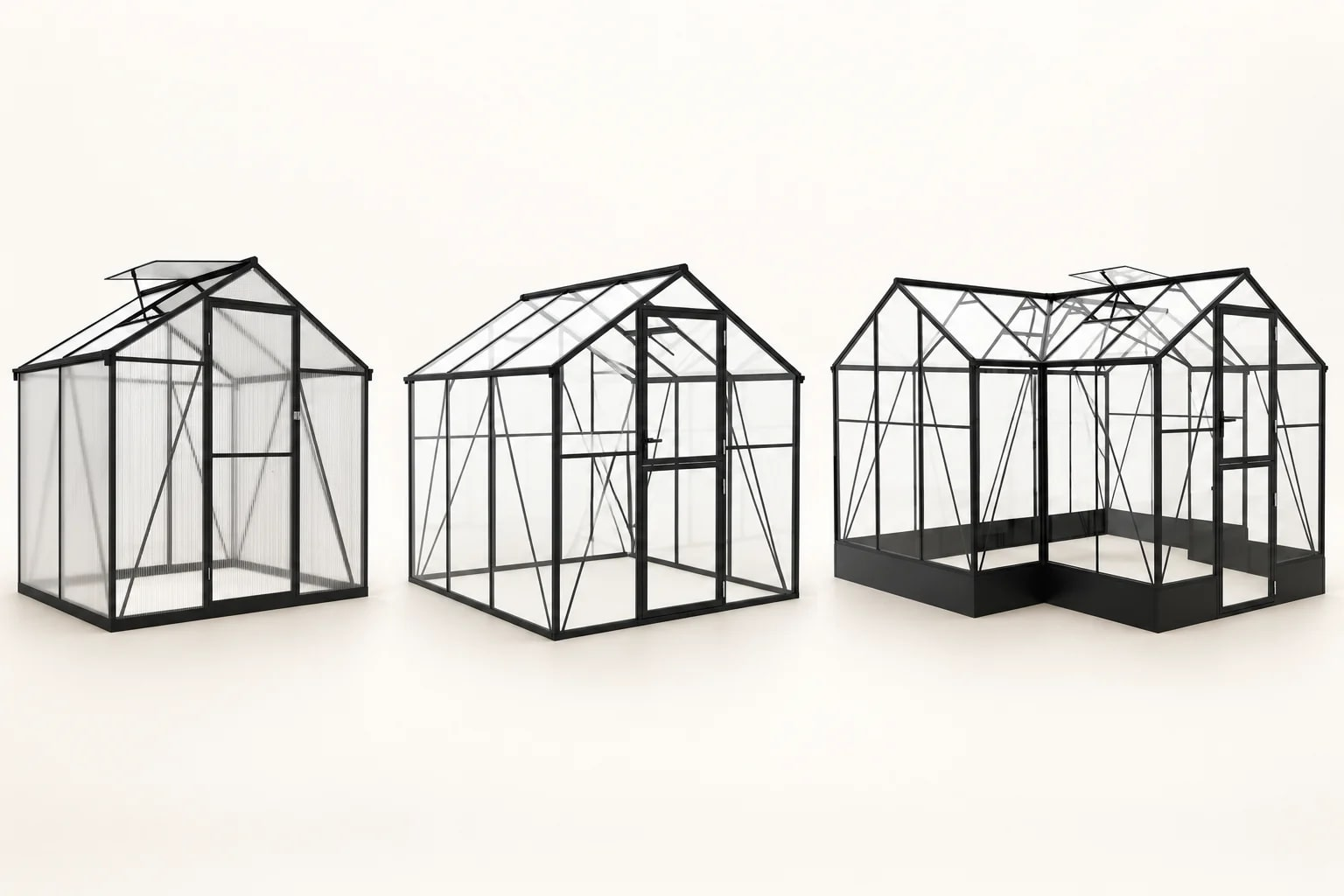
This guide compares only the structures for which LERYOU has identifiable product references. It does not treat an illustration as a new SKU or imply that materials, doors, dimensions and ratings transfer between models. For a sourcing discussion, use the greenhouse OEM/ODM project page and send the closest reference product with the changes you need.
Three design directions at a glance
| Reference direction | What the buyer is choosing | What to verify before quotation |
|---|---|---|
| Freestanding polycarbonate | A practical gable greenhouse family with translucent panels and aluminium framing. | Footprint, panel specification, access, roof vents and packaging for the chosen model. |
| Freestanding glass | A clearer, premium visual presentation with aluminium framing. | Wall and roof glazing, handling requirements, doors and destination-market needs. |
| T-shaped glass | A more distinctive plan with a projecting section and a different roof junction. | Exact layout, doors, roof details, installation basis and model-specific documentation. |
1. Freestanding polycarbonate: start with the everyday garden use
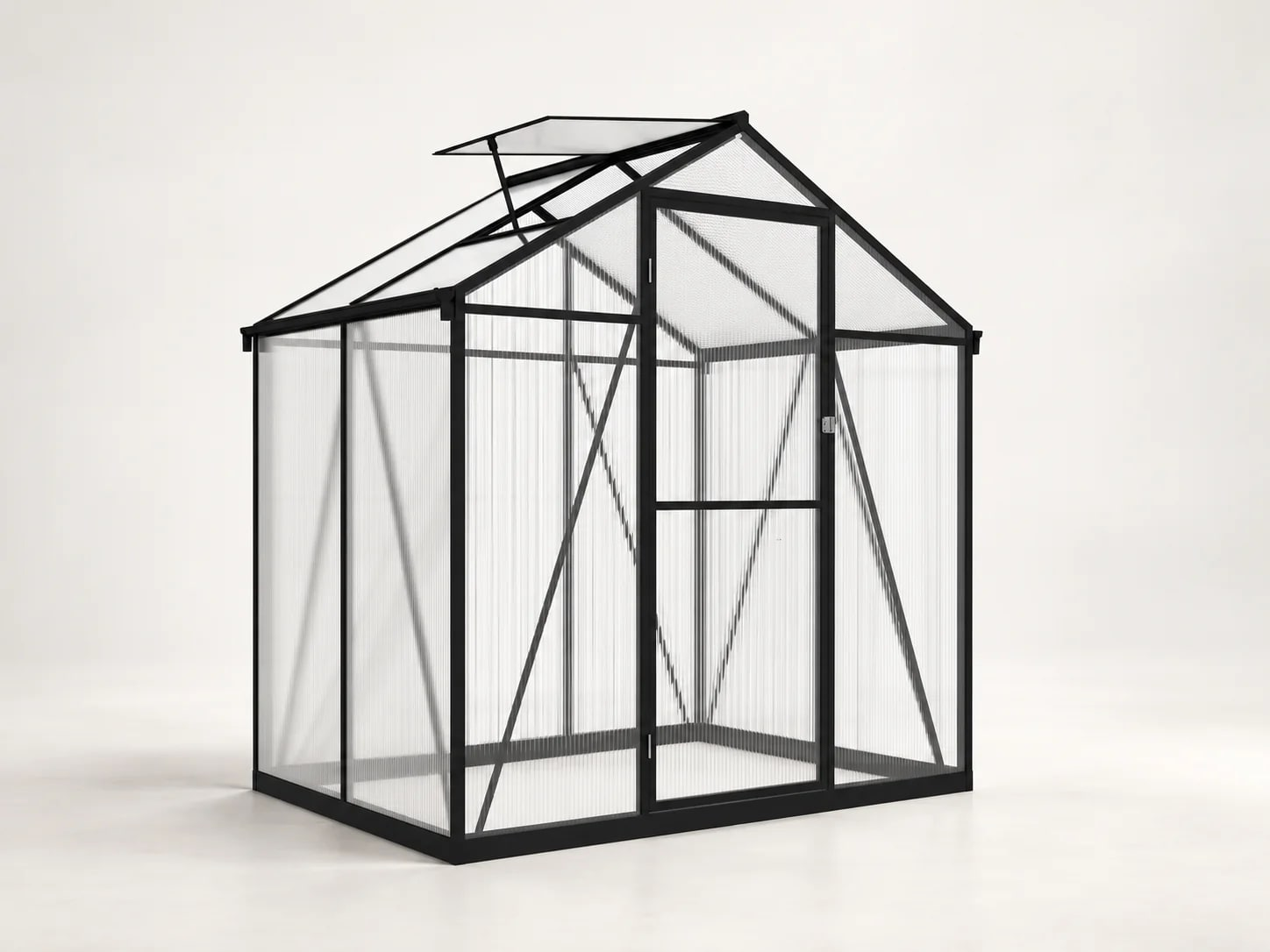
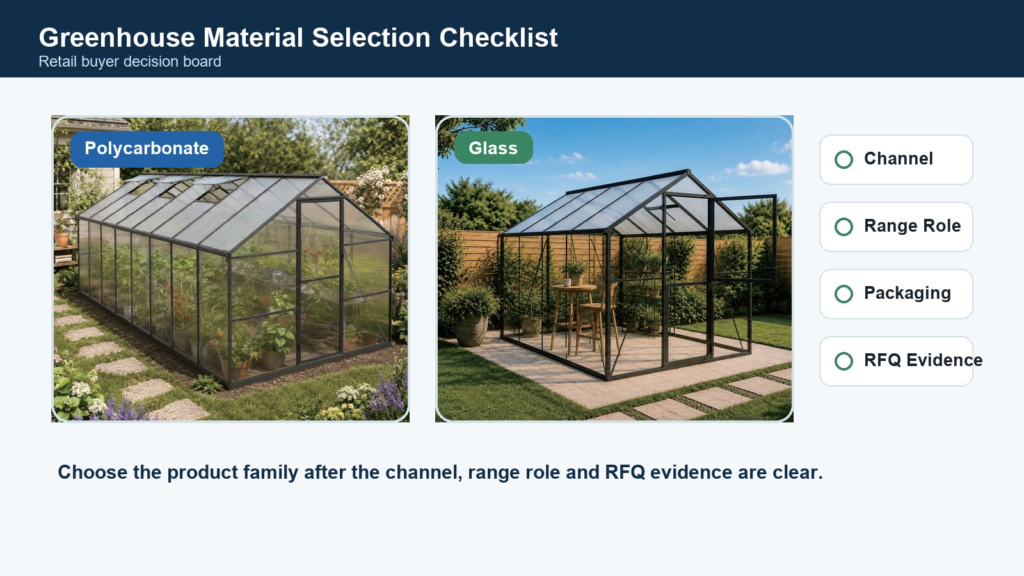
A freestanding gable greenhouse is easy for customers to recognize and compare within a garden range. A polycarbonate example lets the retail buyer discuss panel appearance, practical access and ventilation without requiring a complex footprint. LERYOU’s ассортимент теплиц из поликарбоната includes multiple formats, so the image should not be treated as one universal configuration.
When requesting a private-label version, identify the closest model and state whether the change concerns frame finish, glazing, door layout, roof window, base or accessories. Ask for the outside dimensions and included components on the selected model’s current specification—not on an unrelated reference image.
2. Freestanding glass: lead with clarity, then check handling
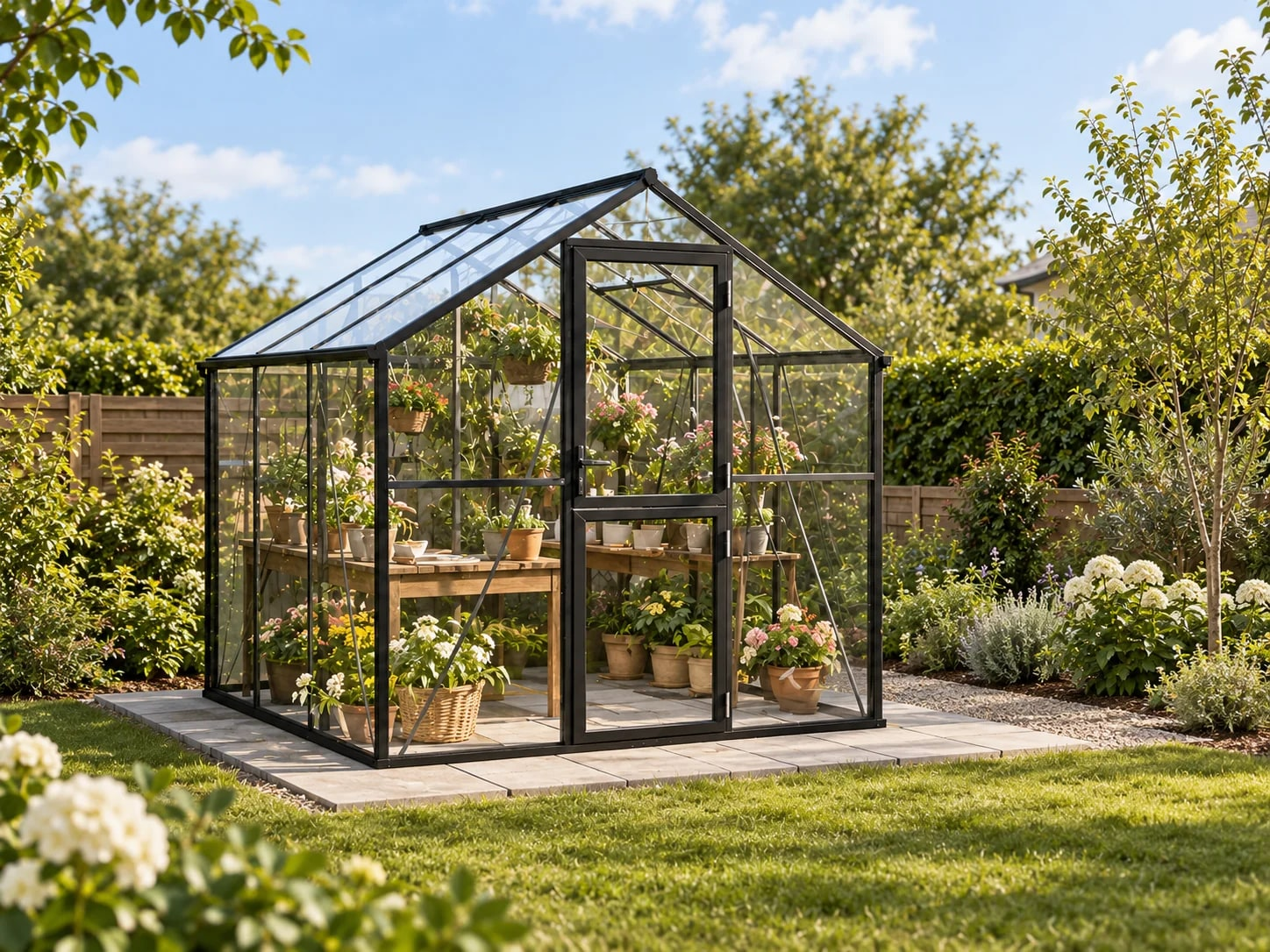
Glass changes the visual position of a garden greenhouse: it can suit a premium range where transparency and garden appearance matter. But the buying brief must be more exact than “glass greenhouse.” LERYOU’s glass greenhouse range describes selected Prestige configurations with 4 mm tempered-glass walls and notes that roof options, access and ventilation vary by configuration. That selected-reference fact should not be applied to every product in the range.
For a retail programme, confirm the actual wall and roof materials, carton handling, installation documents and any market-specific requirements together. The final approved bill of materials controls the supplied product.
3. T-shaped glass: a different plan, not a decorative option
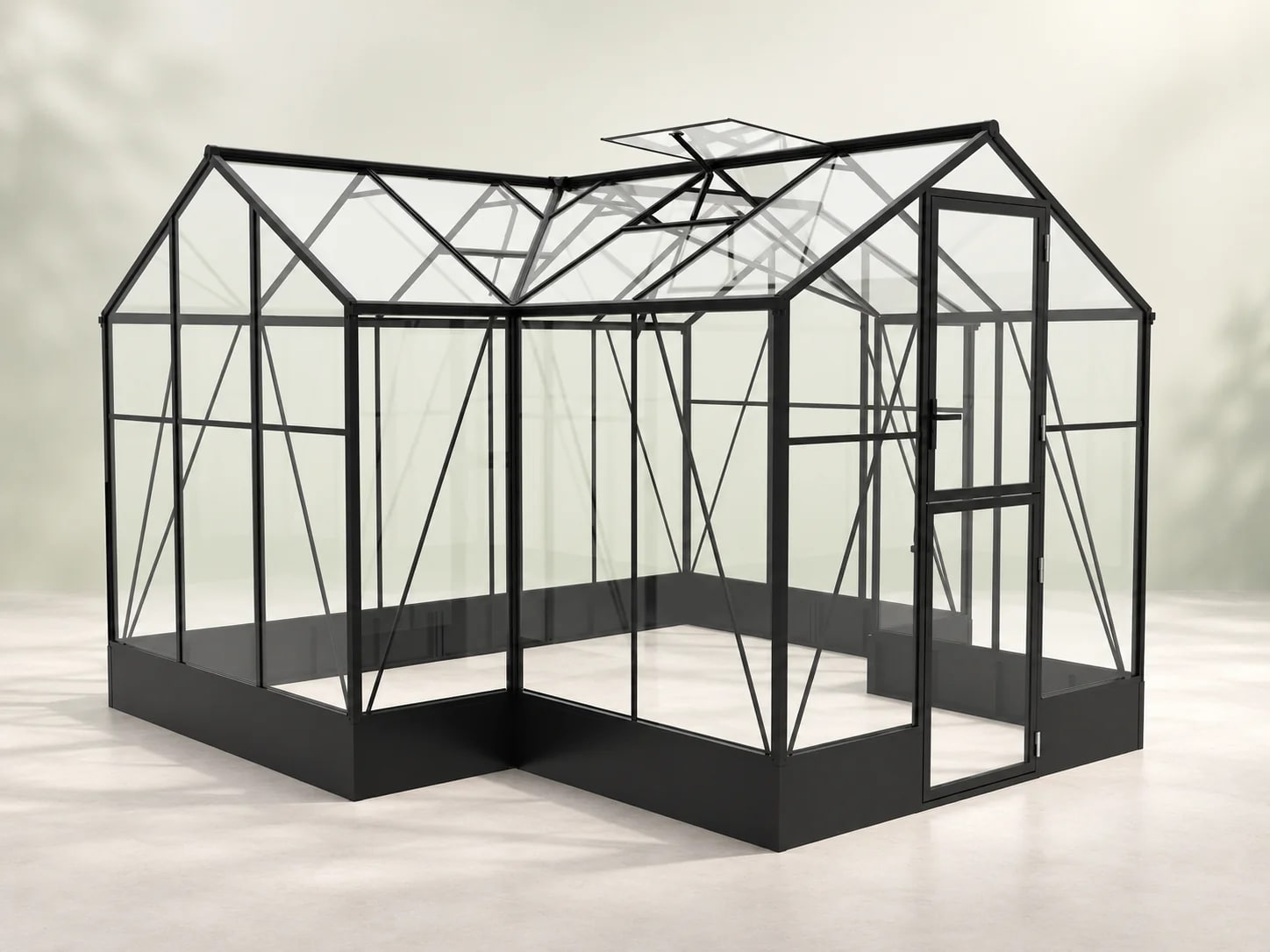
A T-shaped greenhouse product introduces a projecting part of the footprint. That affects how the buyer should ask about the entrance, use of floor area, roof junction and installation information. It should be scoped as its own product reference, not assumed to be a standard gable greenhouse with one extra bay.
This direction may help a retailer differentiate a premium outdoor-living range, but avoid publishing a fixed performance claim, standard size or included accessory without the matching product specification.
How to turn a design preference into an OEM/ODM brief
- Choose one reference product. Link to the closest PC, glass or T-shaped model so the starting point is explicit.
- Name the market and sales channel. The same appearance can require different documentation and presentation for a garden centre, distributor or e-commerce programme.
- Separate product changes from brand changes. Structure, panel, door and ventilation requests should not be mixed into one line with artwork or label requests.
- Specify what needs approval. Identify whether a drawing, sample, finish reference, packaging artwork or instruction set will close each request.
- Ask for model-specific confirmation. MOQ, lead time, dimensions, testing and components belong in the project quotation and approved specification.
For a broader supplier-evaluation framework, see the Контрольный список для импортеров при покупке теплиц. To discuss one of the structures above, prepare a greenhouse project brief или связаться с LERYOU. Confidential drawings or packaging files can be shared later with qualified buyers; they do not need to be posted publicly.
Часто задаваемые вопросы
Is polycarbonate always the lower-cost choice?
Do not infer a final price from the panel category. Overall size, frame, access, packing, quantity and market requirements affect a project quotation.
Does the same door system fit all three forms?
No. Door type and arrangement must be checked against the selected structure and current product specification.
Can a buyer use these images as technical drawings?
No. The illustrations help discuss a design direction. Confirm dimensions, components and installation details against the approved drawings and specifications.
 English
 Deutsch
 Français
 Español
 Italiano
 Polski
 日本語
日本語 한국어
한국어 Nederlands
 Čeština
 Português do Brasil
 Русский