
OEM, ODM and private-label are often used as broad sales terms, but they can describe very different project responsibilities. For garden and outdoor products, the practical difference is not the label itself. It is who supplies the product concept, how much development is required, which specifications are controlled and how approvals move from idea to production.
This guide helps buyers define the right cooperation model for outdoor storage, greenhouses and outdoor-living products.
1. What Does OEM Mean in Practice?
An OEM-style project generally begins with a buyer-defined product, specification or design direction. The manufacturer reviews whether it can produce the proposed item, what must be clarified and how the project fits available processes and equipment.
The buyer may provide:
- drawings or an existing product reference;
- required dimensions and functions;
- material and finish requirements;
- target performance criteria;
- branding, labels and packaging artwork;
- destination-market requirements;
- approval and quality expectations.
The manufacturer then reviews feasibility, production method, cost drivers, sampling, packaging and production controls. Responsibility for design ownership and technical approval should be defined contractually for each project.
2. What Does ODM Mean in Practice?
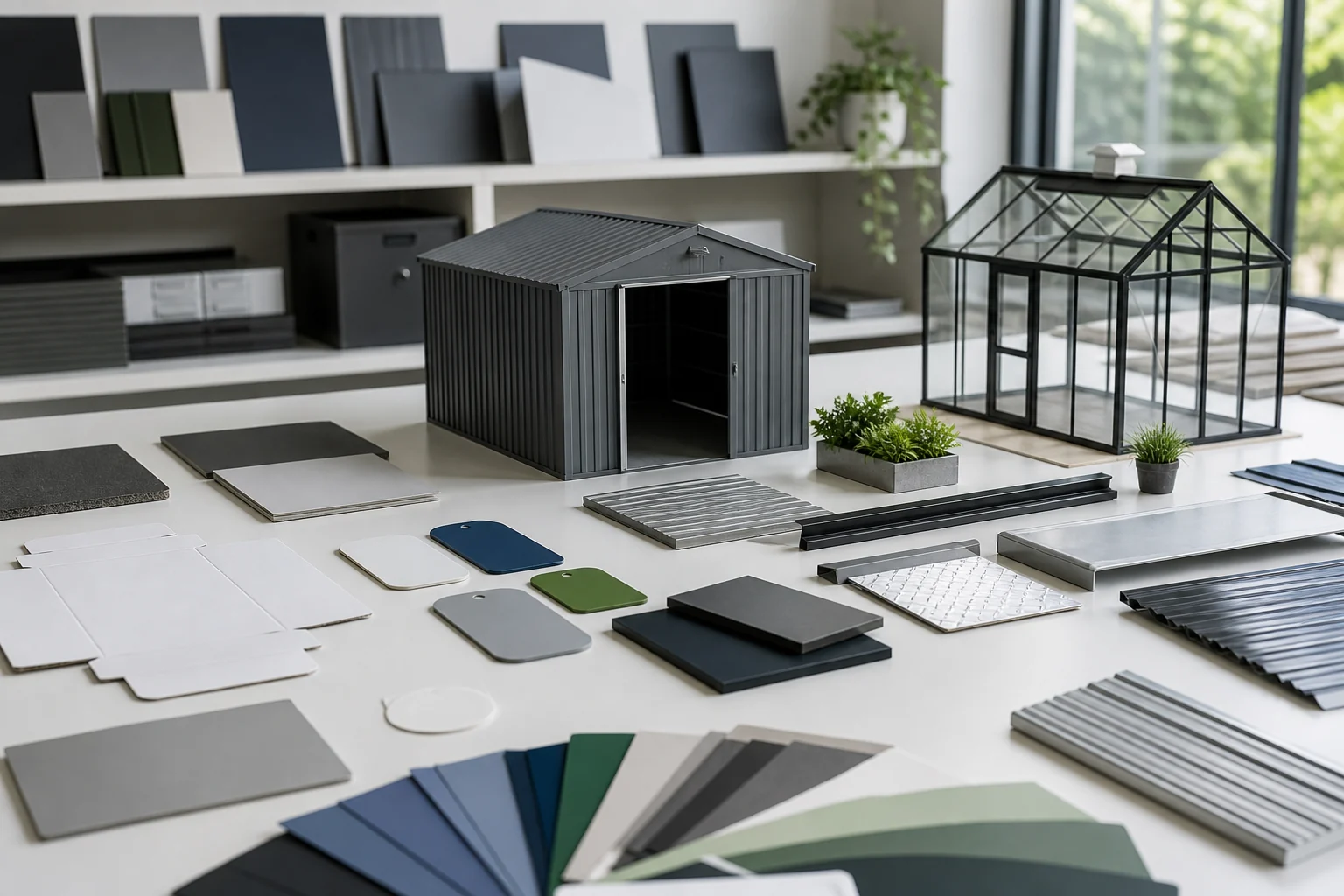
An ODM-style project usually starts from a manufacturer-developed product platform or design direction. The buyer selects a suitable base and works with the manufacturer to adapt the product for its market.
Possible adaptation areas include:
- size or configuration within platform limits;
- color and surface finish;
- doors, roofs, vents, floors or compatible accessories;
- product assortment and price positioning;
- private-label branding;
- instructions, labels and packaging;
- market-specific documentation.
ODM can reduce the amount of new development when an existing platform meets the commercial objective. It does not mean every requested change is automatically available.
3. Where Private Label Fits
Private label describes the brand under which a product is sold. It can apply to both OEM and ODM projects.
A private-label program may involve an existing product with custom artwork, or it may include deeper structural and packaging development. Buyers should define the actual scope instead of using “private label” as a complete specification.
Confirm:
- logo placement and artwork ownership;
- product and carton naming;
- manuals and required languages;
- barcode and market information supplied by the buyer;
- color approval;
- packaging design and claims;
- which components remain standard.
4. Compare the Starting Information
OEM projects need sufficiently complete design inputs or a clear development brief. ODM projects need a well-defined market requirement and a process for selecting the right platform.
For either model, provide:
- target market and sales channel;
- intended user and product category;
- target assortment and price position;
- required functions and restrictions;
- expected customization level;
- packaging and delivery route;
- approval timeline and decision makers;
- expected order scope.
The manufacturer cannot define a reliable project from a product name alone.
5. Review Development Risk
New structures and extensive changes can introduce technical, schedule and cost risk. Using an existing platform can reduce some uncertainty, but requested modifications still need review.
Before choosing a model, ask:
- Is the project based on an established platform or new development?
- Which parts, tools and tests may be affected?
- What must be approved before quotation, sample and production?
- Which changes could alter packaging or instructions?
- How will revisions be recorded?
- Which claims require supporting evidence?
Do not assume that “ODM” means no development risk or that “OEM” guarantees complete exclusivity.
6. Clarify Tooling and Ownership
If a project requires new tooling, fixtures, drawings, artwork or other development assets, ownership and permitted use should be agreed before work begins.
Commercial agreements may need to cover:
- who pays for development or tooling;
- who owns supplied and newly created files;
- who may use the final design;
- how engineering changes are approved;
- storage, maintenance and replacement of tools;
- what happens if the project stops.
These terms are project-specific and should be confirmed in written commercial documentation.
7. Build a Clear Approval Process
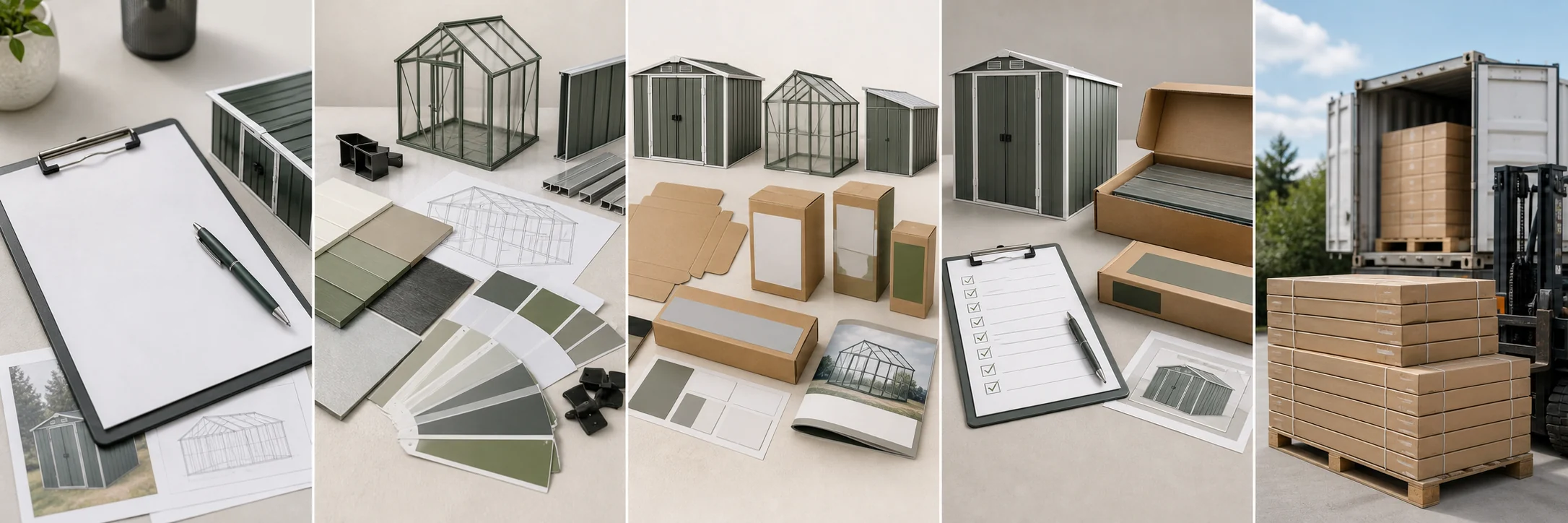
A practical workflow normally includes:
- requirement review;
- product and specification confirmation;
- customization and feasibility review;
- sample or order approval;
- production and shipment preparation.
At each step, identify the controlled version of drawings, specifications, colors, artwork, manuals and packaging. Avoid approving different documents through disconnected email chains.
8. Include Packaging From the Start
Garden and outdoor products can include long panels, profiles, glazing, hardware and multiple cartons. Packaging should be developed with the product, not added after design approval.
Review:
- package breakdown and component protection;
- retail versus e-commerce handling;
- carton artwork and product identification;
- manuals and hardware bags;
- barcode and destination-market information;
- package tests or evidence required for the final configuration.
Do not publish container quantities or packaging-performance claims before the actual pack is confirmed.
9. Compare OEM and ODM by Project Need
| Decision area | OEM-style direction | ODM-style direction |
|---|---|---|
| Starting point | Buyer-defined design or specification | Manufacturer platform or design direction |
| Buyer input | Detailed technical and commercial inputs | Market, channel, assortment and customization brief |
| Development scope | May require feasibility review and new work | Often adapts an existing platform, subject to limits |
| Approval focus | Design transfer, feasibility and controlled specification | Platform selection, compatible options and approved adaptations |
| Private label | Can be included | Can be included |
The exact responsibilities depend on the written project agreement.
10. Select the Model With a Decision Checklist
Choose an OEM-style path when the buyer has a defined product or protected design direction and is prepared to provide complete technical inputs and approvals.
Choose an ODM-style path when speed and platform reuse matter, and an existing manufacturer-developed product can meet the market with controlled adaptations.
Consider a staged approach when the market is uncertain: begin with an existing platform, validate the assortment and then review deeper changes using evidence from the program.
Frequently Asked Questions
Is private label the same as OEM?
No. Private label refers to the selling brand. The underlying product may come from an OEM-style, ODM-style or standard-product program.
Does ODM mean the buyer cannot customize anything?
No. ODM platforms may support colors, configurations, branding, packaging and other compatible changes. The exact scope depends on the product.
Which model is faster?
An existing ODM platform may reduce new development, but timing depends on customization, samples, artwork, approvals, order scope and production planning. Confirm the actual project rather than relying on a general claim.
What should a buyer prepare before contacting a manufacturer?
Prepare the market, channel, product direction, required features, customization scope, packaging needs, approval process and expected order scope.
Define the Cooperation Model Before Quotation
Explore LERYOU’s
garden and outdoor product range,
review the
OEM and ODM manufacturing workflow,
or
contact LERYOU
with a product brief and target market.
 English
 Deutsch
 Français
 Español
 Italiano
 Polski
 日本語
日本語 한국어
한국어 Nederlands
 Čeština
 Português do Brasil